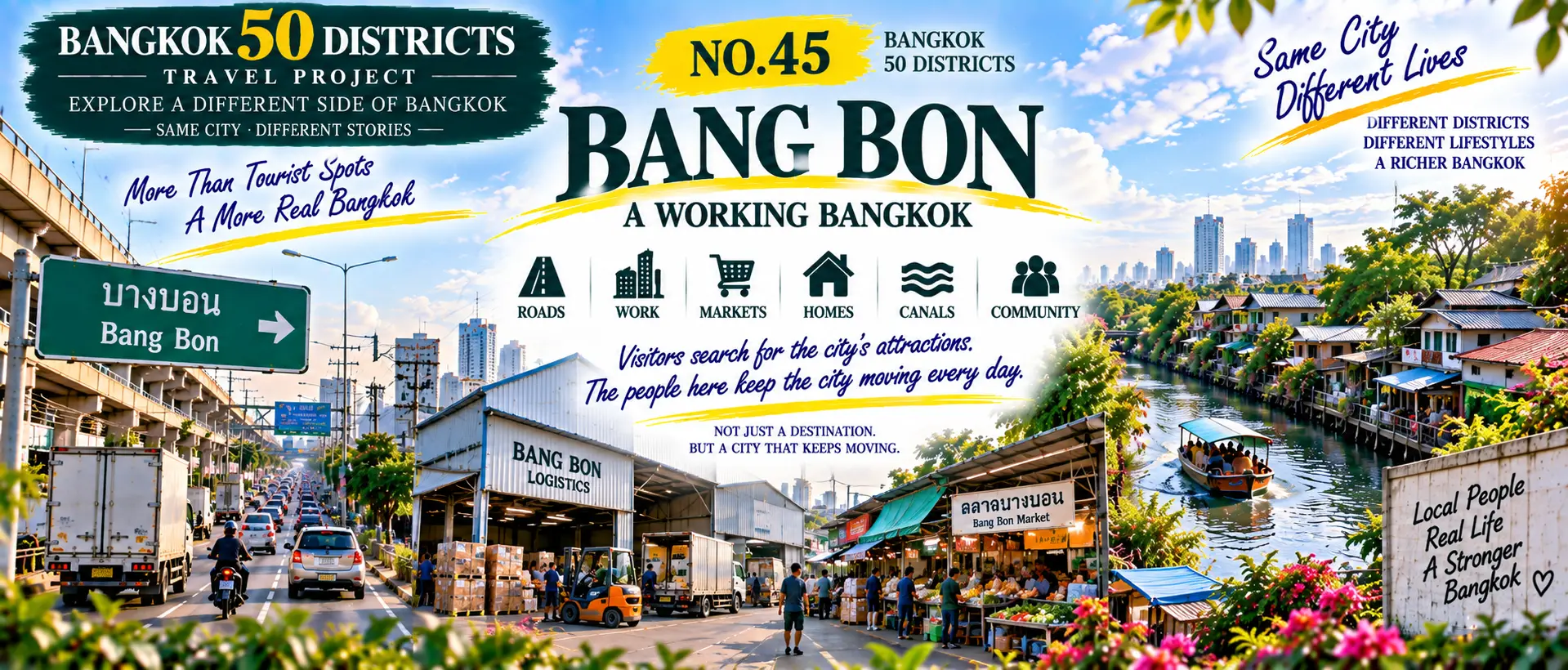
Leave Nong Khaem
and continue toward southwestern Bangkok.
The urban landscape begins to change again.
Roads become increasingly important.
Trucks and commuters move through the district.
Warehouses, workshops, small businesses and shops
appear between residential communities.
Markets serve nearby residents.
Canals still pass through parts of the district.
Schools, homes and local roads
form another side of everyday Bangkok.
This is:
Bang Bon
It rarely appears on the itinerary of a first-time visitor.
But if you want to understand
how a metropolis of millions actually functions every day,
Bang Bon offers a different perspective.
Because here,
A city is not only a place to visit. It is also a place that has to work every day.
01|From Nong Khaem into Bang Bon
Continue south and east from Nong Khaem,
and the urban landscape begins to change again.
Nong Khaem.
↓
Southwest Bangkok.
↓
Bang Bon.
↓
Work & Transport.
↓
Local Community.
Green spaces remain.
Low-rise homes remain.
But roads, businesses and workplaces
become increasingly visible.
This is another side of Bangkok’s outer districts:
people do not only live here.
They produce,
transport,
operate businesses,
and work here too.
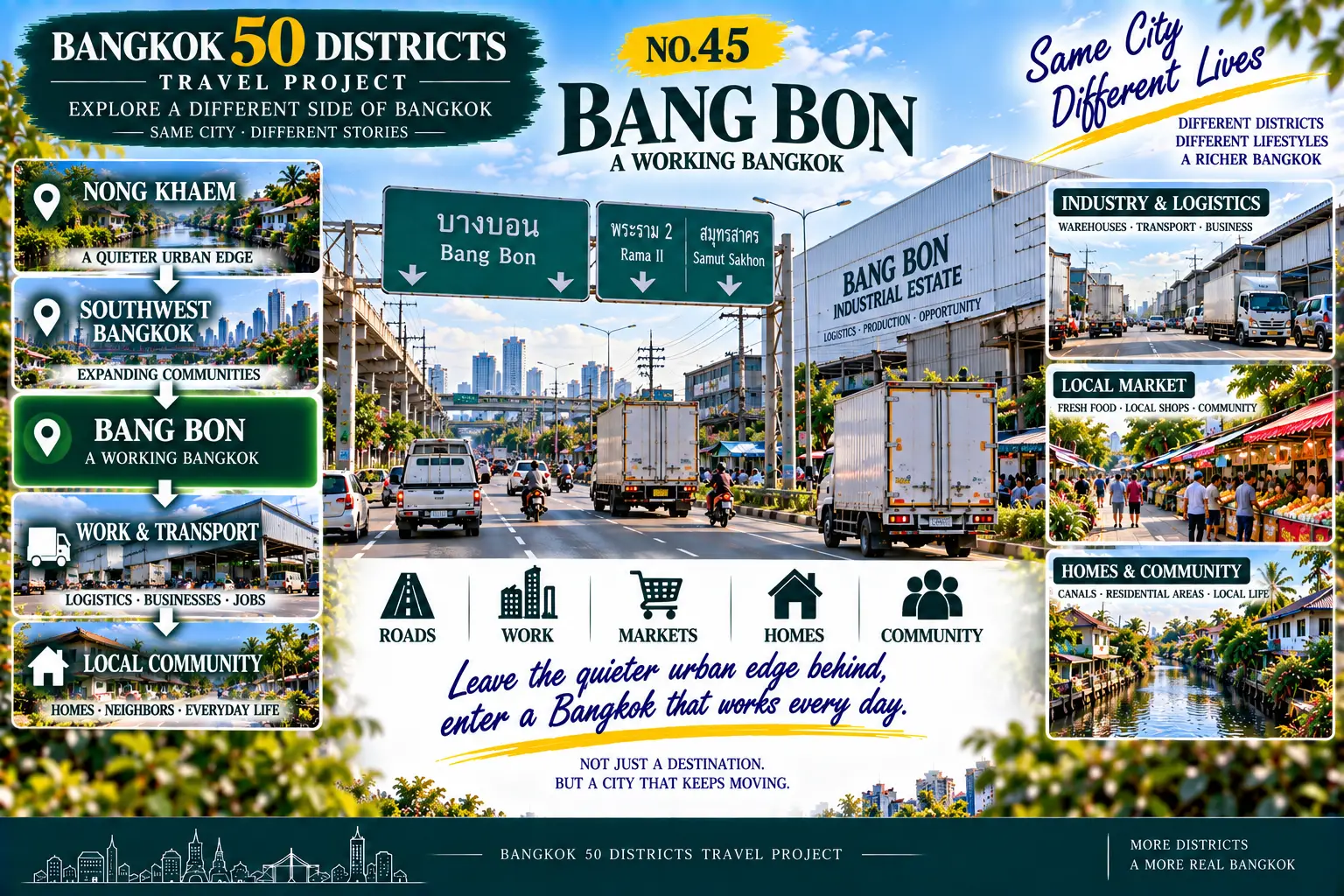
NONG KHAEM
↓
SOUTHWEST BANGKOK
↓
BANG BON
↓
WORK & TRANSPORT
↓
LOCAL COMMUNITY
ROADS × WORK × MARKETS × HOMES × COMMUNITY
**Leave the quieter urban edge behind
and enter a Bangkok that works every day.**
02|Why Are Roads So Important?
In central Bangkok,
many people experience the city through:
BTS.
MRT.
Taxis.
Walking.
But in the outer districts,
roads perform more complicated roles.
Commuting.
Freight.
Deliveries.
Commerce.
Community connections.
Roads do more than move people
from one place to another.
They also move the goods and services
that the city needs every day.
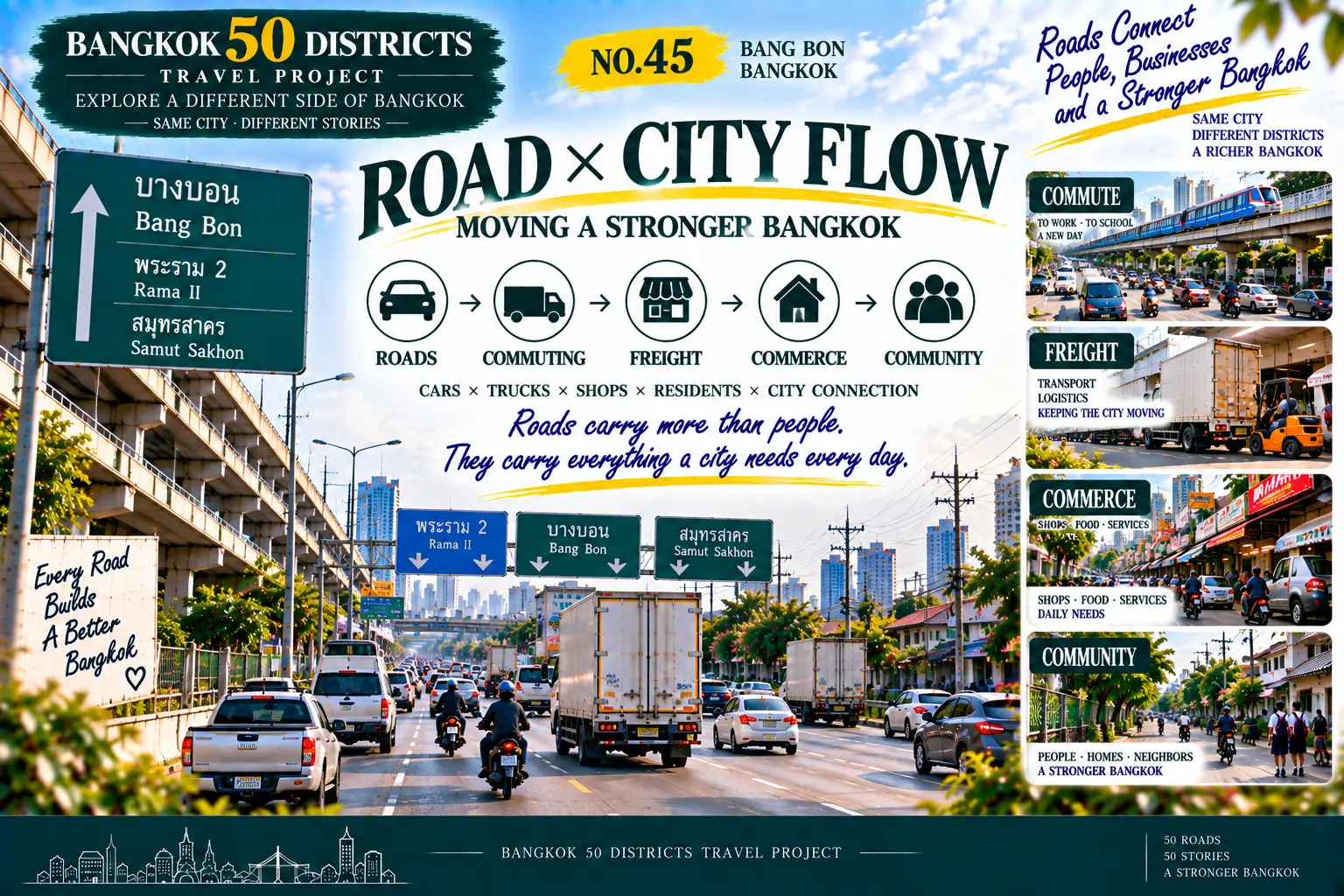
ROAD × CITY FLOW
ROADS
↓
COMMUTING
↓
FREIGHT
↓
COMMERCE
↓
COMMUNITY
CARS × TRUCKS × SHOPS × RESIDENTS × CITY CONNECTION
**Roads carry more than people.
They also carry what the city needs every day.**
03|Workspaces × City Life
When people think of Bangkok,
they often think first of:
Shopping malls.
Hotels.
Restaurants.
Office towers.
But the city also contains
countless workplaces that rarely appear in travel photographs.
Warehouses.
Repair shops.
Small businesses.
Production spaces.
Logistics.
These places may look ordinary,
but they help keep the city functioning every day.
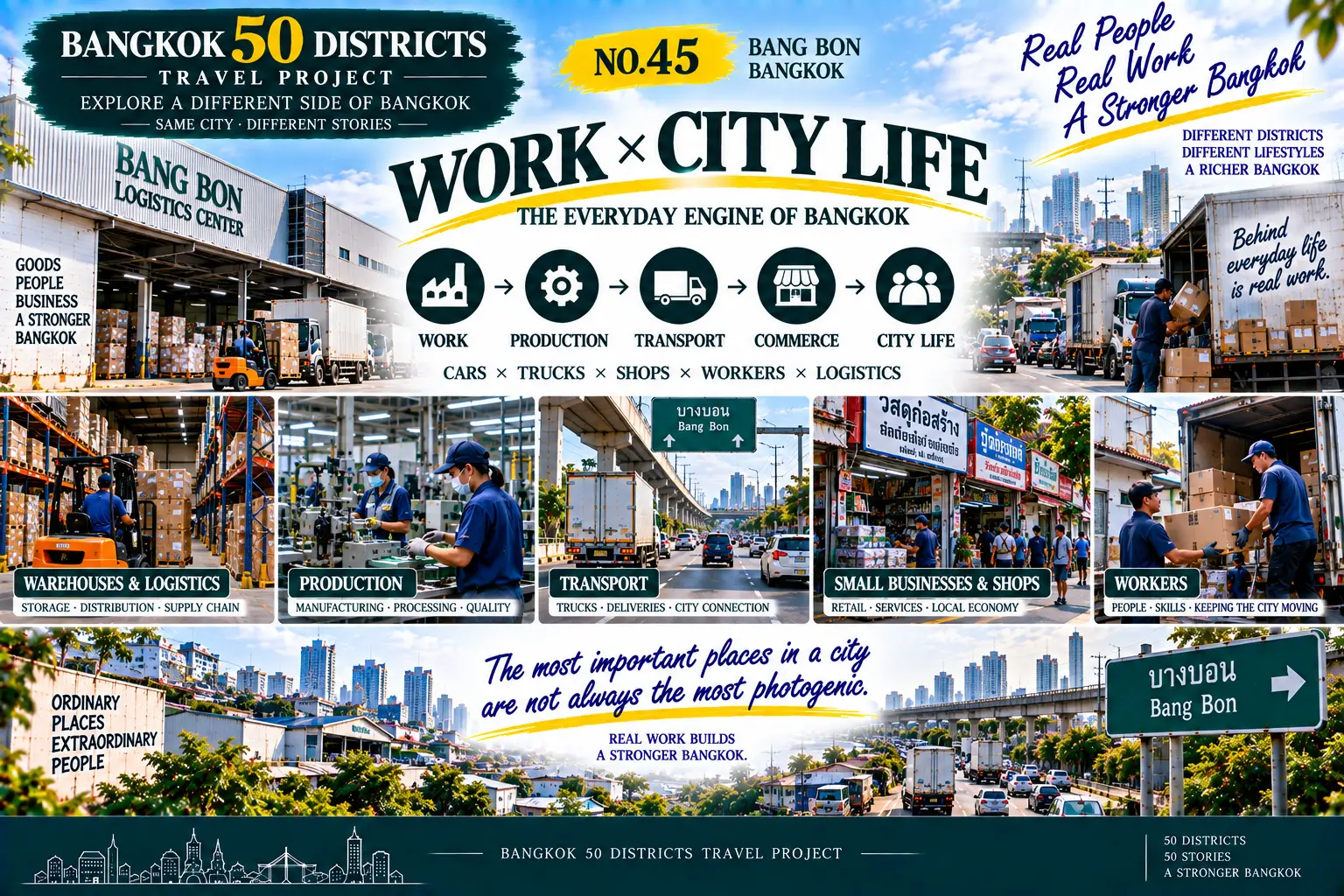
WORK × CITY LIFE
WORK
↓
PRODUCTION
↓
TRANSPORT
↓
COMMERCE
↓
CITY LIFE
WAREHOUSES × SMALL BUSINESSES × SHOPS × WORKERS × LOGISTICS
**The places most important to a city
are not always the most photogenic.**
04|Office Bangkok VS Working Bangkok
“Work” in Bangkok
does not happen only inside glass office towers.
On one side:
Office buildings.
Computers.
Meetings.
Business districts.
Rail transit.
On the other:
Warehouses.
Shops.
Repairs.
Transport.
Local businesses.
Both sides are working.
They simply represent
very different forms of urban work.
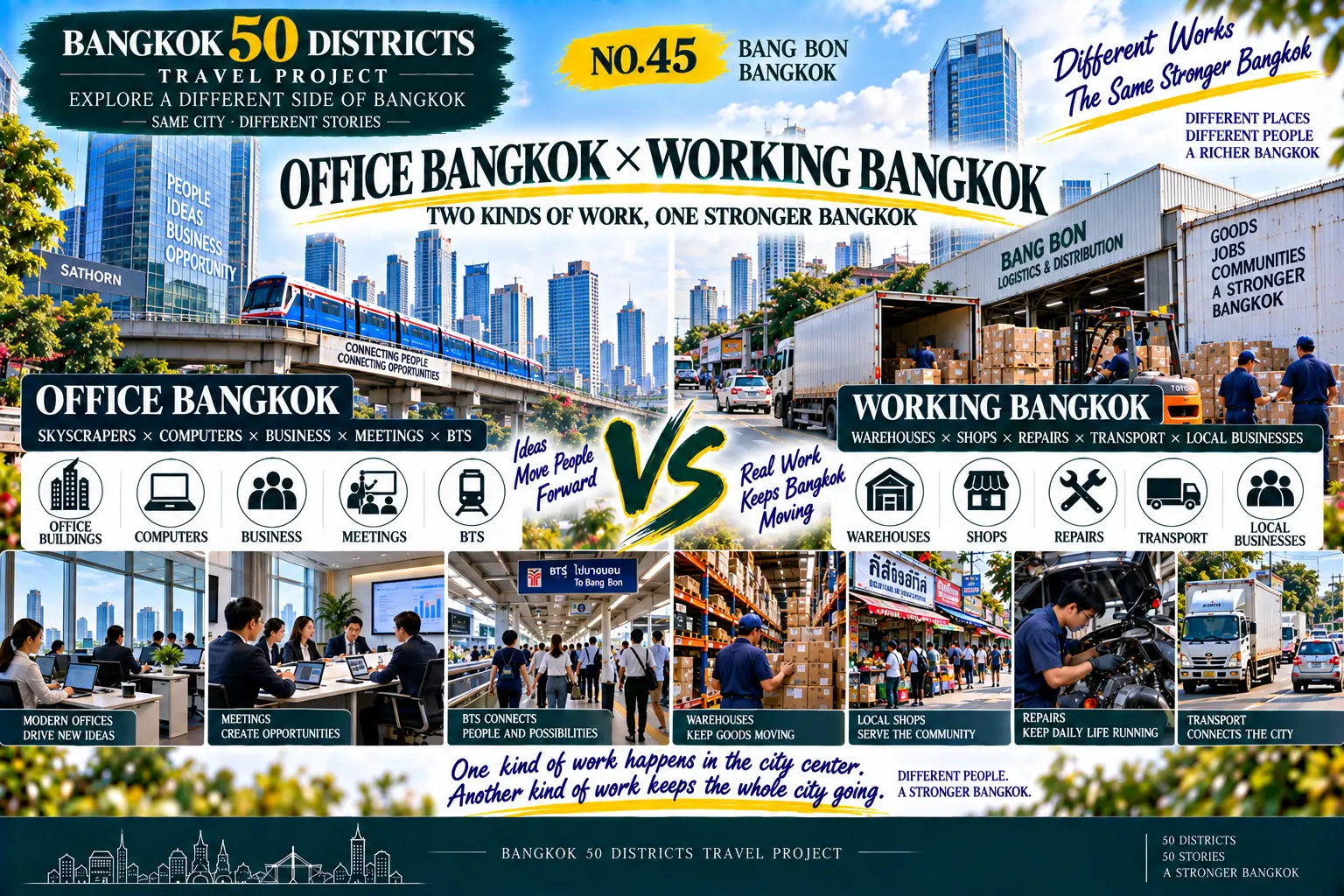
OFFICE × WORKING
OFFICE
OFFICE TOWERS × COMPUTERS × BUSINESS × MEETINGS × BTS
VS
WORKING
WAREHOUSES × SHOPS × REPAIRS × TRANSPORT × LOCAL BUSINESSES
**One kind of work happens in the city center.
Another helps keep the entire city running.**
05|Why Do Local Markets Still Matter?
Even as the city continues to expand,
community markets remain important.
Breakfast.
Vegetables.
Fruit.
Prepared food.
Household goods.
Residents buy what they need every day.
Vendors run their businesses here.
Nearby workers come here for meals.
The market reconnects:
Work.
Homes.
Residents.
Commerce.
And everyday life.
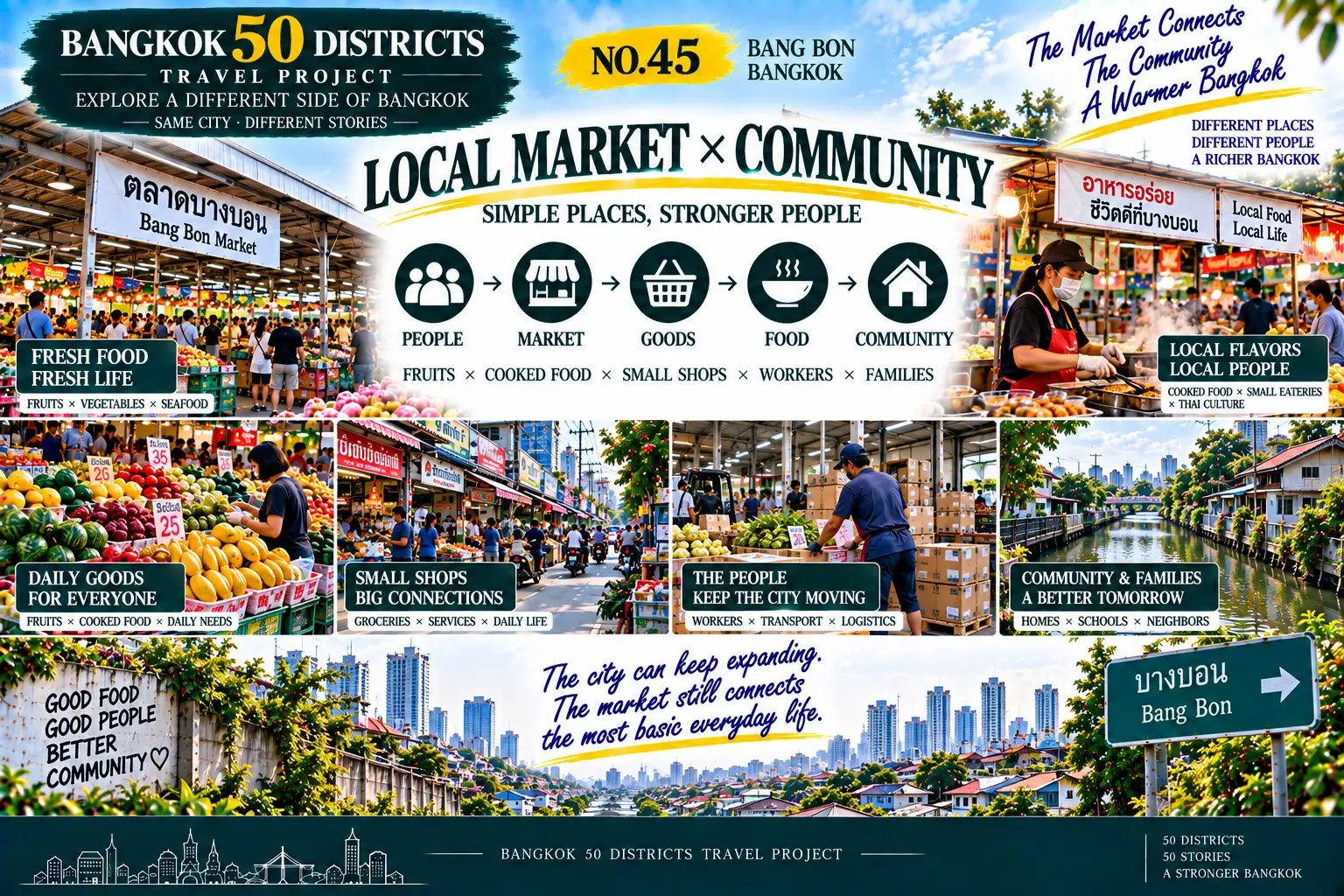
LOCAL MARKET × COMMUNITY
RESIDENTS
↓
MARKET
↓
GOODS
↓
FOOD
↓
COMMUNITY
FRUIT × LOCAL FOOD × SMALL SHOPS × WORKERS × FAMILIES
**The city can keep expanding.
Markets still connect the essentials of everyday life.**
06|Everyday Life in Bang Bon
A day in Bang Bon
begins with commuting.
In the morning,
students and workers leave their neighborhoods.
Trucks and delivery vehicles enter the roads.
At noon,
local restaurants and markets become busy.
In the afternoon,
work, commerce and community life continue.
By evening,
people return to their residential neighborhoods.
The rhythm of this district
is shaped by both work and everyday life.
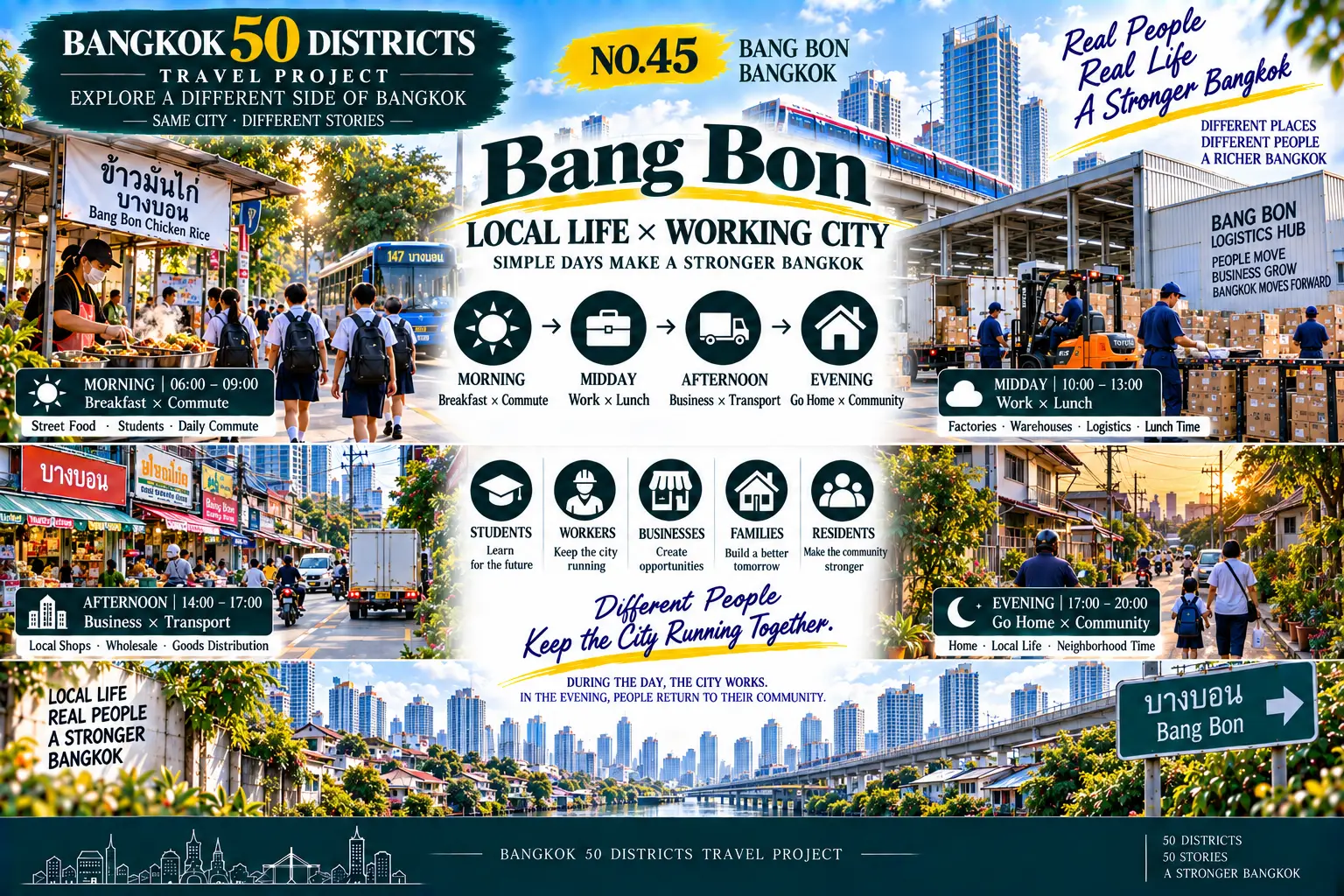
LOCAL LIFE × WORKING CITY
MORNING|BREAKFAST × COMMUTE
↓
NOON|WORK × LUNCH
↓
AFTERNOON|COMMERCE × TRANSPORT
↓
EVENING|GOING HOME × COMMUNITY
STUDENTS × WORKERS × VENDORS × FAMILIES × RESIDENTS
**By day, the city works.
By evening, people return to their communities.**
07|Tourist City VS Working City
When traveling,
we usually see the side of a city
that is designed to be seen.
Landmarks.
Temples.
Shopping malls.
Hotels.
Night views.
But for a city to function,
it also needs another set of spaces.
Roads.
Warehouses.
Markets.
Repair shops.
Homes.
Communities.
Without these places,
the Bangkok familiar to visitors
could not function normally either.
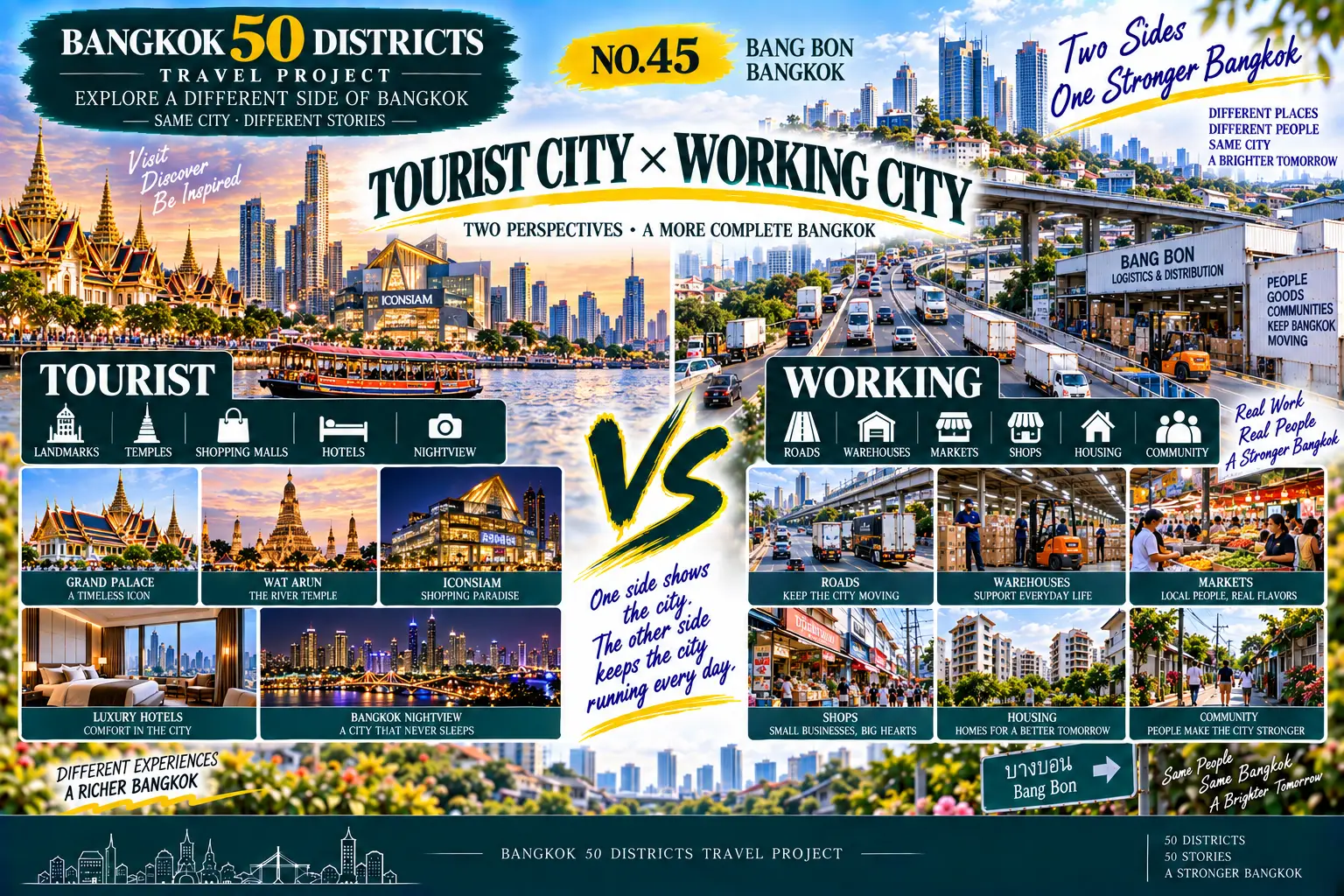
TOURIST × WORKING
TOURIST
LANDMARKS × TEMPLES × SHOPPING MALLS × HOTELS × NIGHT VIEWS
VS
WORKING
ROADS × WAREHOUSES × MARKETS × SHOPS × HOMES × COMMUNITY
**One side presents the city.
The other keeps the city running every day.**
08|A One-Day Bang Bon Travel Plan
This stop
is not about collecting tourist attractions.
Instead,
follow:
“Roads → Work → Markets → Community”
and observe an ordinary day in a working city.
09:00|Depart Central Bangkok
Travel toward southwestern Bangkok.
10:00|Pass Through Nong Khaem
Move from the quieter urban edge toward Bang Bon.
10:30|Enter Bang Bon
Observe how roads and urban spaces begin to change.
12:00|Local Lunch
Eat somewhere frequented by nearby residents and workers.
13:30|Market × Commerce
See how the local community economy functions.
15:00|Workspaces × Local Roads
Discover a Bangkok beyond the tourist map.
16:30|Homes × Canals × Community
Return to residential neighborhoods and local life.
18:00|Local Road × Evening
End the day with the evening flow of people returning home.
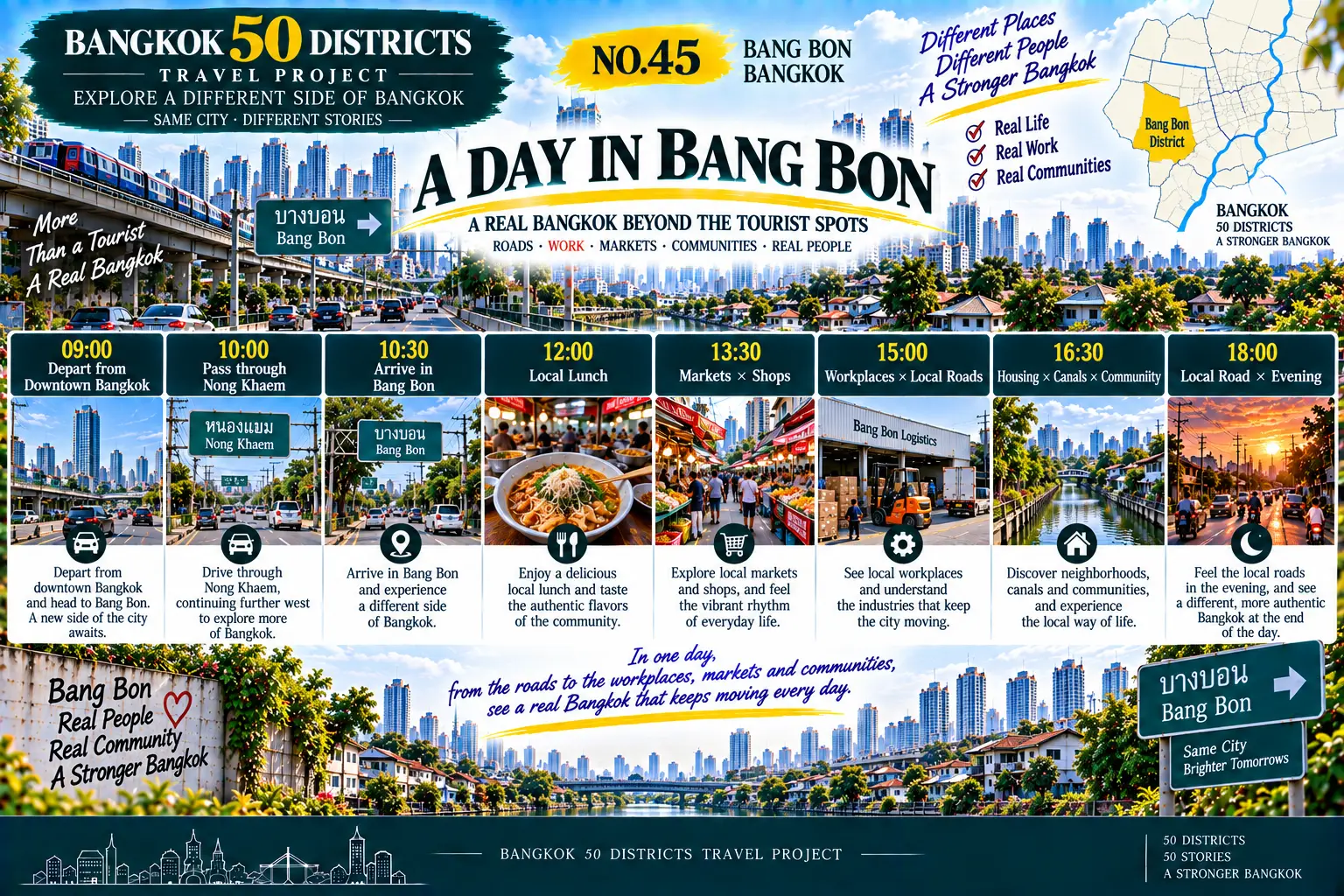
09:00|DEPART CENTRAL BANGKOK
10:00|PASS THROUGH NONG KHAEM
10:30|ENTER BANG BON
12:00|LOCAL LUNCH
13:30|MARKET × COMMERCE
15:00|WORKSPACES × LOCAL ROADS
16:30|HOMES × CANALS × COMMUNITY
18:00|LOCAL ROAD × EVENING
**One day,
from roads into workplaces, markets and communities,
discovering a Bangkok that truly works every day.**
09|Why Is Bang Bon Worth This Stop?
Because travel can easily create the illusion
that cities are made of attractions.
But real cities do not work that way.
Someone cooks.
Someone runs a shop.
Someone transports goods.
Someone repairs things.
Someone makes deliveries.
Someone goes to school.
Someone goes to work.
Someone goes home.
These ordinary activities
rarely appear in tourism brochures.
Yet they are what keep a city functioning every day.
What makes Bang Bon worth exploring
is not one particular building
or one must-see attraction.
It is this:
**After the tourist camera moves away, Bangkok continues to work and live.**
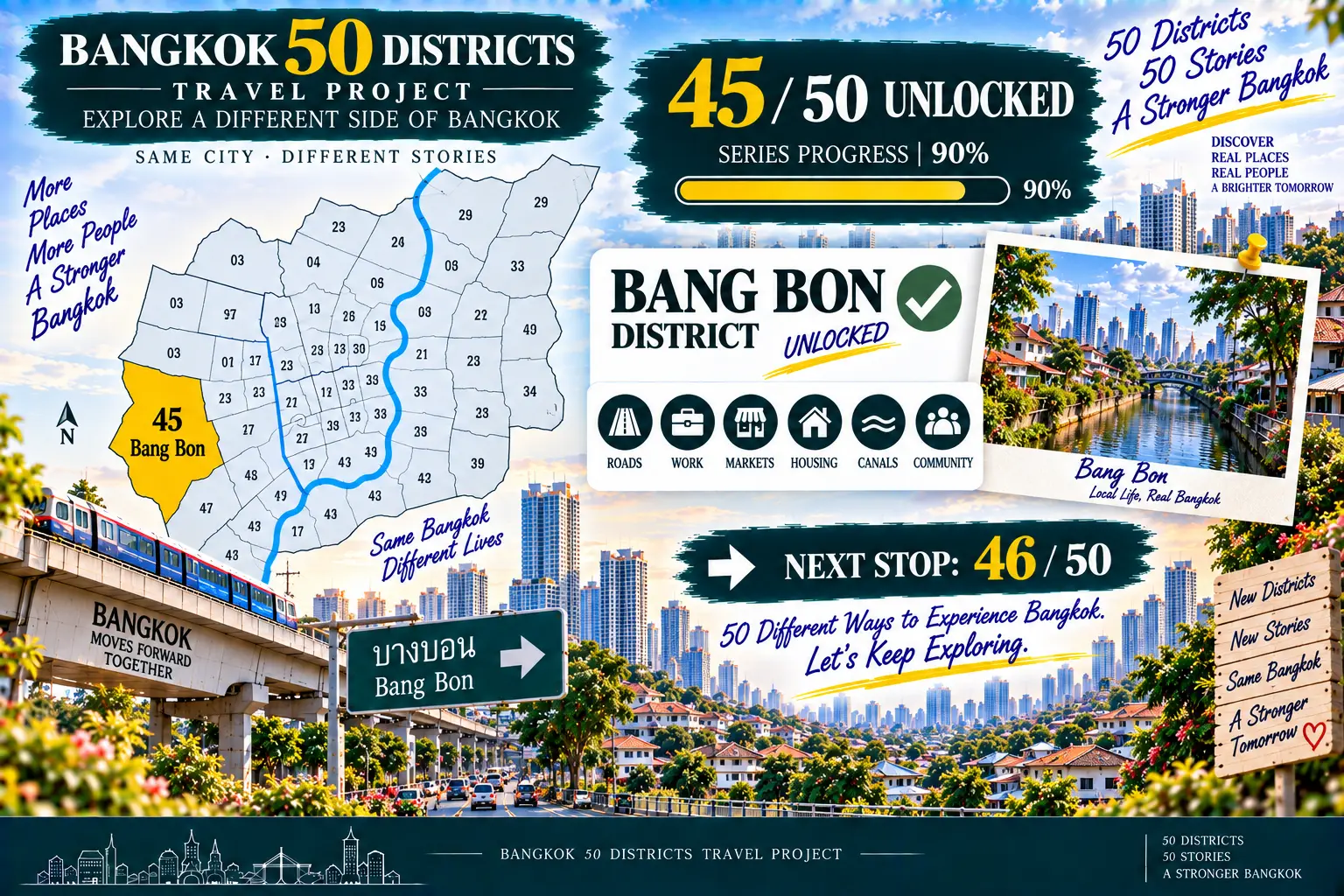
BANGKOK 50 DISTRICTS TRAVEL PROJECT
**45 / 50 UNLOCKED**
BANG BON ✓
SERIES PROGRESS|90%
ROADS × WORK × MARKETS × HOMES × CANALS × COMMUNITY
NEXT STOP: 46 / 50
**50 districts.
50 different ways of life.
Keep exploring Bangkok.**