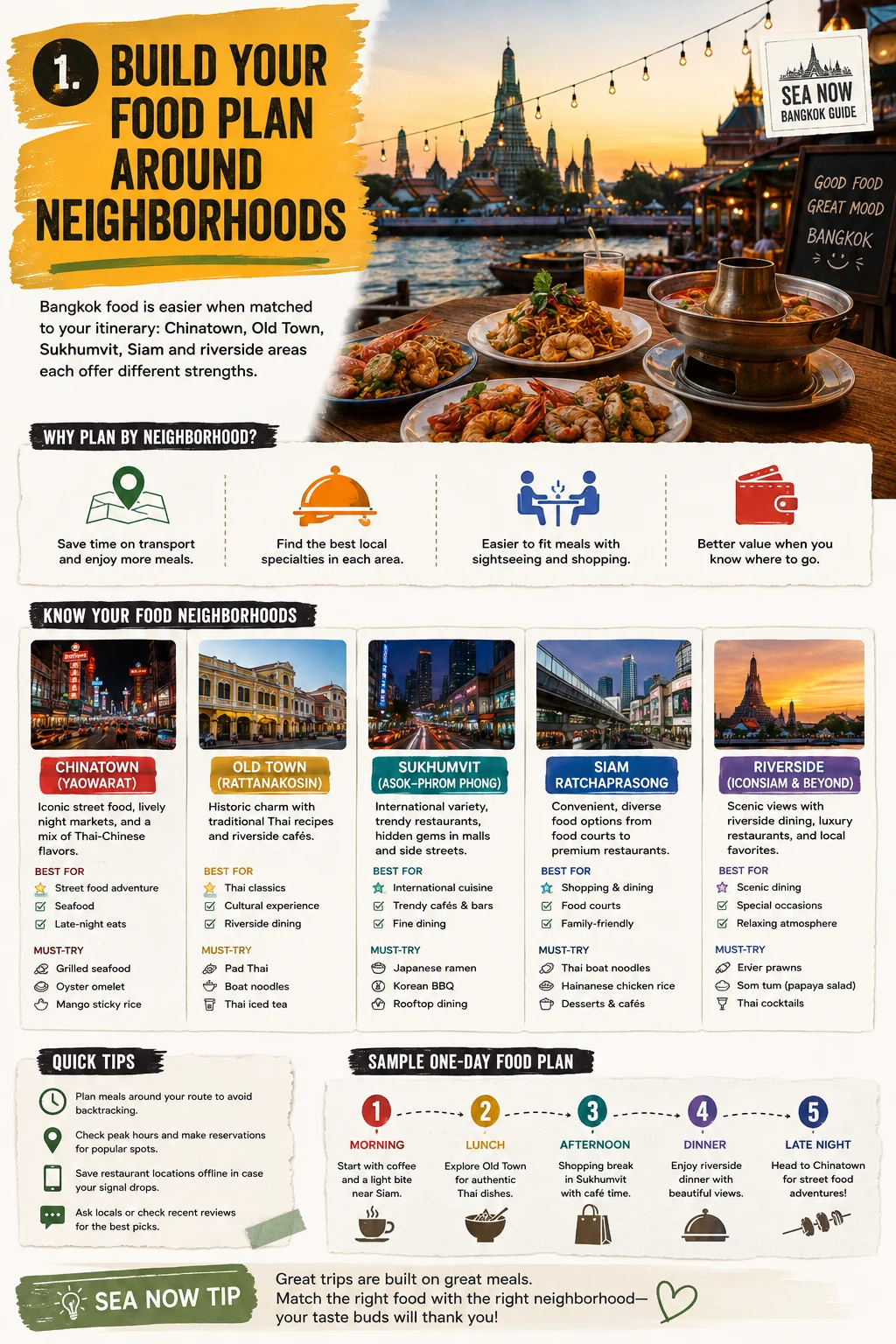
1. Build your food plan around neighborhoods
Bangkok food is easier when matched to your itinerary: Chinatown, Old Town, Sukhumvit, Siam and riverside areas each offer different strengths.
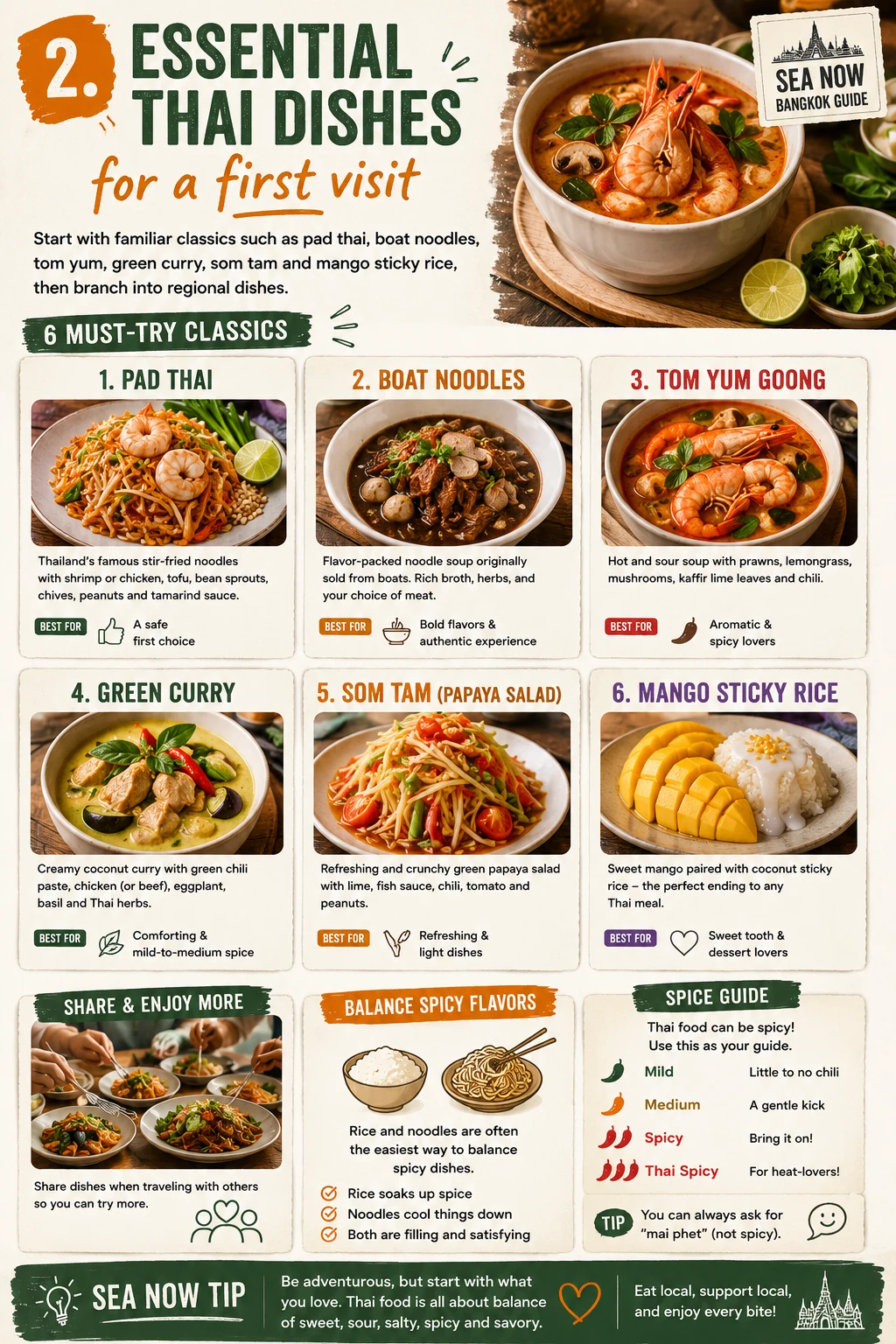
2. Essential Thai dishes for a first visit
Start with familiar classics such as pad thai, boat noodles, tom yum, green curry, som tam and mango sticky rice, then branch into regional dishes.
- Share dishes when traveling with others so you can try more.
- Rice and noodles are often the easiest way to balance spicy dishes.
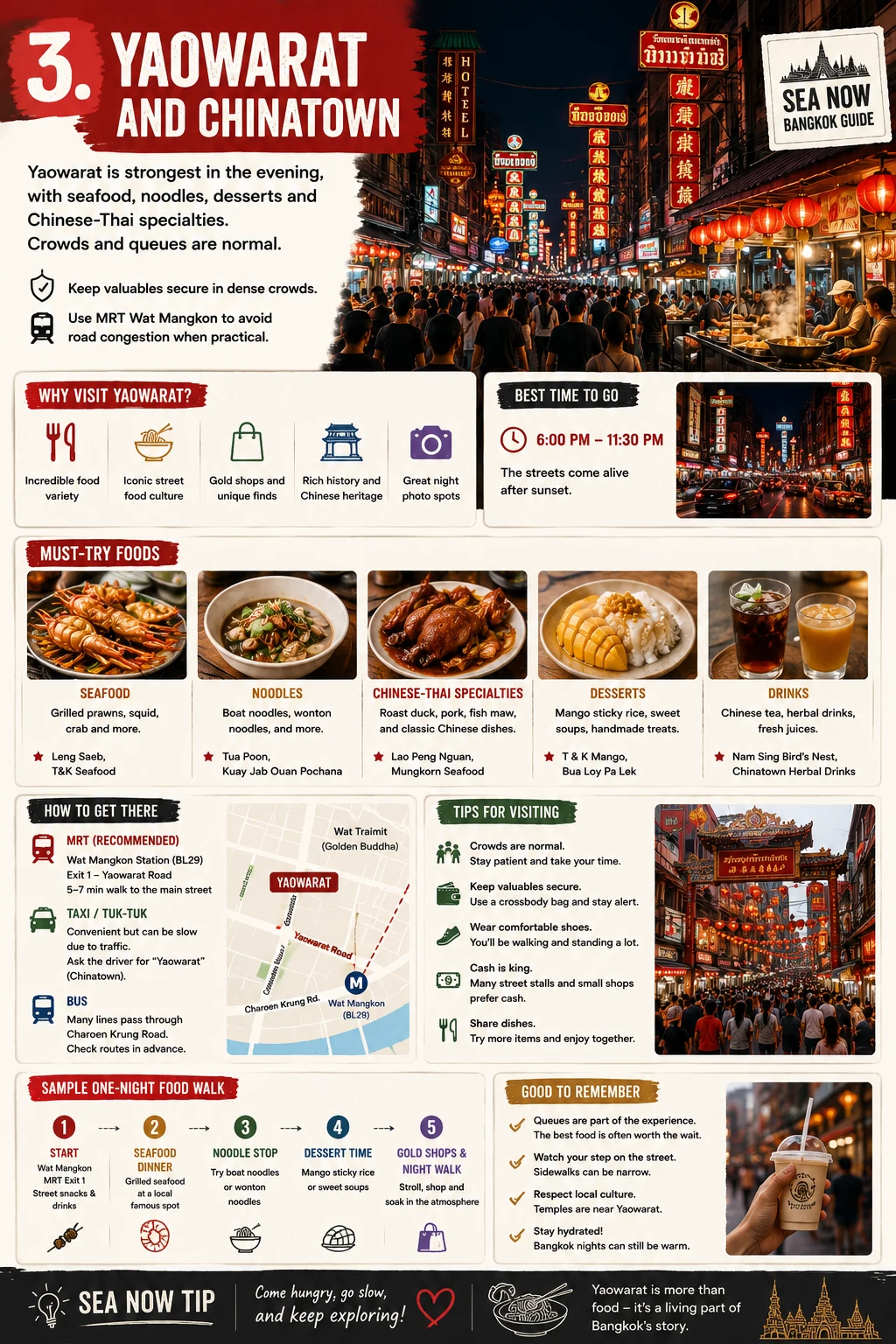
3. Yaowarat and Chinatown
Yaowarat is strongest in the evening, with seafood, noodles, desserts and Chinese-Thai specialties. Crowds and queues are normal.
- Keep valuables secure in dense crowds.
- Use MRT Wat Mangkon to avoid road congestion when practical.
4. Mall food courts and restaurants
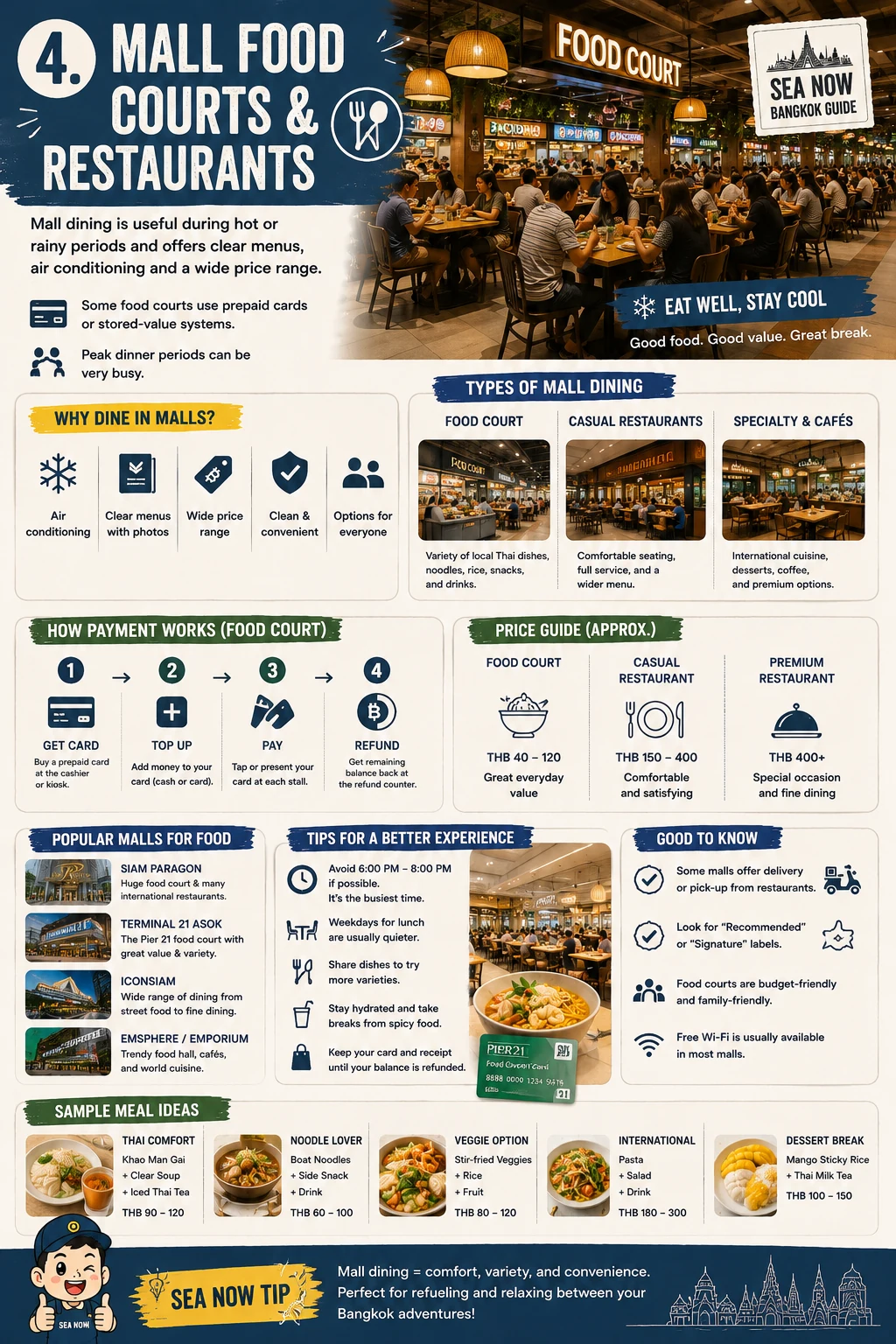
Mall dining is useful during hot or rainy periods and offers clear menus, air conditioning and a wide price range.
- Some food courts use prepaid cards or stored-value systems.
- Peak dinner periods can be very busy.
5. Markets and street food
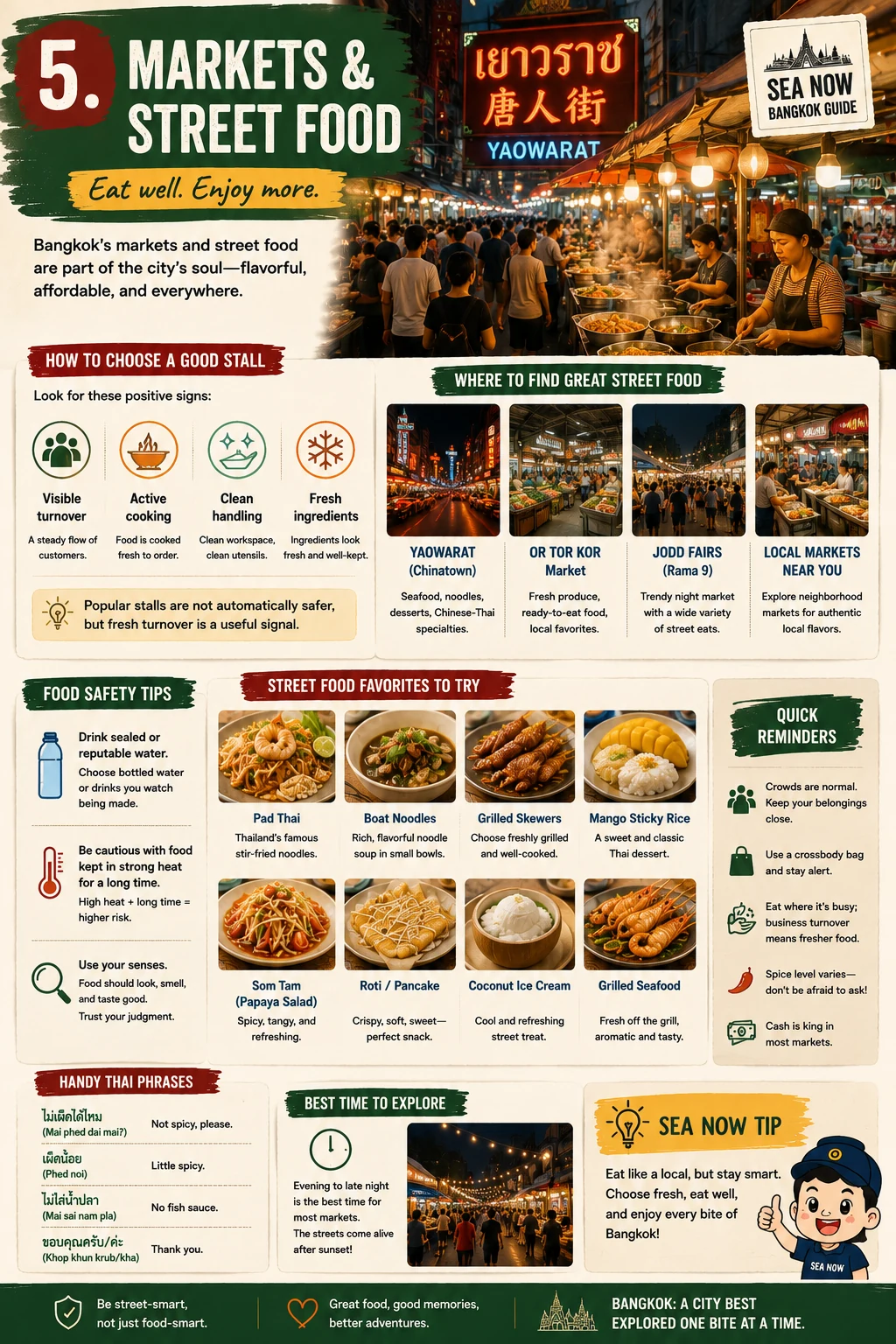
Choose stalls with visible turnover, active cooking and clean handling. Popular stalls are not automatically safer, but fresh turnover is a useful signal.
- Drink sealed or reputable water.
- Be cautious with food that has been sitting in strong heat for a long time.
6. Ordering and spice levels
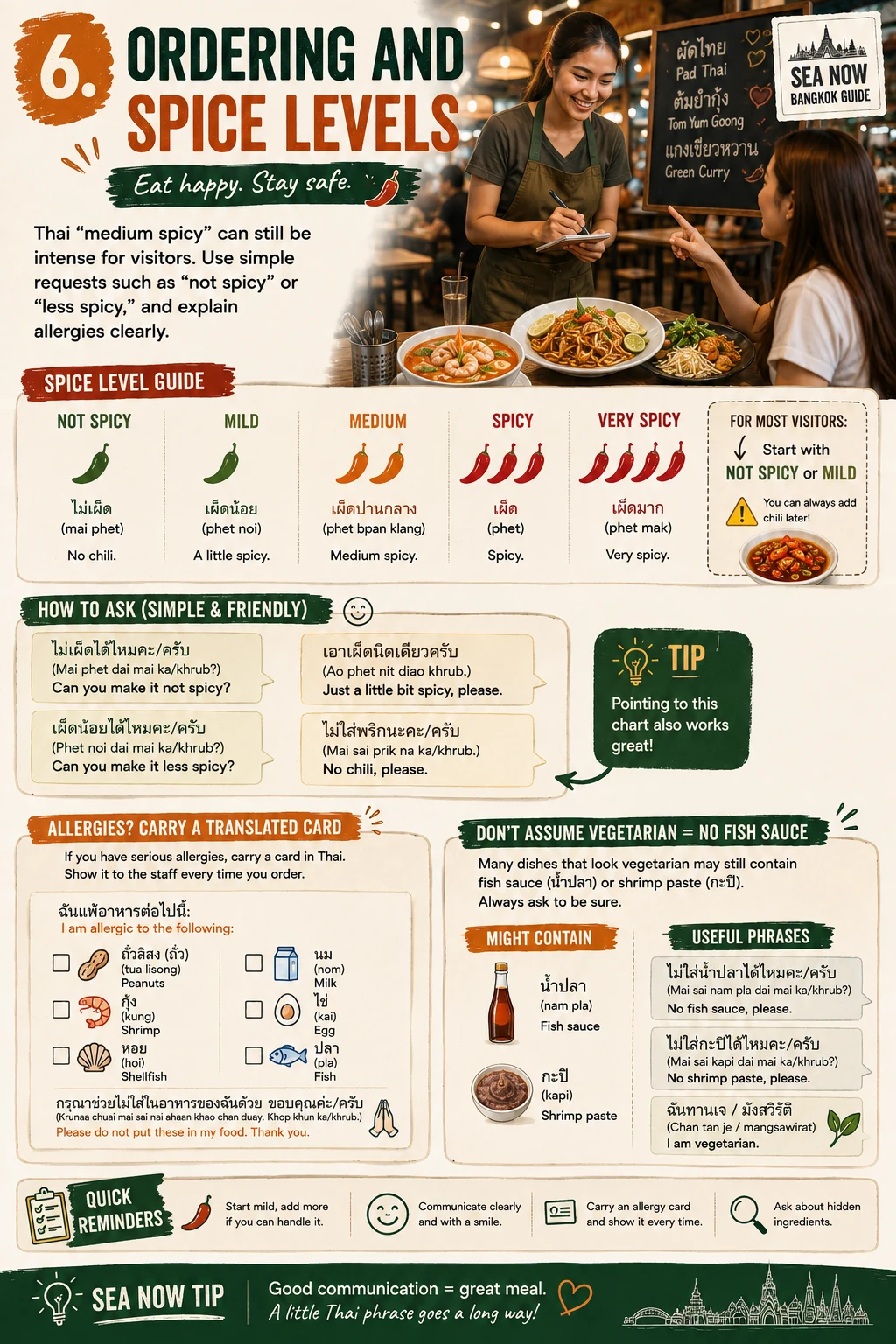
Thai “medium spicy” can still be intense for visitors. Use simple requests such as “not spicy” or “less spicy,” and explain allergies clearly.
- If you have serious allergies, carry a translated allergy card.
- Do not assume vegetarian dishes exclude fish sauce or shrimp paste.
7. Budgeting for meals
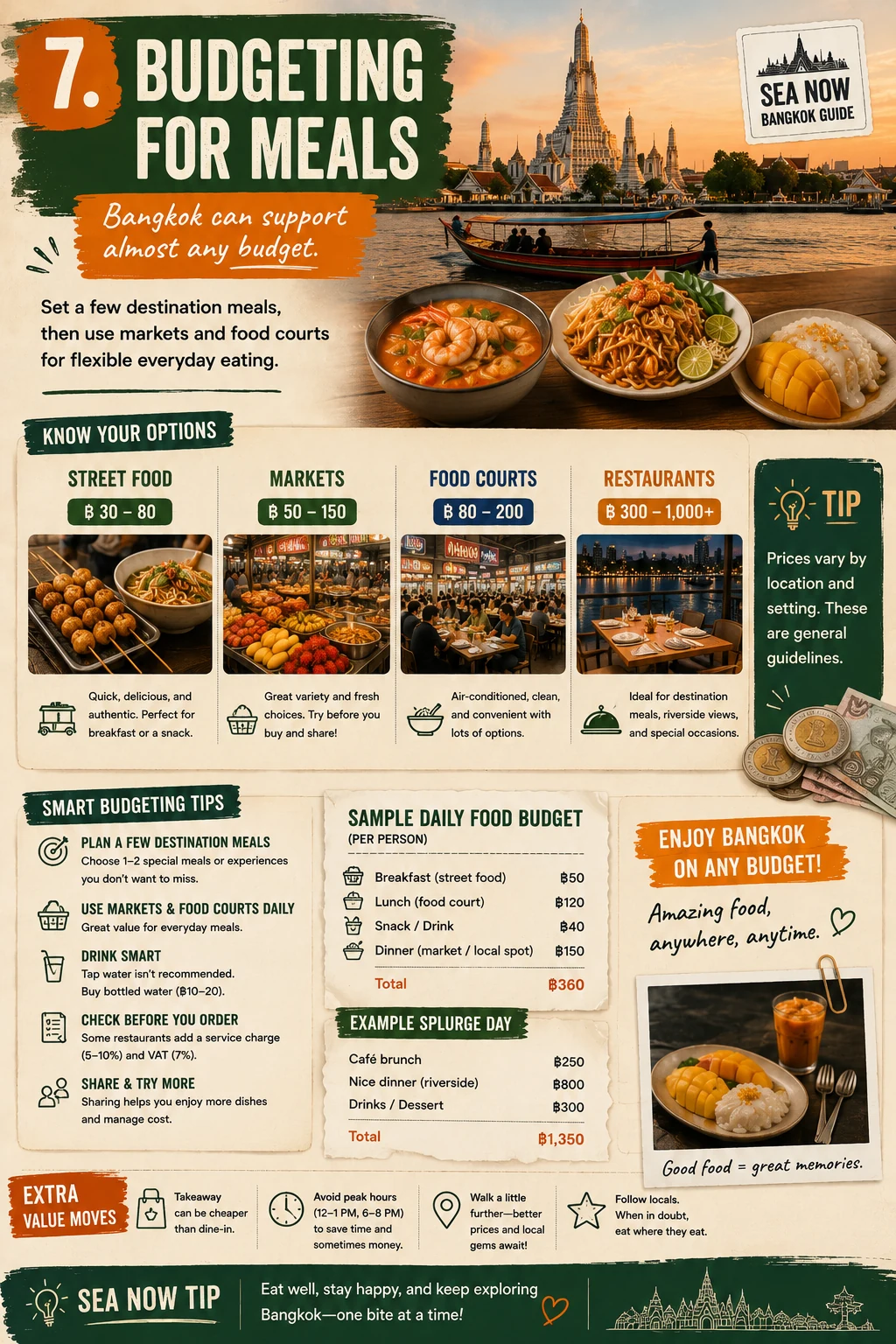
Bangkok can support almost any budget. Set a few destination meals, then use markets and food courts for flexible everyday eating.
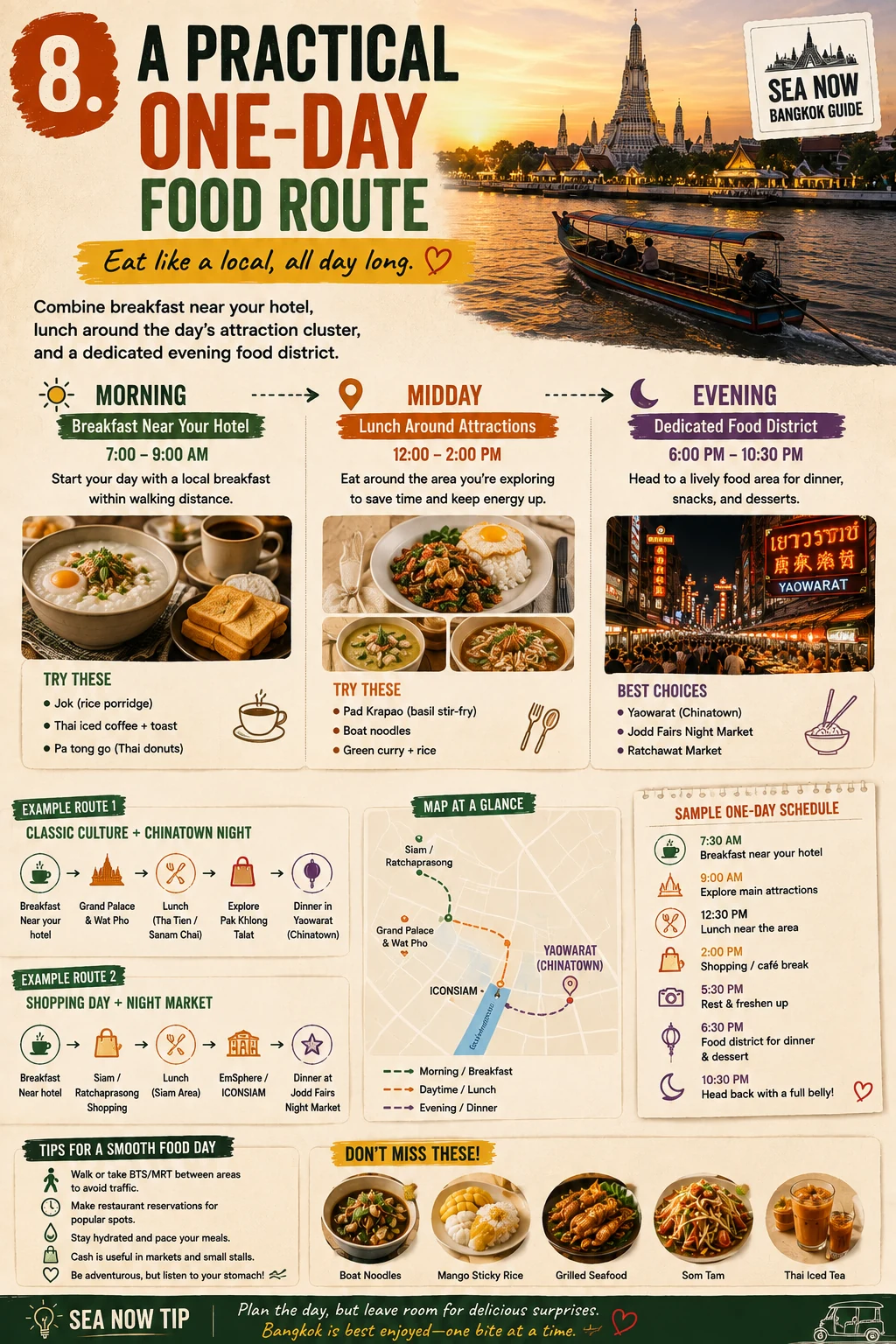
8. A practical one-day food route
Combine breakfast near your hotel, lunch around the day’s attraction cluster, and a dedicated evening food district such as Yaowarat or a night market.
Frequently Asked Questions
Is Bangkok street food safe?
Many travelers eat it without problems, but choose high-turnover stalls, observe hygiene and use your own risk tolerance.
How do I ask for less spicy food?
Use “less spicy” or “not spicy,” and show a translated note if needed.
Final pre-trip check
Save important addresses, bookings, transport plans, passport details and emergency contacts offline. Recheck time-sensitive information on the day you travel.