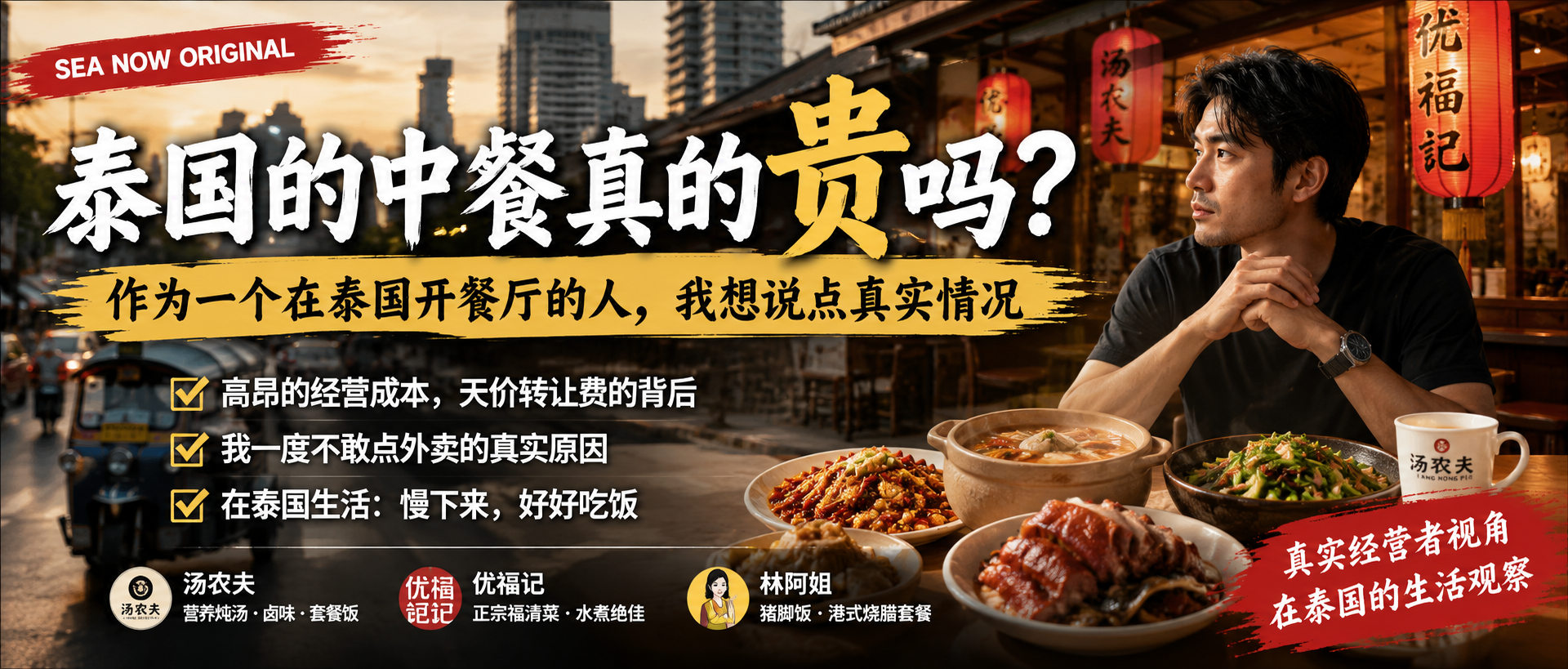
泰国的中餐真的贵吗?作为一个在泰国开餐厅的人,我想说点真实情况
从“中餐为什么贵”,到我后来为什么一度不敢点外卖——这是一个在泰国生活、也真正经营餐厅的人看到的餐饮另一面。
01|泰国的中餐真的贵吗?
在泰国生活久了,经常能看到一个讨论:为什么泰国的中餐这么贵?
一份炒菜、一份水煮、一顿火锅,换算成人民币以后,有些人的第一反应是:这个价格在国内都能吃得很好了。
这句话我完全能理解。但作为一个已经在泰国生活了几年,同时自己也实际经营餐厅的人,我的答案是:泰国的中餐确实不便宜,但我不认为“贵”就等于不值。
至少对那些每天采购新鲜食材、有真实堂食门店、有稳定厨房和有经验厨师的中餐厅来说,消费者看到的菜单价格背后,还有很多看不到的经营成本。
02|为什么价格很难做到和国内一样?
真正开始做餐饮以后,我才发现很多成本以前根本不会注意。
最明显的就是店铺。热门区域的转让费、租金和二手转租成本可能非常高,有些店经过多次转手以后,价格已经被一层层抬高。作为外国经营者,在谈店铺和转让时,也可能遇到对方认为“中国经营者预算更高”的情况。
当然,这不是说所有泰国房东或所有店铺都这样。但从我自己的经营经历来看,高转让费、高租金以及不透明的转租成本,确实会直接增加一家实体餐厅的压力。
再加上人工、水电、设备、损耗、食材、厨房维护,这些都是每天真实发生的成本。所以如果问我为什么泰国中餐不能直接卖国内的价格,最简单的答案就是:我们承担的并不是国内的经营成本。
03|贵一点,但真正的实体餐厅应该给你什么?
我自己也是餐饮经营者,所以我更不想替所有价格高的餐厅找理由。价格高不代表一定好,也不代表消费者就应该接受。
一家餐厅到底值不值,我最看重的是:食材是不是新鲜、厨房是不是稳定、厨师有没有经验、有没有真实可以堂食和接受检查的经营场所。
我们自己的菜品每天都是新鲜供应,厨师也都是做了很多年的熟手。真正经营堂食门店,需要长期维持食材、后厨、卫生、人员和环境,这些东西最终买到的不应该只是一盘菜,也包括食品安全、稳定性和责任。
所以如果一家实体餐厅认真把这些事情做好,价格比国内高一些,我自己是能够理解的,也认为它值得这个价格。
04|真正让我改变饮食习惯的,其实是外卖
刚到泰国的时候,我也很懒。工作完不想出门,手机打开外卖软件,点完以后等骑手送到门口,特别方便。
有一段时间我甚至可以连续很多天都靠外卖解决。但慢慢地,我开始碰到一些质量很差、甚至让我怀疑制作环境的外卖。那段时间我真的对外卖产生过恐惧,甚至一度不太敢点。
后来接触餐饮越来越多,我才慢慢意识到:问题不是“外卖”本身,而是你到底在向谁点外卖。
05|外卖软件里的一家“店”,现实里可能完全不是你想象的样子
手机里看到的是漂亮的商品图、设计过的店名、Logo、套餐、促销和折扣。看起来每一家都像成熟餐厅。
但现实里,有些经营主体可能只做外卖,没有面对消费者营业的实体堂食门店;也有一些地址、厨房环境和实际经营主体很难确认。
这类模式经常被统称为 Ghost Kitchen,也就是“幽灵厨房”。需要特别说明:幽灵厨房这种商业模式本身并不等于黑作坊。正规的外卖专营厨房一样可以依法经营、做好卫生和食品安全。
真正需要警惕的是那些经营主体、实际地址和制作环境都很难核实,却通过精美包装让消费者误以为自己在向一家正规实体餐厅下单的店铺。
06|现在我点外卖,会先确认这家店到底是谁
我现在点一家完全没吃过的外卖,会比以前多花一分钟。
我会看看它有没有公开的经营地址,有没有真实招牌,地图上能不能找到,是否有长期经营痕迹,店铺信息是不是透明。
因为外卖平台会把不同类型的经营者放在同一个界面里。一家开了很多年的实体餐厅,和一家消费者完全不了解实际厨房情况的外卖店,在屏幕上可能只是上下两张差不多漂亮的菜单。
消费者很容易被包装好的页面打断判断。所以我的建议一直很简单:点陌生外卖之前,先确认实际经营信息。
07|来泰国以后,其实可以多出去吃饭
在泰国住久以后,我越来越喜欢这里的一点,就是生活真的可以慢一点。
有时候下班之后,与其回家躺着点外卖,我更愿意出去走一走,找一家店坐下来,点几个菜,看着街上的人,慢慢把饭吃完。
堂食还有一个很直接的好处:你可以看到餐厅在哪里,可以看到环境、工作人员和真实经营状态。
而且泰国本地美食本身就非常丰富。来泰国生活或旅行,不妨多尝尝本地人的店。如果确实吃不惯泰餐,曼谷现在也已经有足够多认真做菜的中餐选择。
08|自己做餐饮以后,我反而更理解一顿饭的成本
我自己在泰国也经营几家不同类型的中餐店。
有做营养隔水炖汤、卤味和套餐饭的汤农夫;有做福清菜和炒菜的优福记;也有以猪脚饭、港式烧腊套餐为主的林阿姐。
这里提自己的店,不是想做推荐,所以我不放地址、不放联系方式,也不做“必吃榜”。
我只是想说,正因为自己真正参与经营以后,我才越来越理解:一家实体餐厅每天把门打开,看起来只是卖一顿饭,背后其实有太多消费者看不到的东西。
新鲜食材每天要采购,厨师要稳定,厨房要维护,员工要发工资,房租、水电、设备和损耗,每一样都真实存在。
我们当然希望生意好,但比一次生意更重要的是:客人今天在这里吃完,下一次还敢来。
09|我真正想说的,不是“泰国中餐一点都不贵”
它确实比国内贵,这是事实。
我真正想表达的是:不要只看到菜单上的数字。
一家真正经营实体店的餐厅,需要承担租金、转让、人工、食材、厨房、设备、水电以及各种持续经营成本。如果它每天认真采购食材,有稳定的厨师,有公开透明的实体门店,也愿意对食品和客人负责,那么贵一点,我能够理解。
反过来,一份外卖便宜几十泰铢,如果连它到底在哪里做出来的都无法确认,我现在反而会更加谨慎。
10|在泰国生活以后,我对“吃饭”最大的变化
以前我觉得方便最重要。
现在我反而觉得:安心更重要。
有时间,就出去走走,去一家真正的餐厅坐下来。想吃泰餐,就去发现本地的小店;想念中国味道,也有越来越多认真经营的中餐厅。
而如果一定要点外卖,我只有一个建议:不要只看外卖软件里的照片。看看它是谁,看看它在哪里,看看经营信息是不是公开透明。
因为最后真正重要的,从来不是一顿饭便宜了几十泰铢,而是:我们每天吃进嘴里的东西,究竟来自哪里。
本文基于作者在泰国长期生活与实际餐饮经营经历撰写。文中观点属于个人观察,不代表所有餐厅、房东、外卖平台或经营者。未经授权,请勿转载、复制或用于商业用途。
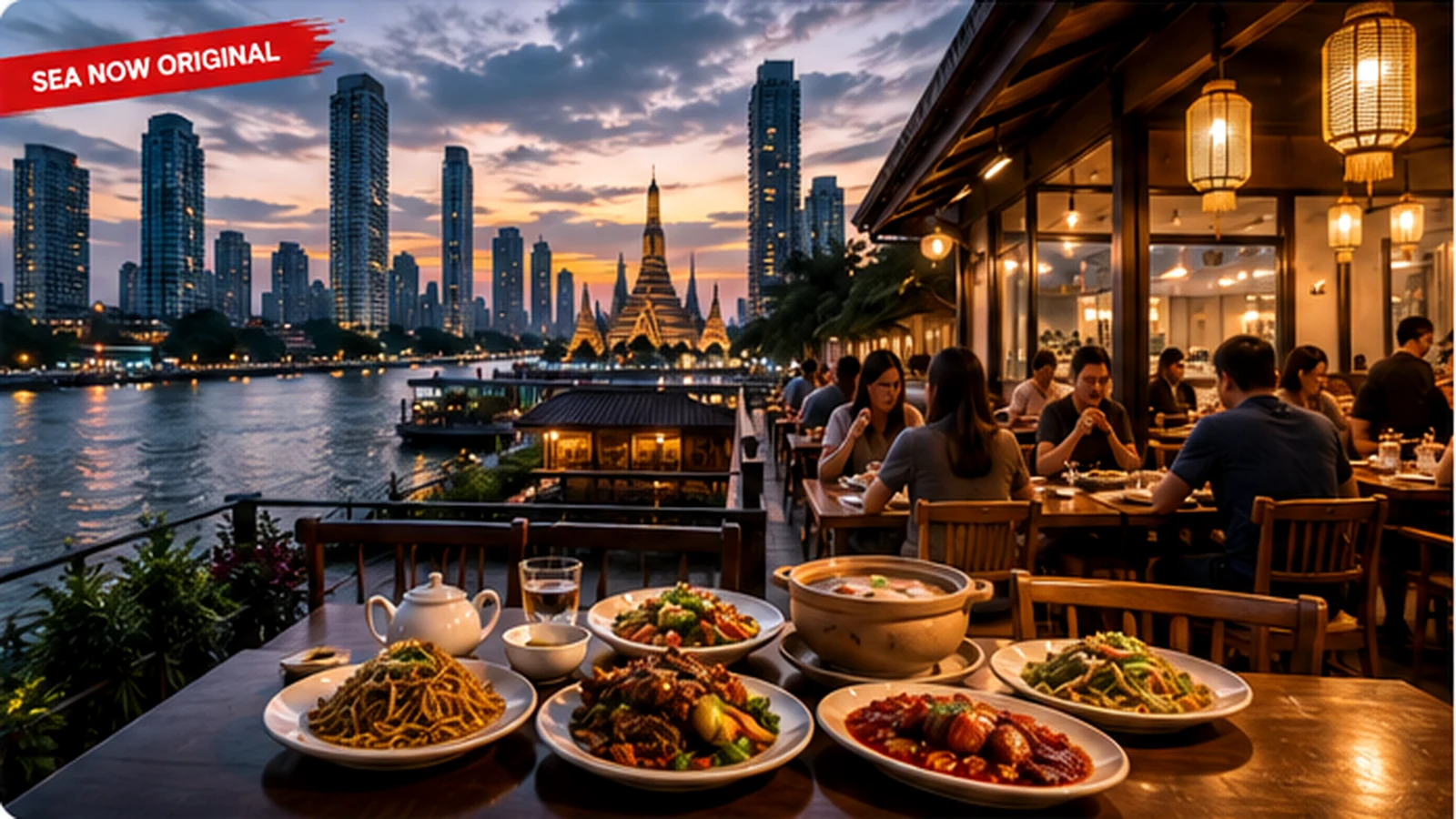
Is Chinese Food in Thailand Really Expensive? A Restaurant Operator’s Perspective
A first-person look at restaurant costs, dining quality, delivery-only kitchens and everyday eating in Thailand.
01 | Is Chinese Food in Thailand Really Expensive?
After living in Thailand for years, I often hear the same question: why is Chinese food here so expensive? I understand the reaction. A stir-fry, a spicy boiled dish or a hotpot can look costly when converted back into RMB. My answer is that Chinese food in Thailand is not cheap — but higher prices do not automatically mean poor value. For restaurants that buy fresh ingredients daily, run a real dine-in location, maintain a stable kitchen and employ experienced chefs, the menu price reflects much more than the plate in front of you.
02 | Why Prices Are Hard to Match With China
Once I began operating restaurants myself, I noticed costs I had never paid attention to as a customer. Shop transfer fees, rent and layered sublease costs in popular areas can be extremely high. Foreign operators may also encounter situations where people assume Chinese business owners have larger budgets. This is not every landlord or every property, but in my own experience, expensive transfers, high rents and opaque subleasing can materially increase the cost of running a physical restaurant. Labor, utilities, equipment, waste, ingredients and kitchen maintenance add to that every day.
03 | If a Restaurant Costs More, What Should You Get in Return?
I do not believe every expensive restaurant deserves to be defended. Higher prices do not guarantee quality. What matters to me is whether ingredients are fresh, the kitchen is stable, the chefs are experienced, and there is a real physical venue where customers can dine and where the operation can be inspected. A serious dine-in restaurant has to maintain food quality, hygiene, staff, kitchen equipment and the dining environment over time. When those things are done properly, I can understand paying more than I would in China.
04 | Delivery Changed My Eating Habits
When I first arrived in Thailand, I was lazy about meals and ordered delivery constantly. It was convenient, but over time I received some orders that were so poor I began to wonder what kind of kitchen they came from. For a while, I became genuinely reluctant to order delivery. Later, after getting deeper into the restaurant business, I realized the problem was not delivery itself. The real question was: who am I actually ordering from?
05 | A Storefront in an App May Not Be What You Imagine
On a delivery app, every business can look polished: attractive photos, a designed name and logo, bundles, promotions and discounts. But some operators may be delivery-only, with no dine-in storefront, and in other cases the real operating entity, address or kitchen environment may be difficult to verify. This is often described as a ghost kitchen. A ghost kitchen is not automatically a bad or unsafe business model — legitimate delivery-only kitchens can operate legally and maintain high hygiene standards. What deserves caution is an operator whose identity, address and production environment are hard to verify while the app presentation makes it look like a conventional restaurant.
06 | Now I Spend One Extra Minute Before Ordering
If I am ordering from a place I have never tried, I now check whether it has a public address, a real sign, a map listing, a history of operation and transparent business information. Delivery platforms place very different types of operators side by side in the same interface. A long-established restaurant and a kitchen a customer knows nothing about can appear as two equally polished menu cards. That makes it easy to judge by packaging instead of by the actual business.
07 | In Thailand, It Is Worth Going Out to Eat
One thing I have come to enjoy about living in Thailand is that life can move a little more slowly. After work, I often prefer to walk outside, sit down somewhere, order a few dishes and watch the city for a while rather than immediately going home and ordering delivery. Dine-in also gives you something very simple: you can see where the restaurant is, what the environment looks like, who works there and how openly the business operates. Thailand also has excellent local food, and I encourage visitors and residents to explore it.
08 | Running Restaurants Made Me Understand the Cost of a Meal
I operate several Chinese food concepts in Thailand myself: Tang Nong Fu, focused on nourishing double-boiled soups, braised dishes and set meals; You Fu Ji, focused on Fuqing-style dishes and stir-fries; and Lin A Jie, focused on pork leg rice and Hong Kong-style roast-meat sets. I am mentioning them for disclosure, not as a ranking or advertisement, so I am not adding addresses, prices, promotions or contact details. Operating these businesses has made the invisible cost of a physical restaurant much easier for me to understand.
09 | My Point Is Not That Chinese Food in Thailand Is Cheap
It is more expensive than in China. That is real. My point is simply that the number on the menu is not the whole story. A physical restaurant carries rent, transfer costs, labor, ingredients, kitchen equipment, utilities and ongoing operating expenses. If it buys ingredients seriously, has stable chefs, runs a transparent physical location and takes responsibility for customers and food safety, I can understand paying more.
10 | The Biggest Change in How I Eat
I used to think convenience mattered most. Now I think peace of mind matters more. If I have time, I would rather go out, sit in a real restaurant and have a proper meal. If I order delivery, I do not look only at the photos. I check who the business is, where it operates and whether the information is transparent. In the end, saving a few dozen baht matters less to me than knowing where the food I eat every day actually comes from.
This English edition is adapted from the author’s original Chinese-language first-person article.