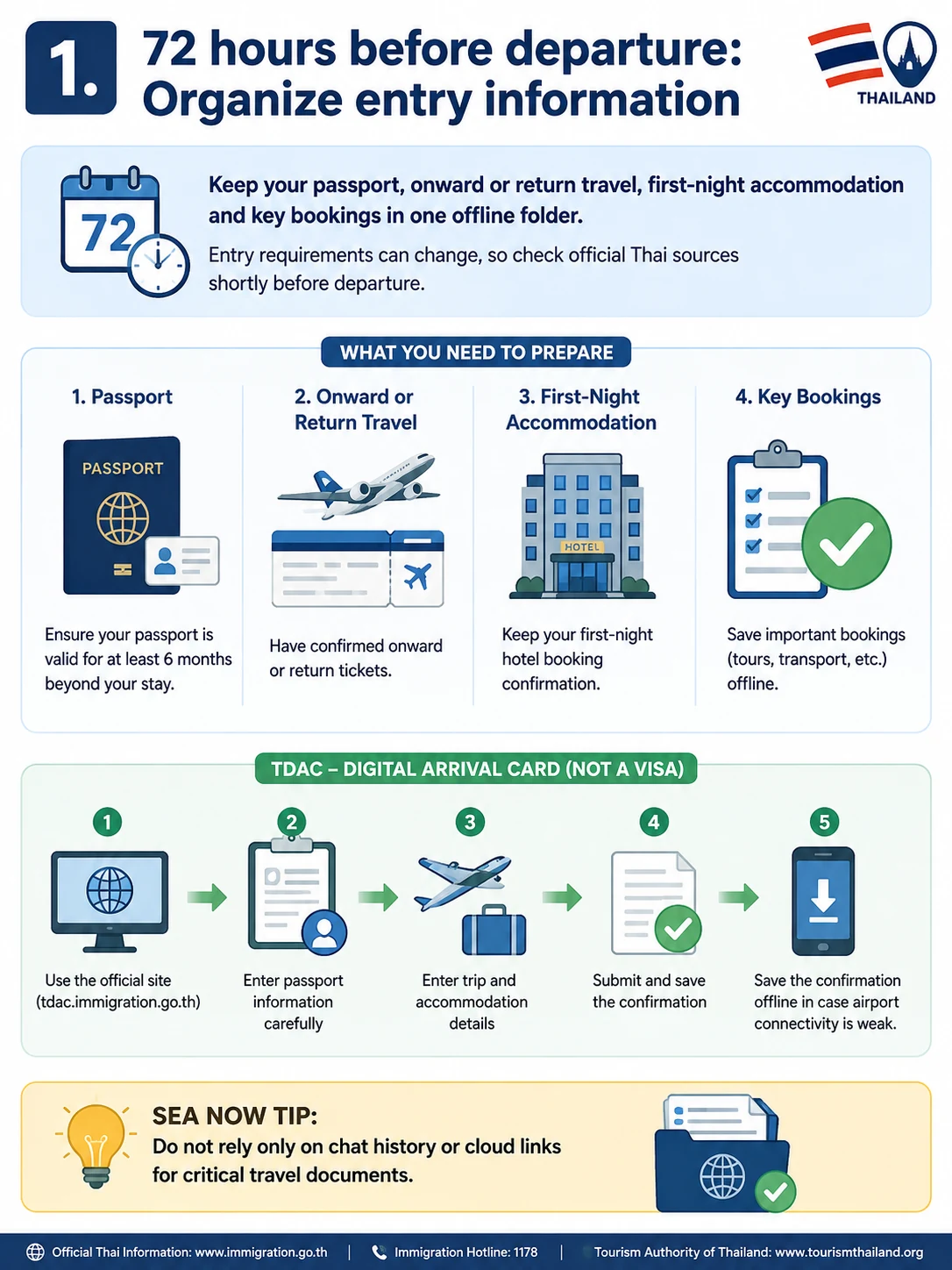
1. 72 hours before departure: organize entry information
Keep your passport, onward or return travel, first-night accommodation and key bookings in one offline folder. Entry requirements can change, so check official Thai sources shortly before departure.
- TDAC is a digital arrival card, not a visa.
- Use the official site and enter passport, trip and accommodation details carefully.
- Save the confirmation offline in case airport connectivity is weak.
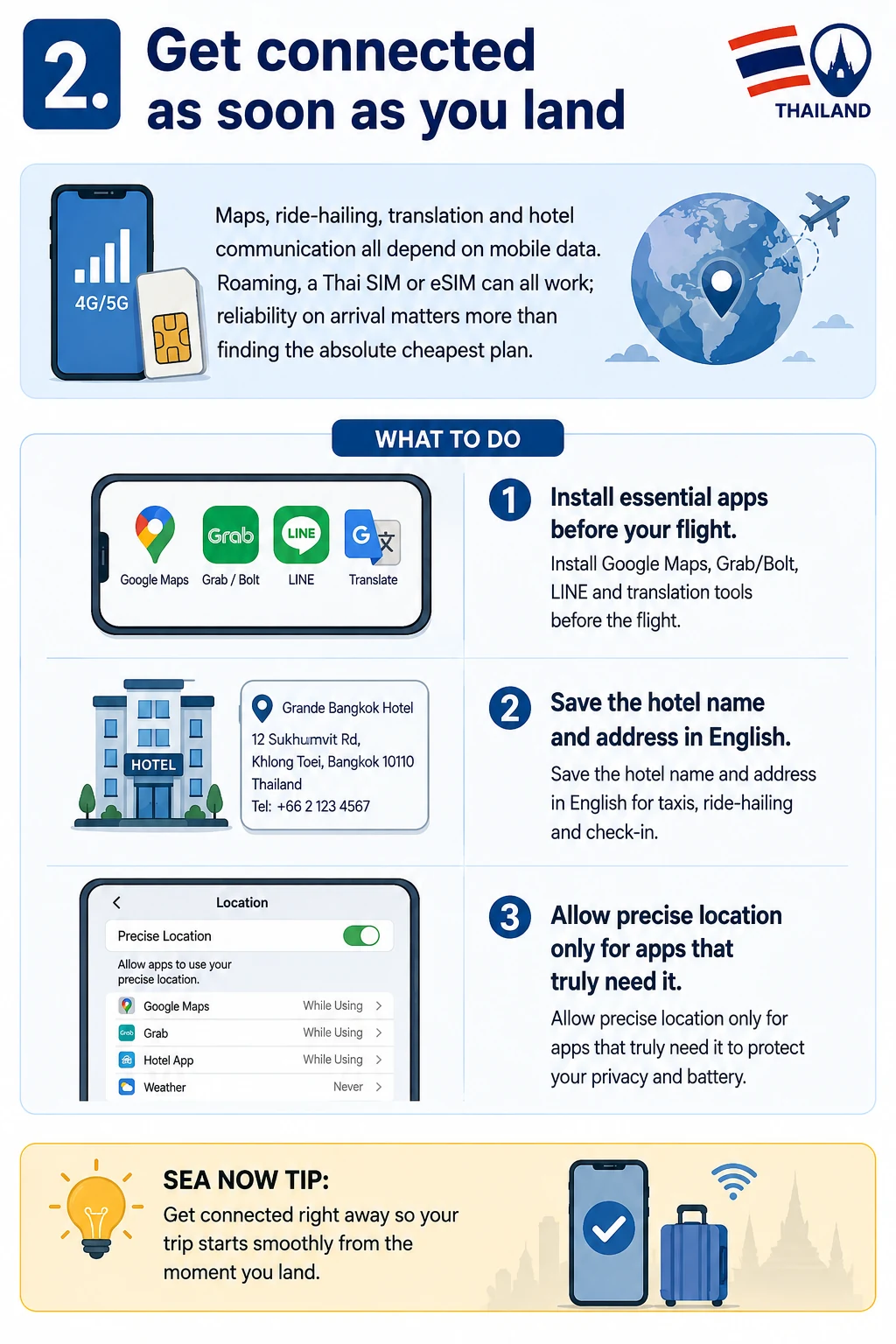
2. Get connected as soon as you land
Maps, ride-hailing, translation and hotel communication all depend on mobile data. Roaming, a Thai SIM or eSIM can all work; reliability on arrival matters more than finding the absolute cheapest plan.
- Install Google Maps, Grab/Bolt, LINE and translation tools before the flight.
- Save the hotel name and address in English.
- Allow precise location only for apps that truly need it.
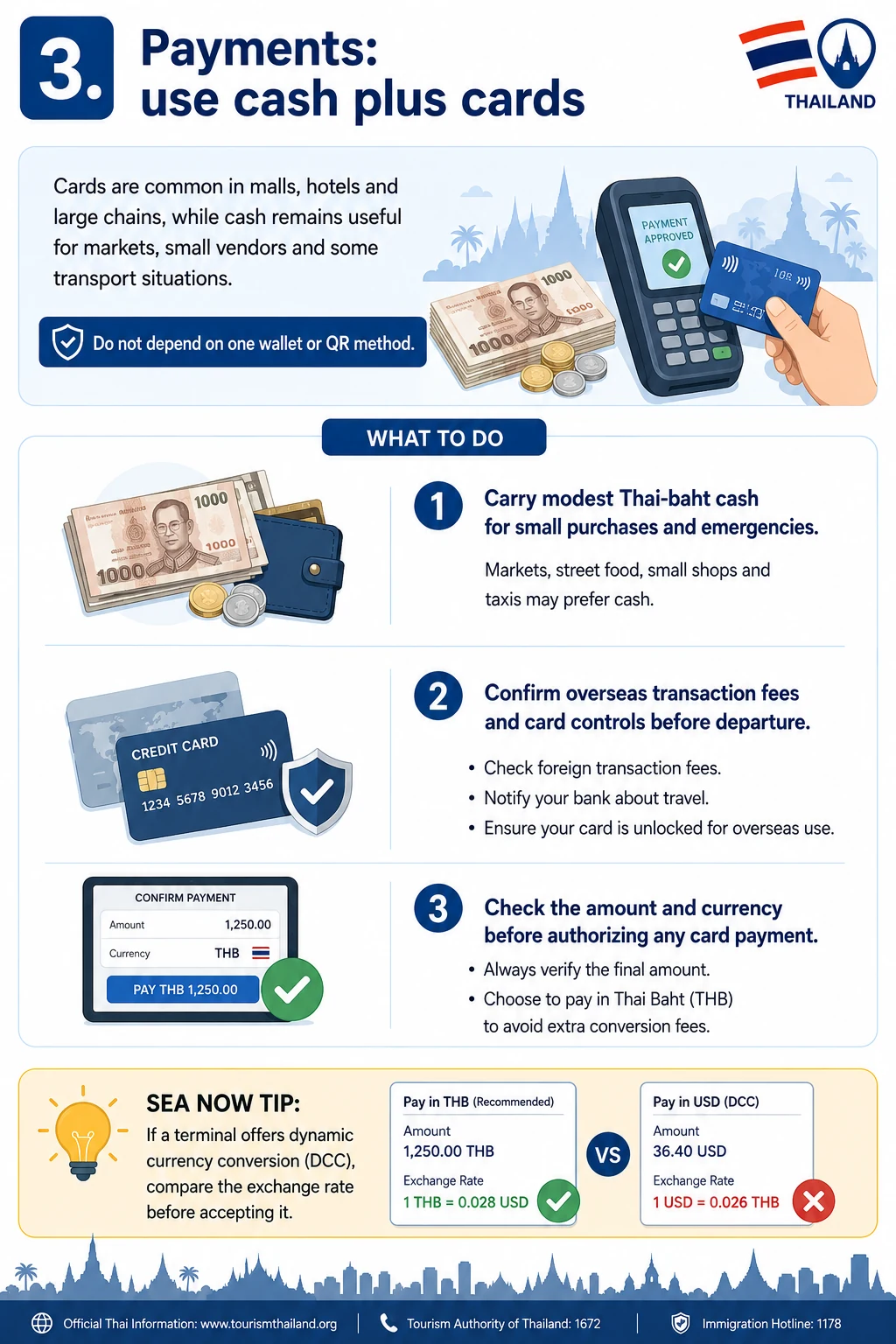
3. Payments: use cash plus cards
Cards are common in malls, hotels and large chains, while cash remains useful for markets, small vendors and some transport situations. Do not depend on one wallet or QR method.
- Carry modest Thai-baht cash for small purchases and emergencies.
- Confirm overseas transaction fees and card controls before departure.
- Check the amount and currency before authorizing any card payment.
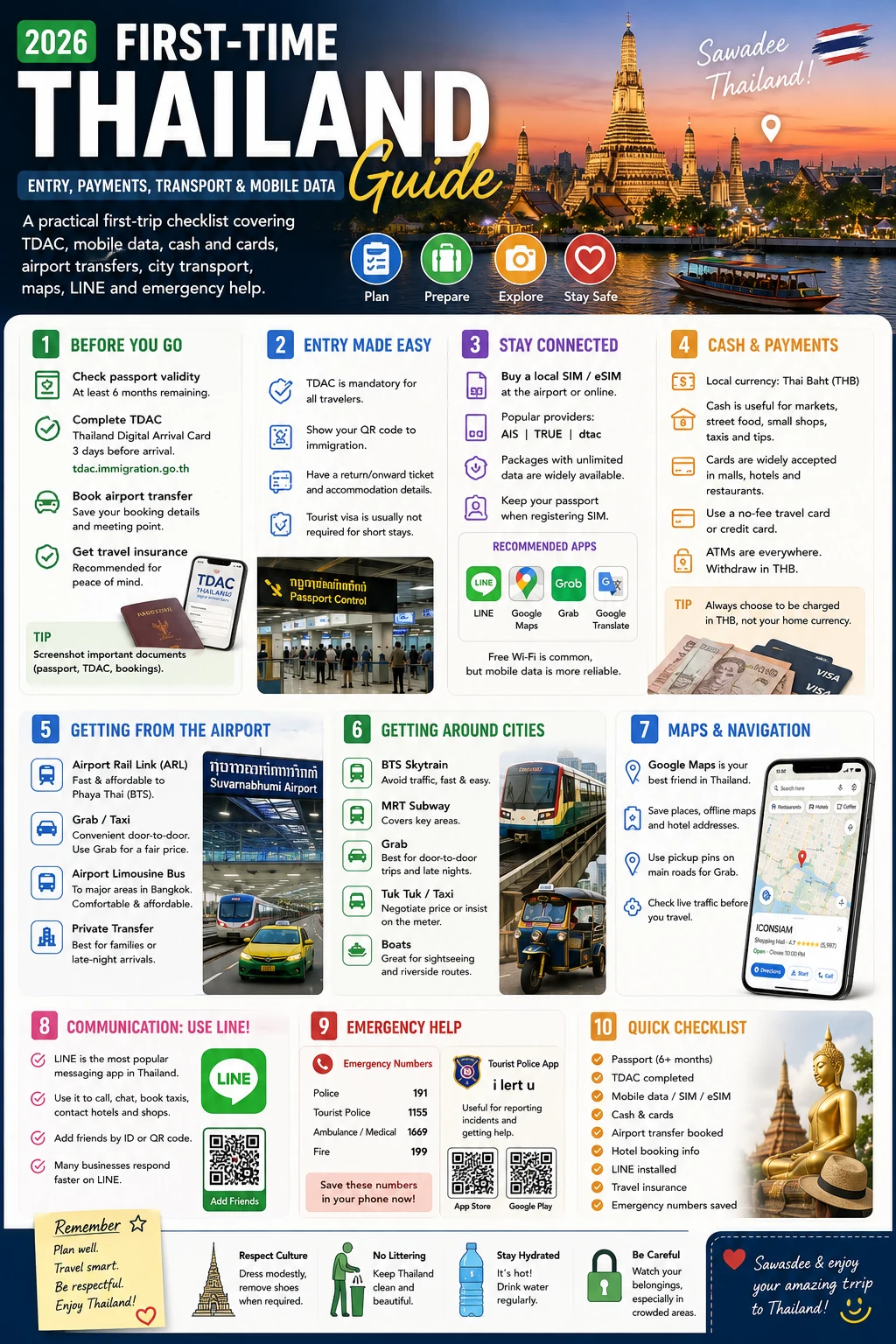
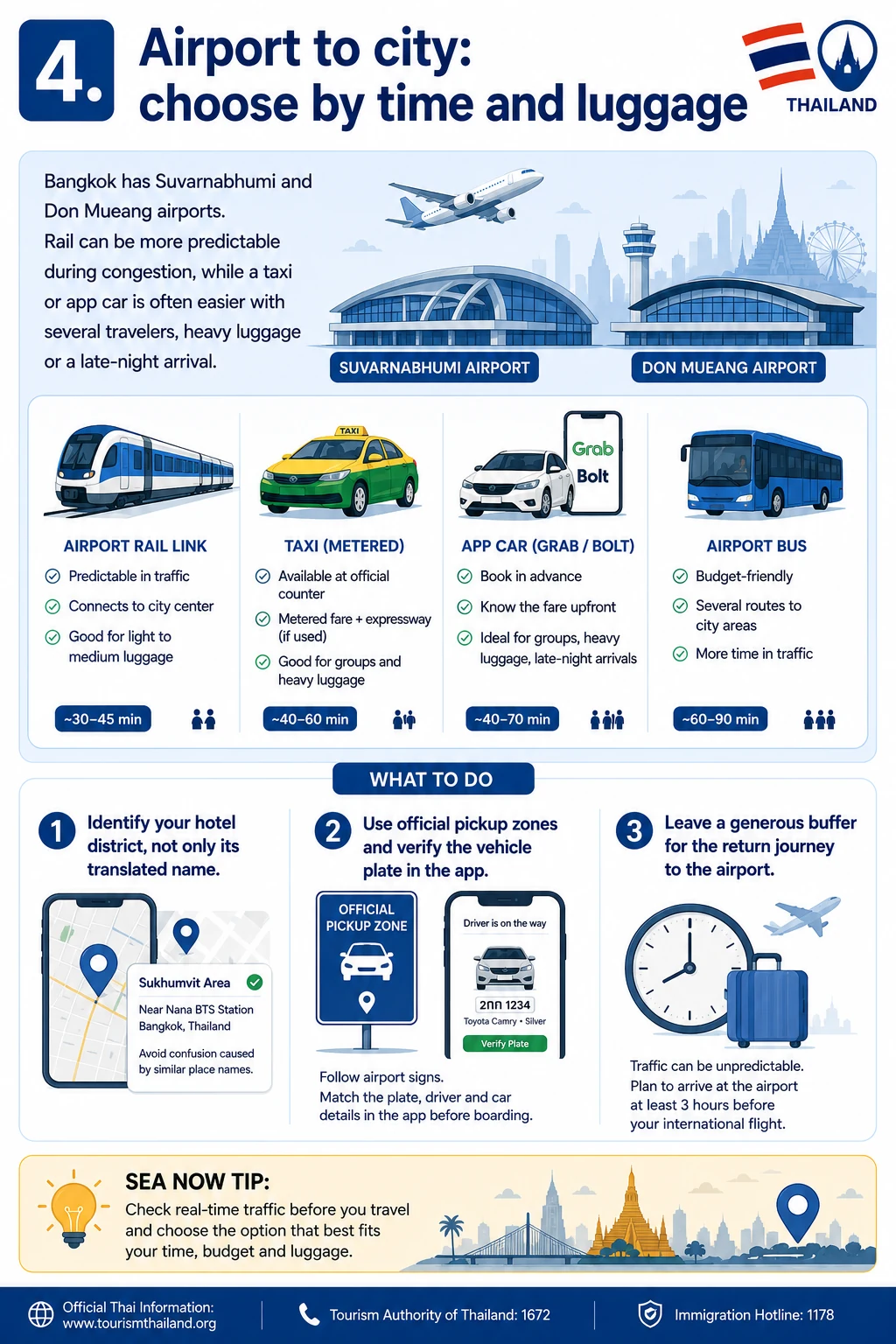
4. Airport to city: choose by time and luggage
Bangkok has Suvarnabhumi and Don Mueang airports. Rail can be more predictable during congestion, while a taxi or app car is often easier with several travelers, heavy luggage or a late-night arrival.
- Identify your hotel district, not only its translated name.
- Use official pickup zones and verify the vehicle plate in the app.
- Leave a generous buffer for the return journey to the airport.
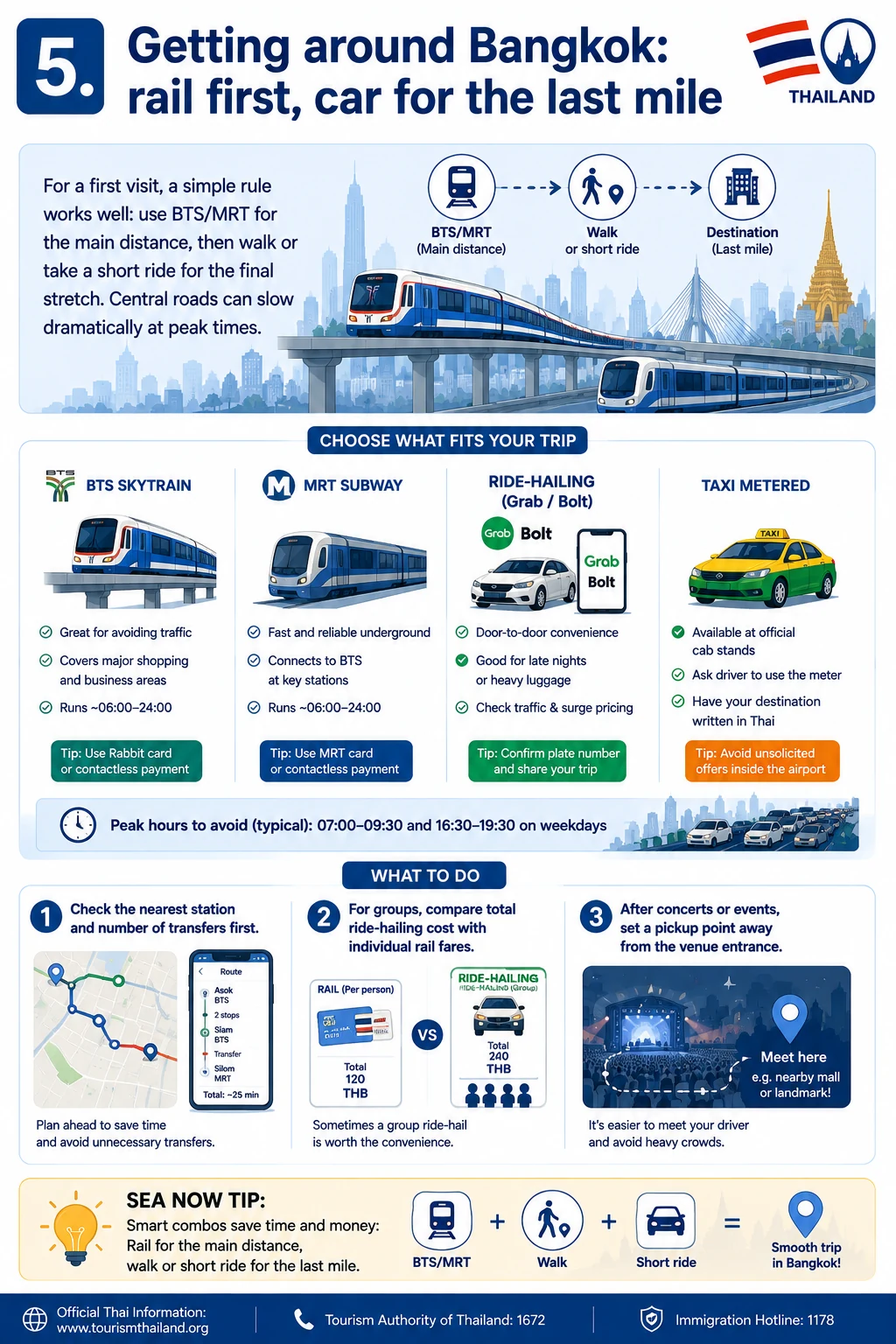
5. Getting around Bangkok: rail first, car for the last mile
For a first visit, a simple rule works well: use BTS/MRT for the main distance, then walk or take a short ride for the final stretch. Central roads can slow dramatically at peak times.
- Check the nearest station and number of transfers first.
- For groups, compare total ride-hailing cost with individual rail fares.
- After concerts or events, set a pickup point away from the venue entrance.
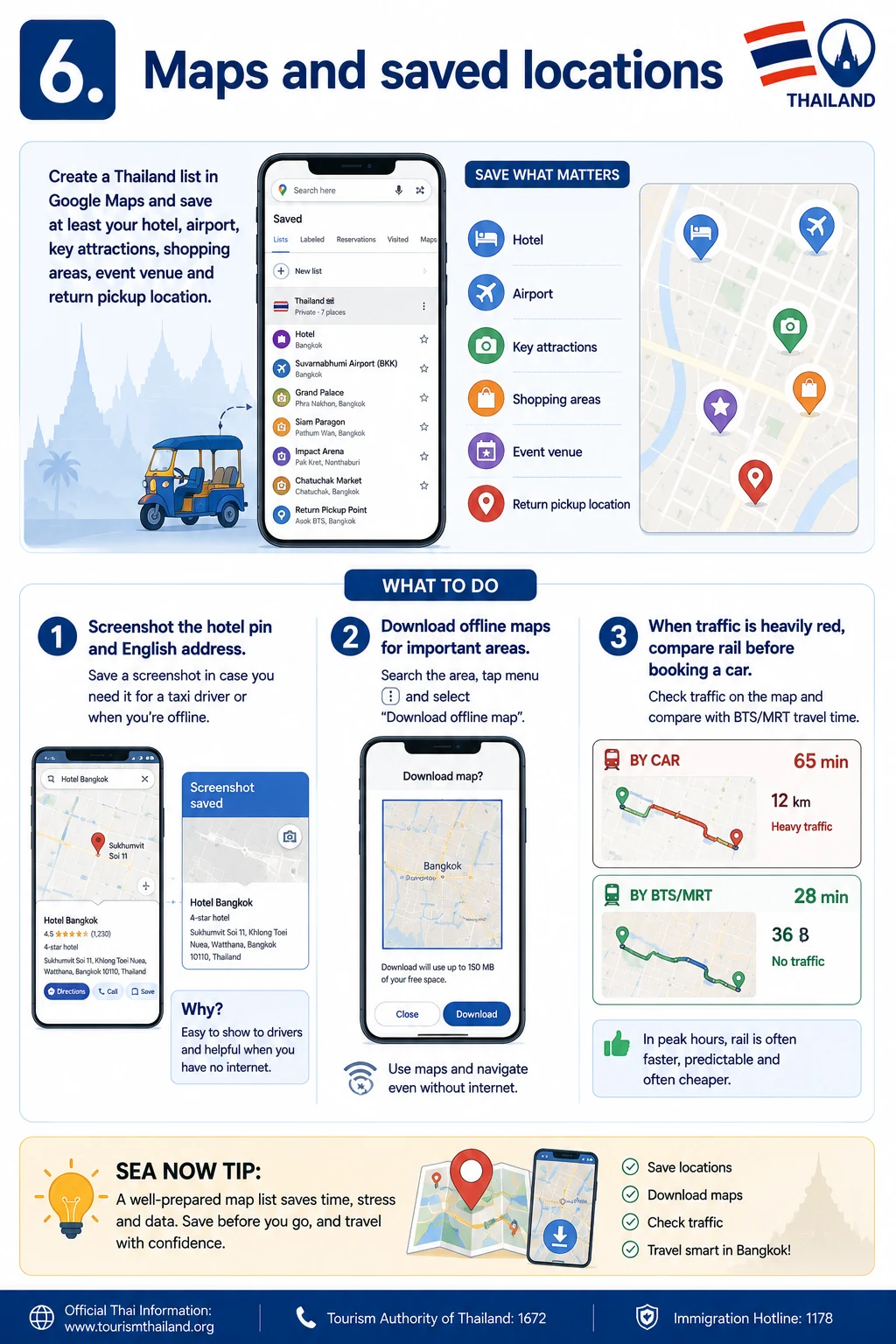
6. Maps and saved locations
Create a Thailand list in Google Maps and save at least your hotel, airport, key attractions, shopping areas, event venue and return pickup location.
- Screenshot the hotel pin and English address.
- Download offline maps for important areas.
- When traffic is heavily red, compare rail before booking a car.
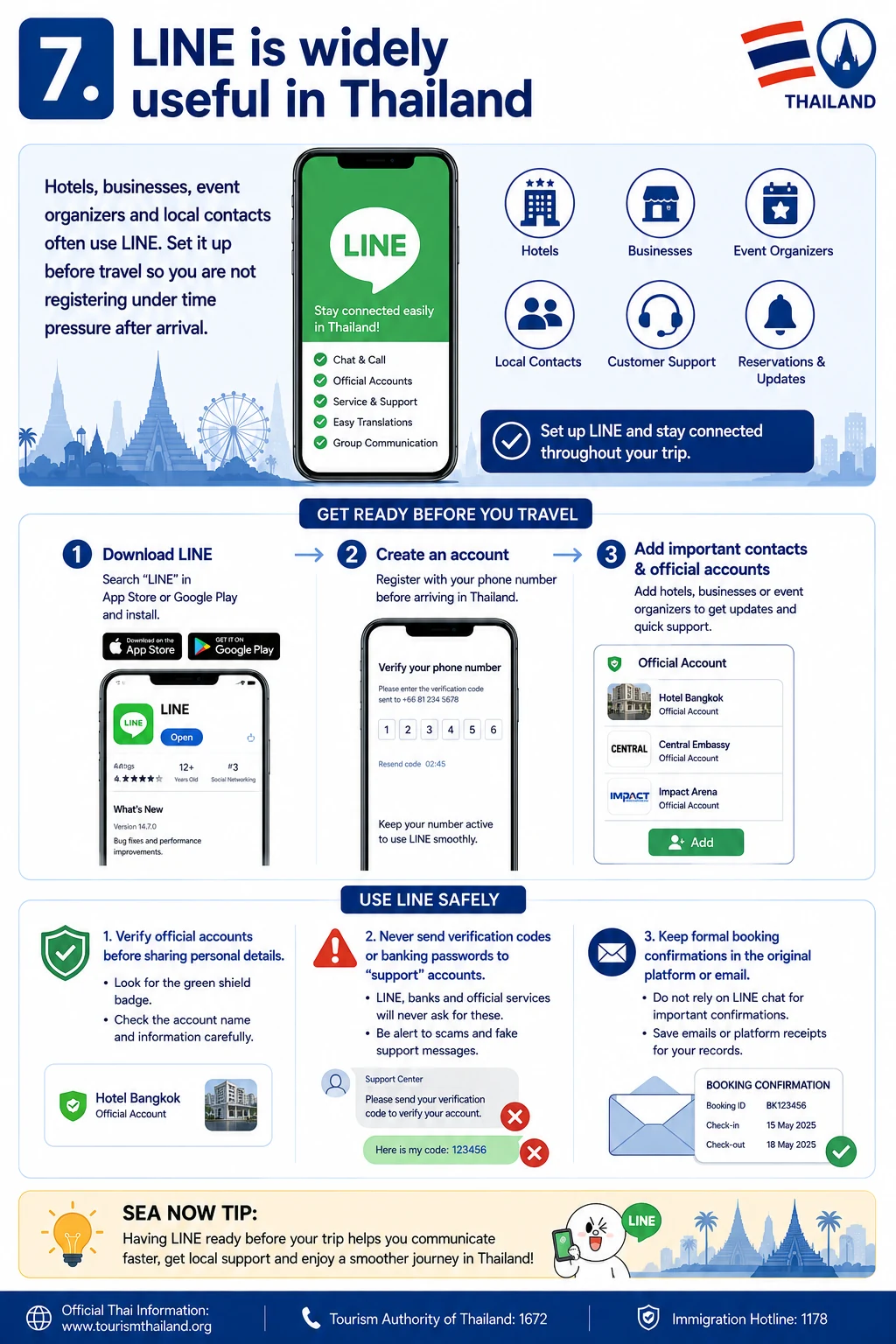
7. LINE is widely useful in Thailand
Hotels, businesses, event organizers and local contacts often use LINE. Set it up before travel so you are not registering under time pressure after arrival.
- Verify official accounts before sharing personal details.
- Never send verification codes or banking passwords to “support” accounts.
- Keep formal booking confirmations in the original platform or email.
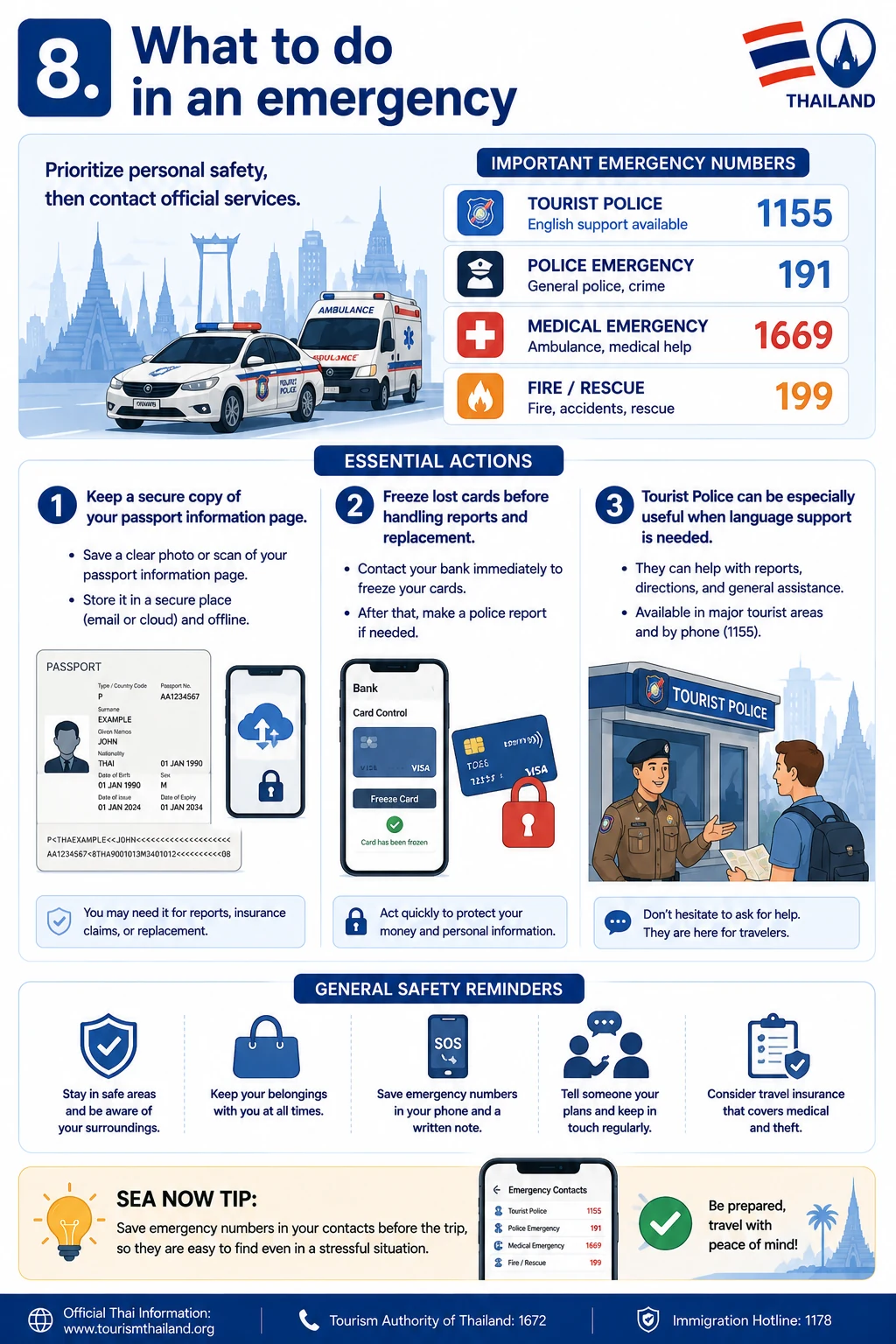
8. What to do in an emergency
Prioritize personal safety, then contact official services. Tourist Police is 1155, police emergency 191, medical emergency 1669, and fire/rescue 199.
- Keep a secure copy of your passport information page.
- Freeze lost cards before handling reports and replacement.
- Tourist Police can be especially useful when language support is needed.
Frequently Asked Questions
Is TDAC a visa?
No. TDAC is a digital arrival card. Visa or visa-exemption eligibility is a separate matter.
Should I carry a lot of cash?
Usually no. A modest amount of cash plus at least one working card and a backup payment method is safer.
Can I use taxis for everything in Bangkok?
You can, but rail is often more predictable during peak congestion in central Bangkok.
Official sources to verify
For changing rules, fares and public-service information, check the latest official source.
Thailand Digital Arrival Card (TDAC) →Thailand Tourist Police →Final pre-trip check
Save important addresses, bookings, transport plans, passport details and emergency contacts offline. Recheck time-sensitive information on the day you travel.