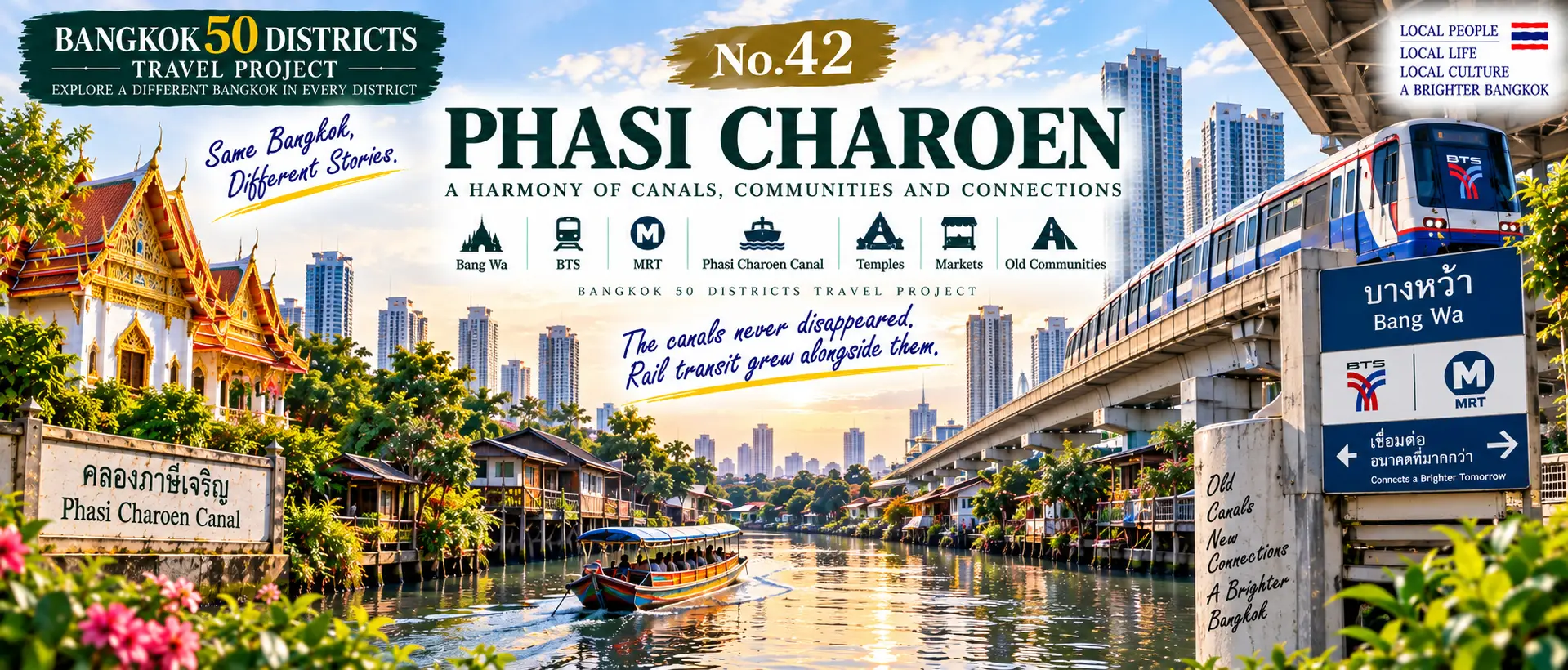
Leave Thawi Watthana
and move back toward the denser parts of western Bangkok.
The rhythm of the city begins to change again.
Homes become denser.
Roads become busier.
Commercial activity returns.
Rail transit comes into view.
But at the same time,
the waterways of old Bangkok still run through local communities.
This is:
Phasi Charoen
Bang Wa.
BTS.
MRT.
Phasi Charoen Canal.
Temples.
Markets.
Old communities.
Modern residences.
What makes this district interesting
is not that the present has replaced the past.
It is that:
They continue to exist together.
01|From the Urban Edge Back into West Bangkok
Travel east from Thawi Watthana,
and the city begins to become denser again.
Thawi Watthana.
↓
West Bangkok.
↓
Phasi Charoen.
↓
Bang Wa.
↓
Urban Community.
More homes.
More roads.
More transportation connections.
But greenery and waterways have not completely disappeared.
This is the transition from Bangkok’s outer edge
back into the urban communities of the western city.
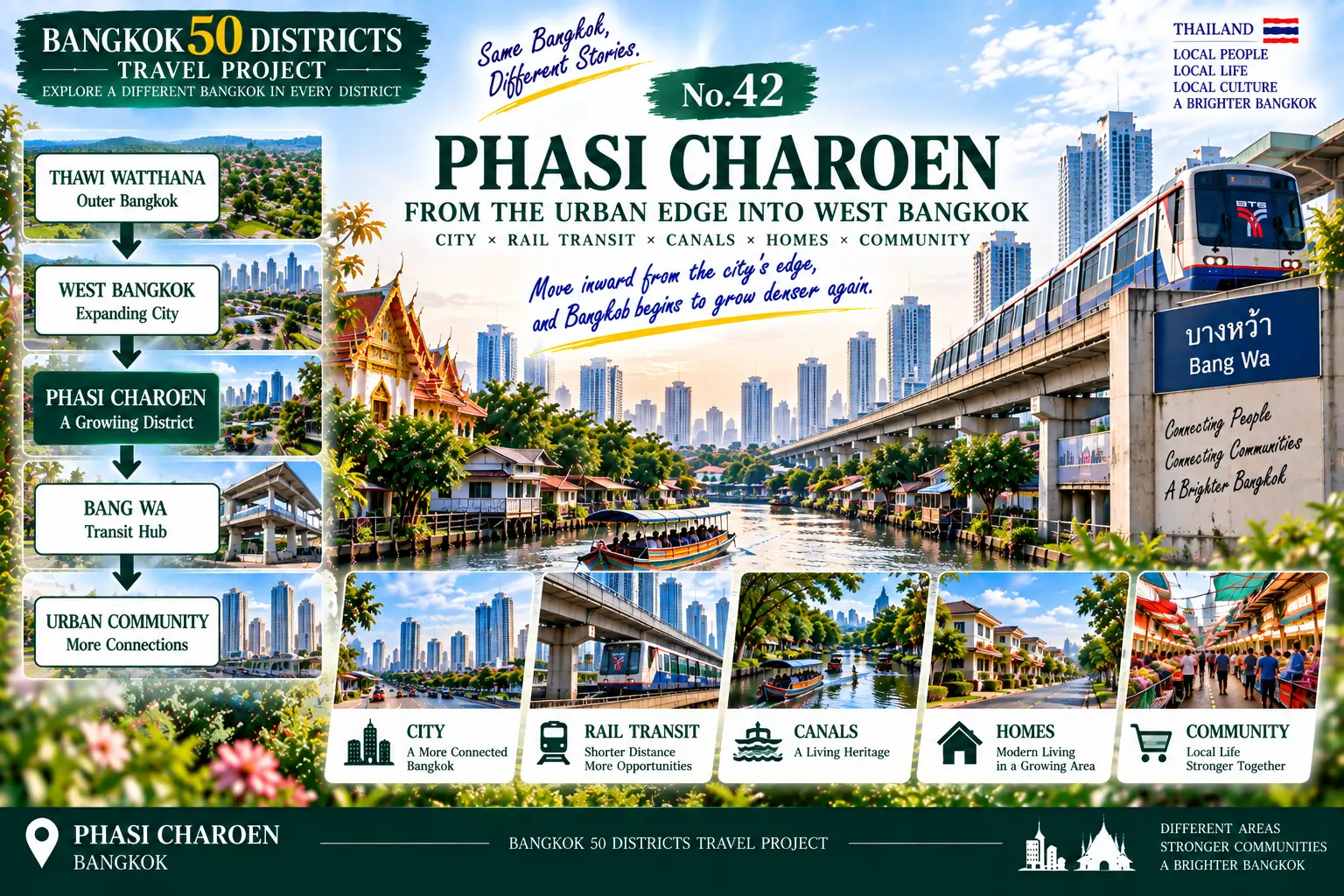
THAWI WATTHANA
↓
WEST BANGKOK
↓
PHASI CHAROEN
↓
BANG WA
↓
URBAN COMMUNITY
CITY × RAIL TRANSIT × CANALS × HOMES × COMMUNITY
**Move inward from the city’s edge,
and Bangkok begins to grow denser again.**
02|Phasi Charoen Canal: An Earlier Urban Transport Network
Long before BTS and MRT,
Bangkok already had another transportation network.
Waterways.
Phasi Charoen Canal runs through western Bangkok,
connecting communities, homes, temples and markets.
In the past,
boats were transportation.
Canals were roads.
The waterfront was part of everyday life.
Today,
roads and rail transit have transformed the city.
But the canal remains.
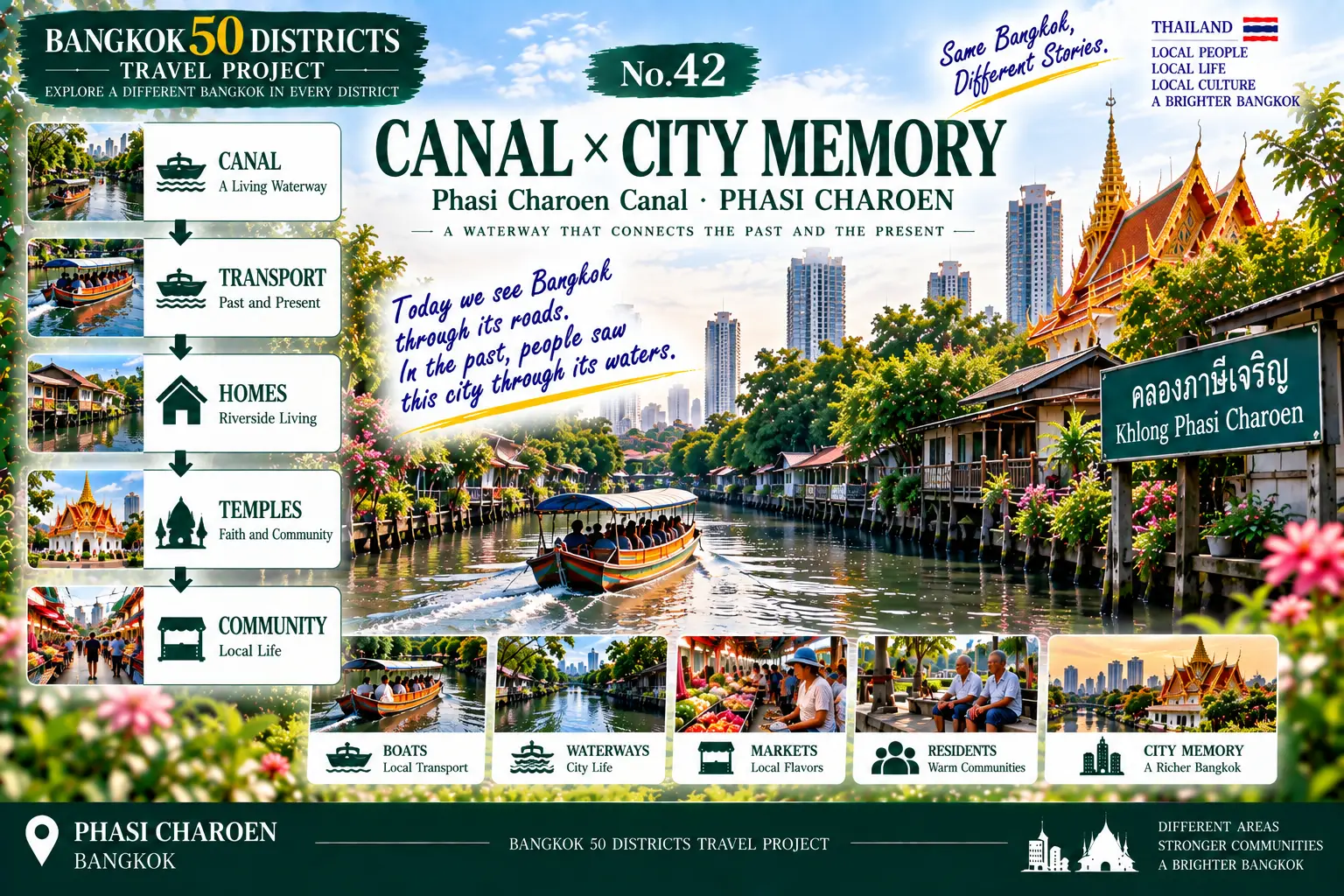
CANAL × CITY MEMORY
CANAL
↓
TRANSPORT
↓
HOMES
↓
TEMPLES
↓
COMMUNITY
BOATS × WATERWAYS × MARKETS × RESIDENTS × CITY MEMORY
**Today, we understand Bangkok through its roads.
In the past, people understood the city through its waterways.**
03|Bang Wa: A New Urban Transport Hub
Today,
one place in Phasi Charoen is impossible to ignore:
Bang Wa
Rail transit has changed the distance between different parts of Bangkok.
In the past,
travel between some western communities and central Bangkok
could take much longer.
Today,
BTS and MRT provide more direct connections
between western Bangkok and other parts of the city.
Transportation changes more than commuting.
It also changes:
Housing.
Business.
Population movement.
And the direction of urban development.
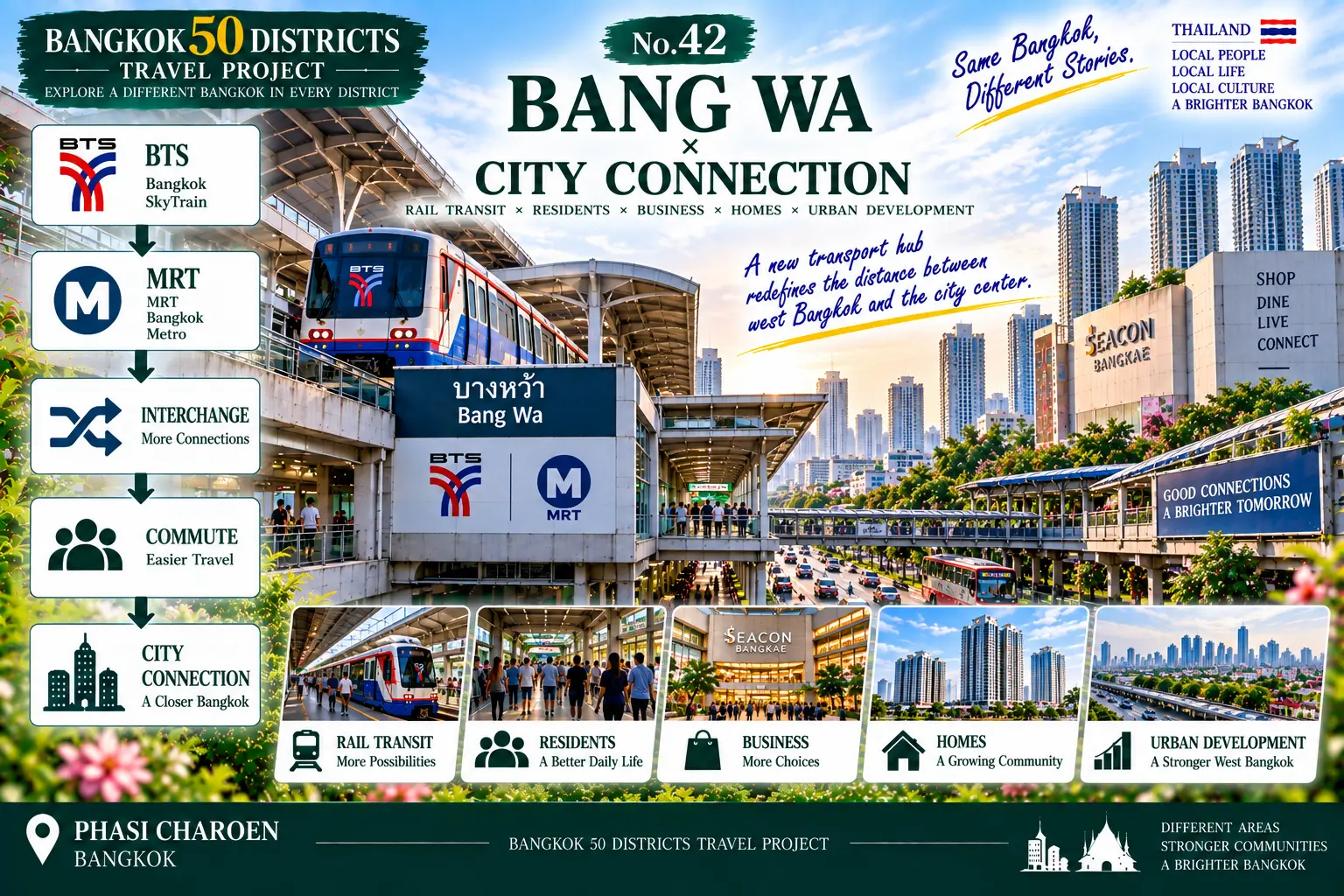
BANG WA × CITY CONNECTION
BTS
↓
MRT
↓
INTERCHANGE
↓
COMMUTE
↓
CITY CONNECTION
RAIL TRANSIT × RESIDENTS × BUSINESS × HOMES × URBAN DEVELOPMENT
**A new transport hub
redefines the distance between western Bangkok and the city center.**
04|Canal Bangkok VS Rail Bangkok
This may be the most important image for understanding Phasi Charoen.
On one side,
canals still pass through old communities.
Small boats.
Temples.
Waterside homes.
Markets.
On the other,
elevated rail lines cross the modern city.
Stations.
Trains.
Roads.
Condominiums.
One district
preserves transportation systems from two different eras.
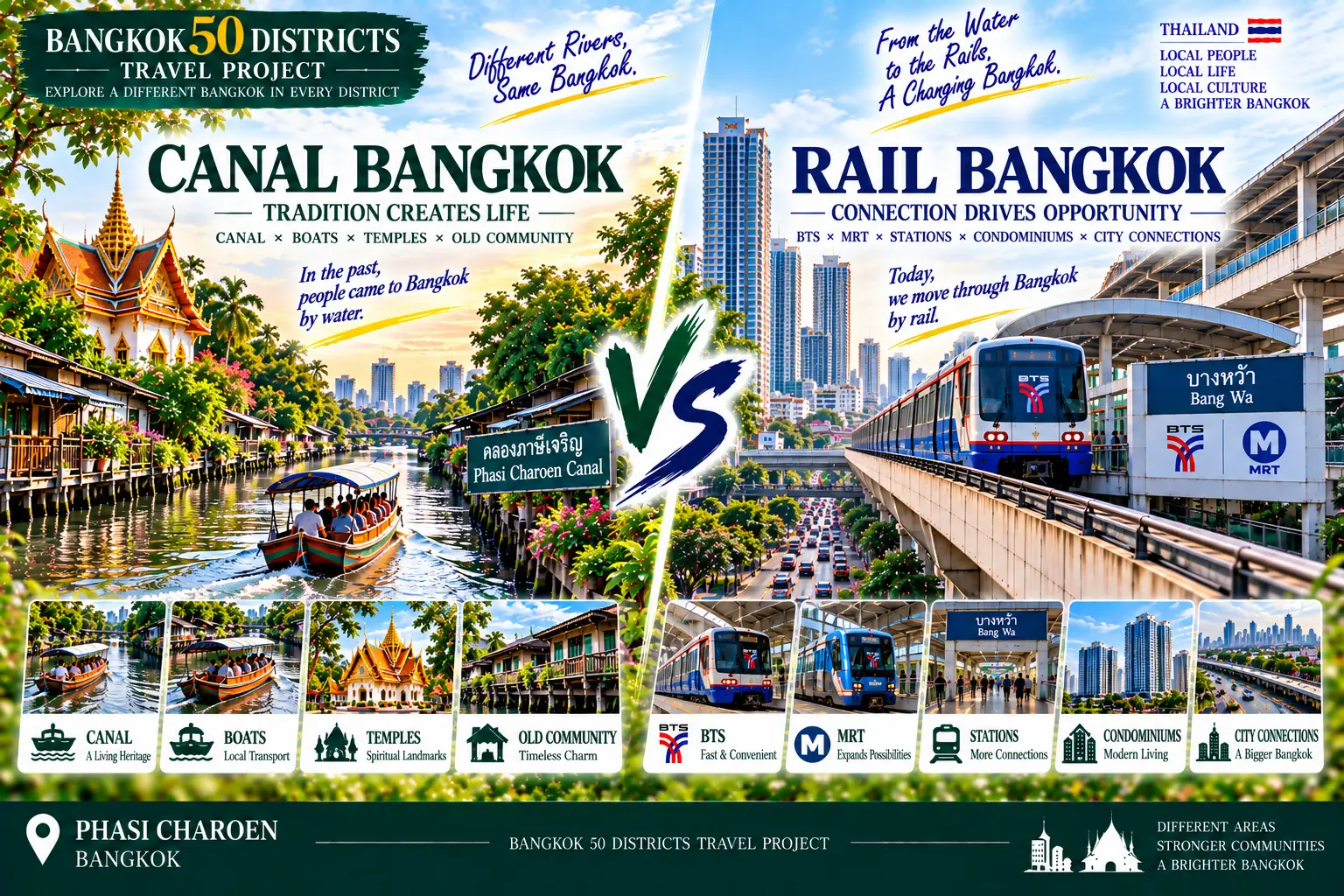
CANAL × RAIL
CANAL
CANALS × SMALL BOATS × TEMPLES × OLD COMMUNITIES
VS
RAIL
BTS × MRT × STATIONS × CONDOS × CITY CONNECTION
**In the past, people entered the city by water.
Today, they travel through it by rail.**
05|Temples Still Connect Old Communities
Even after transportation changes dramatically,
the relationship between temples and communities does not simply disappear.
Faith.
Festivals.
Education.
Residents.
Markets.
Everyday life.
In many older neighborhoods,
temples remain important centers of community life.
Modern transportation changes the speed of the city.
But community traditions continue at their own pace.
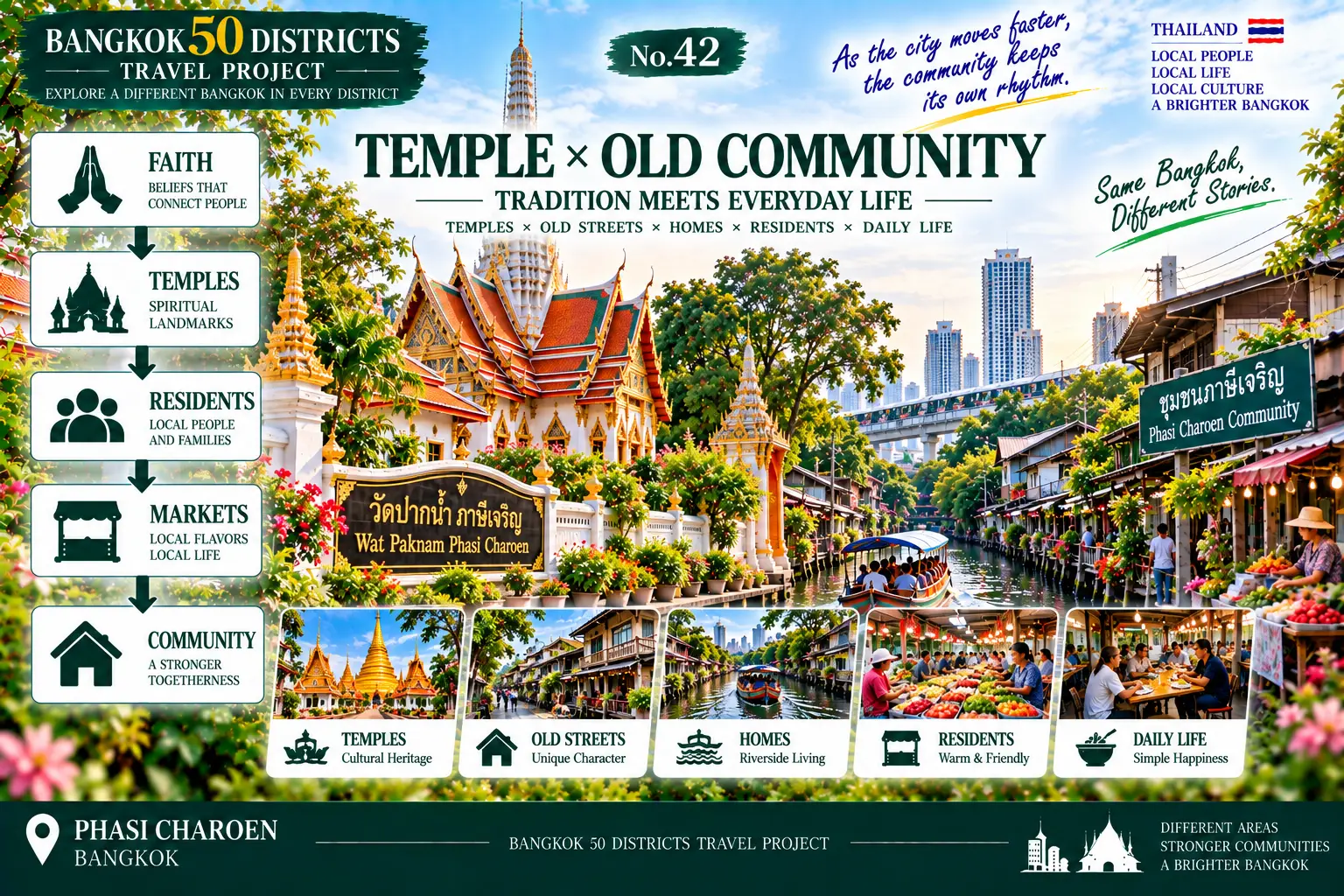
TEMPLE × OLD COMMUNITY
FAITH
↓
TEMPLE
↓
RESIDENTS
↓
MARKET
↓
COMMUNITY
TEMPLES × OLD STREETS × HOMES × RESIDENTS × DAILY LIFE
**Transportation makes the city faster.
The community keeps its own rhythm.**
06|Phasi Charoen Local Market
To understand a district,
the local market is often one of the best places to start.
Breakfast.
Fruit.
Prepared food.
Vegetables.
Small shops.
Students.
Residents.
Office workers.
This is not a tourist attraction.
It is a place that shows
how the district functions every day.
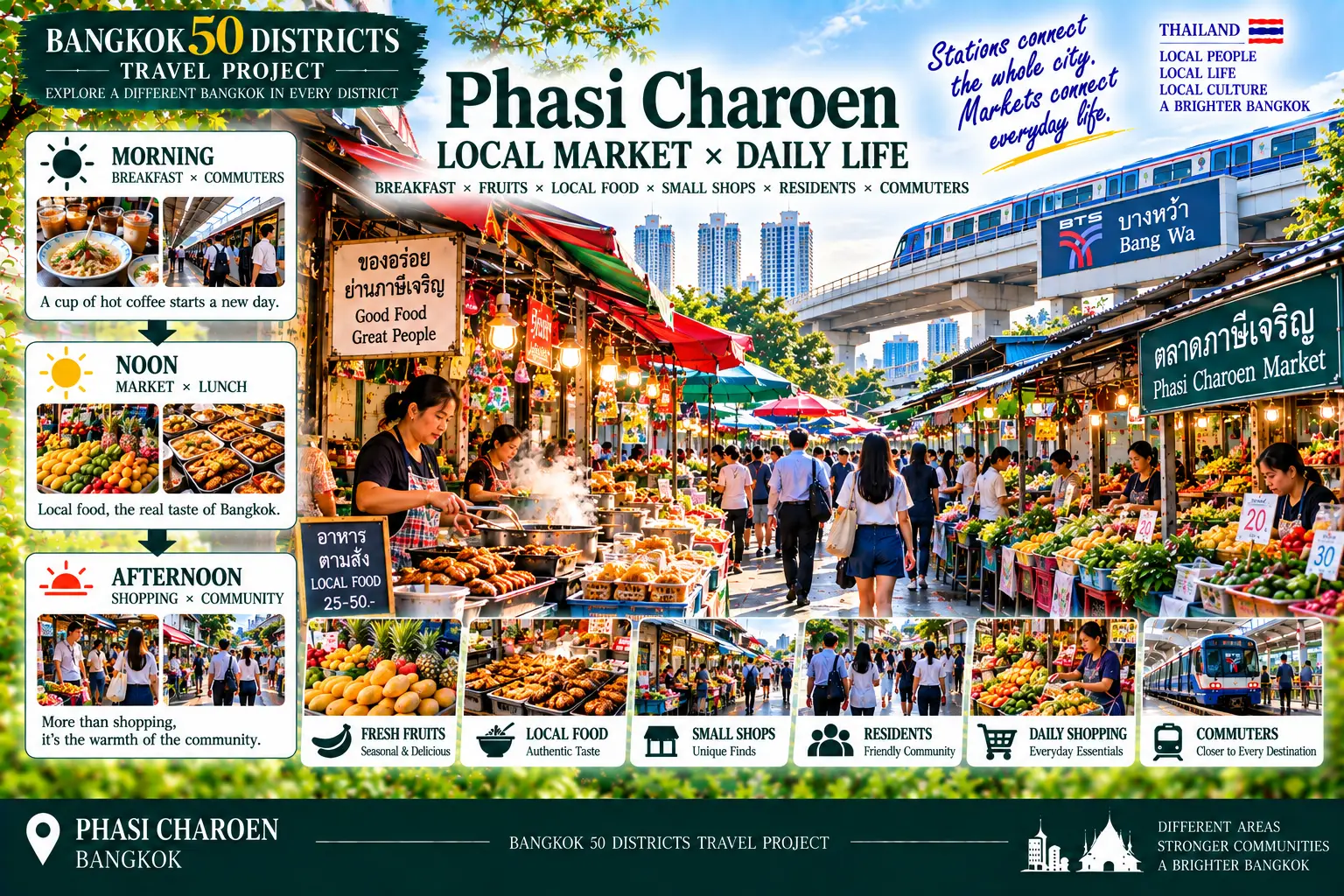
LOCAL MARKET × DAILY LIFE
BREAKFAST × FRUIT × LOCAL FOOD × SMALL SHOPS × RESIDENTS × COMMUTERS
MORNING|BREAKFAST × COMMUTE
↓
NOON|MARKET × LUNCH
↓
AFTERNOON|SHOPPING × COMMUNITY
**Stations connect the city.
Markets connect everyday life.**
07|OLD BANGKOK VS NEW BANGKOK
If one image could explain Phasi Charoen,
it would show old Bangkok and new Bangkok at the same time.
OLD:
Canals.
Temples.
Old communities.
Markets.
NEW:
BTS.
MRT.
Condominiums.
Modern roads.
They are not separated by a clear line.
Very often,
they exist within the same neighborhood.
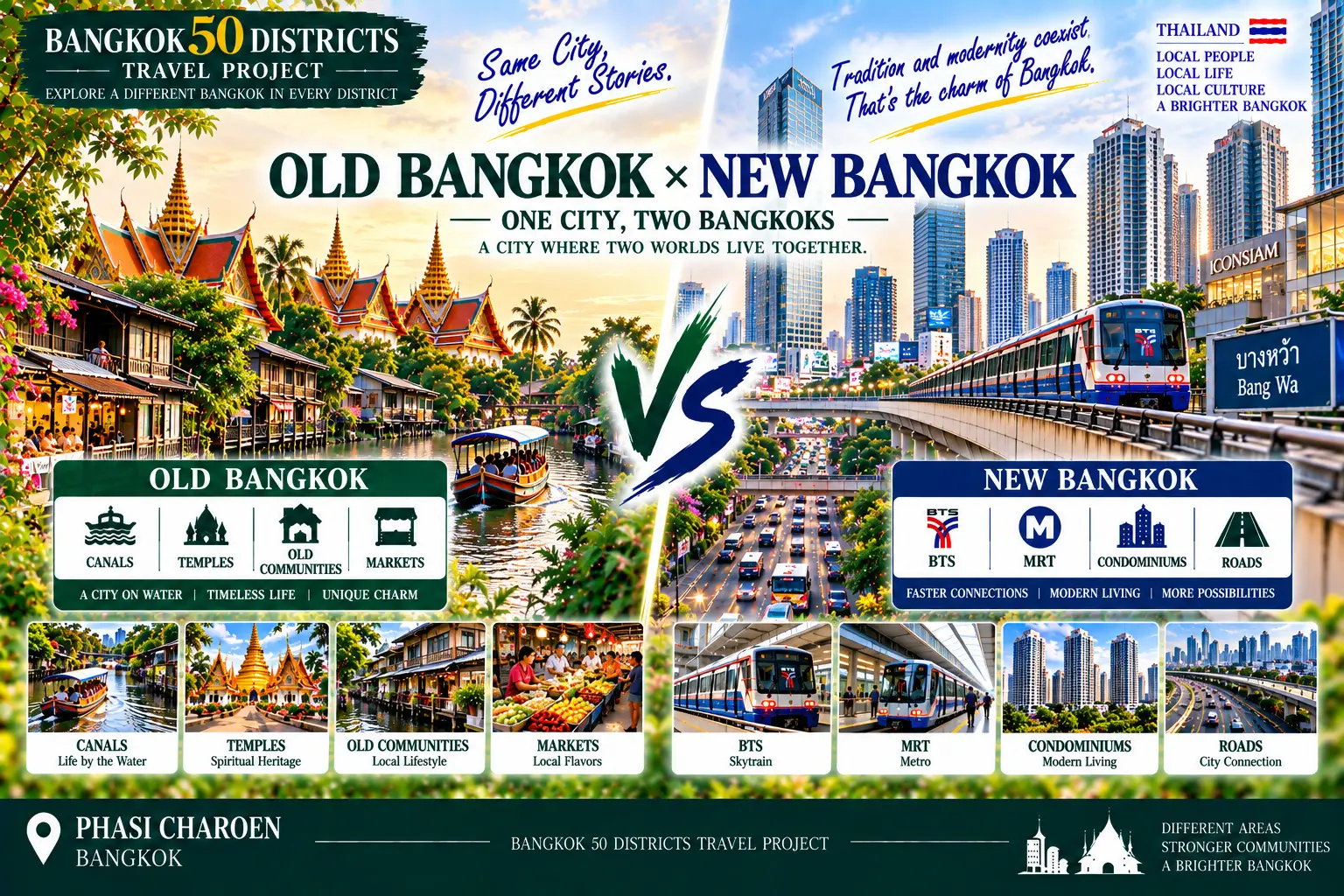
OLD × NEW
OLD
CANALS × TEMPLES × OLD COMMUNITIES × MARKETS
VS
NEW
BTS × MRT × CONDOS × ROADS
**One district,
living in two Bangkoks at the same time.**
08|A One-Day Phasi Charoen Travel Plan
The best way to explore this district is to follow:
“Rail Transit → Community → Canal → Old Bangkok”
09:00|Depart Central Bangkok
Take rail transit west.
09:30|Bang Wa
Begin at a modern transportation hub.
10:30|BTS × MRT × City Connection
See how rail transit is reshaping western Bangkok.
12:00|Local Lunch
Eat inside the neighborhood.
13:30|Local Market
Experience everyday community life.
15:00|Temple × Old Community
Leave modern transit behind and enter an older neighborhood.
16:30|Phasi Charoen Canal
Return to Bangkok’s earlier transportation network.
18:00|Canal × Sunset
End the day beside the water.
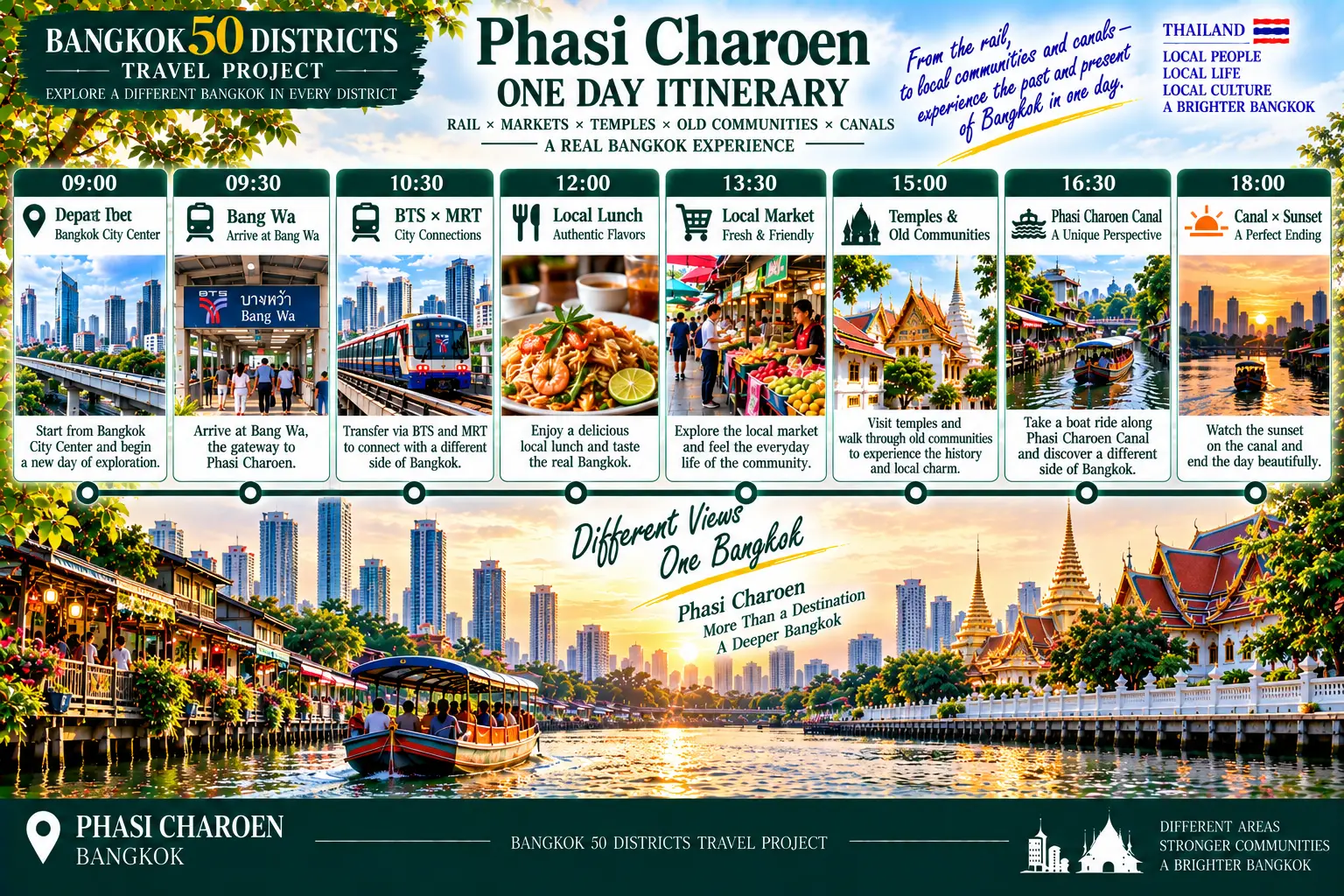
09:00|DEPART CENTRAL BANGKOK
09:30|BANG WA
10:30|BTS × MRT × CITY CONNECTION
12:00|LOCAL LUNCH
13:30|LOCAL MARKET
15:00|TEMPLE × OLD COMMUNITY
16:30|PHASI CHAROEN CANAL
18:00|CANAL × SUNSET
**One day,
from rail transit into old communities and canals,
discovering Bangkok’s past and present living side by side.**
09|Why Is Phasi Charoen Worth This Stop?
Because this district helps answer an important question:
When a city modernizes,
does the past really disappear?
In Phasi Charoen,
the answer is not that simple.
The canals remain.
The temples remain.
The markets remain.
Old communities continue their everyday lives.
At the same time,
BTS has arrived.
MRT has arrived.
New housing has appeared.
New businesses have developed.
The city moves faster.
So what makes Phasi Charoen worth exploring
is not simply the “old” or the “new.”
It is:
**How old Bangkok and new Bangkok continue to live together in the same district.**
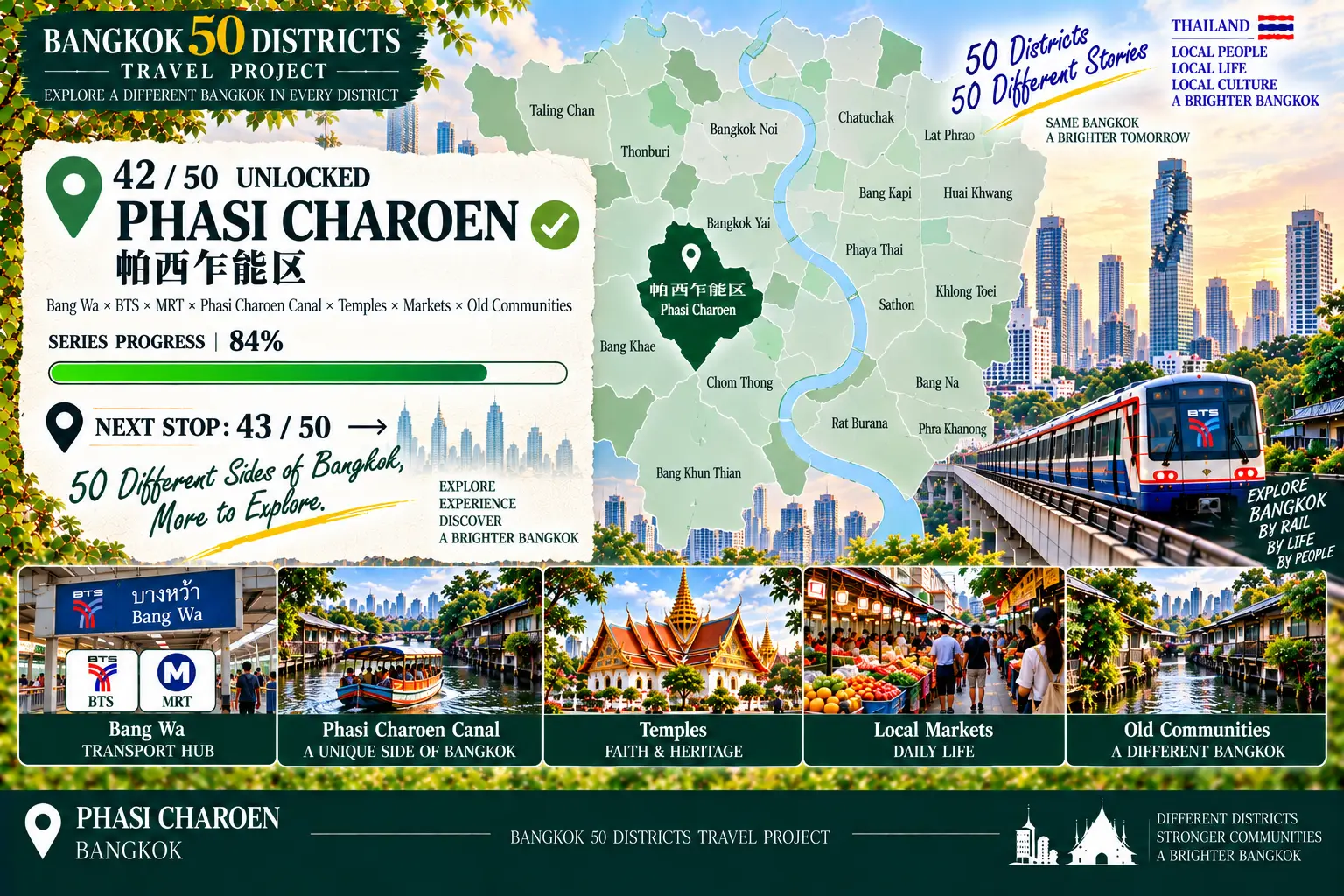
BANGKOK 50 DISTRICTS TRAVEL PROJECT
**42 / 50 UNLOCKED**
PHASI CHAROEN ✓
SERIES PROGRESS|84%
BANG WA × BTS × MRT × PHASI CHAROEN CANAL × TEMPLES × MARKETS × OLD COMMUNITIES
NEXT STOP: 43 / 50
**50 districts.
50 different ways of life.
Keep exploring Bangkok.**