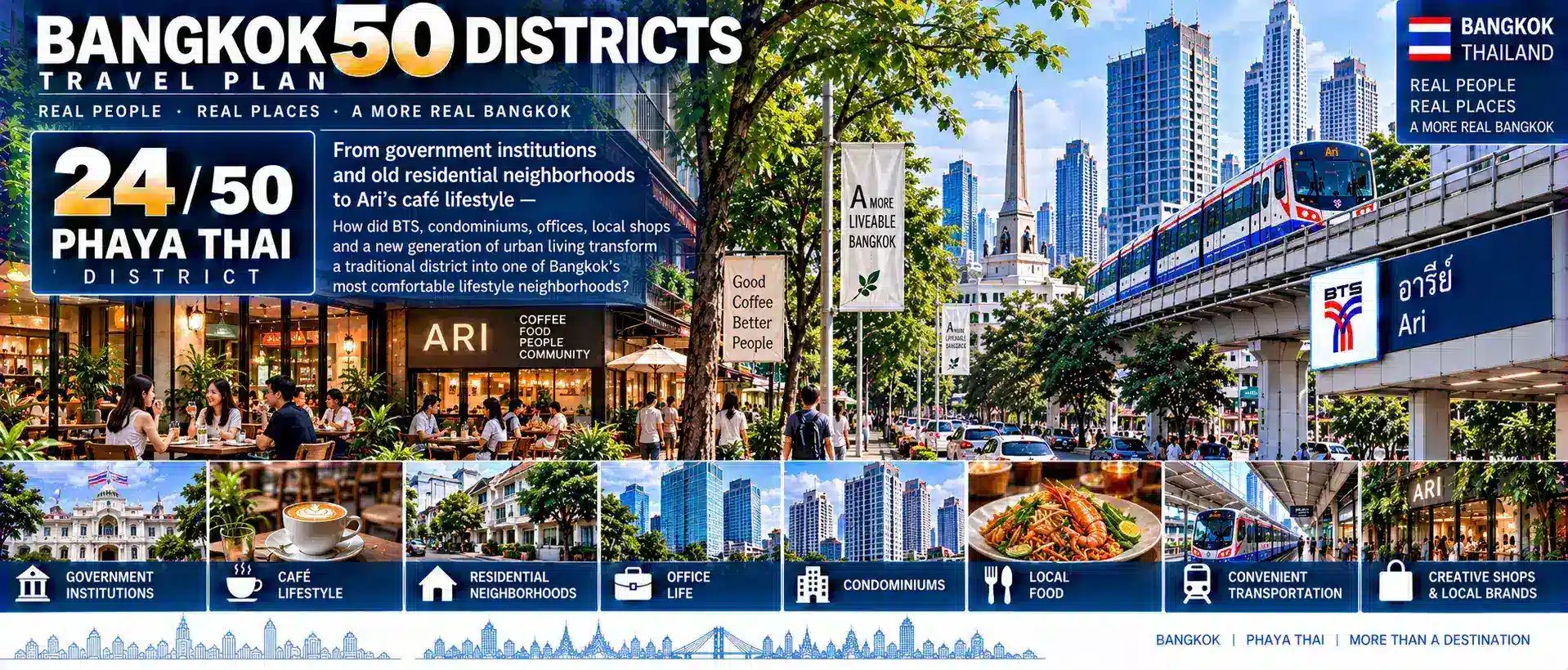
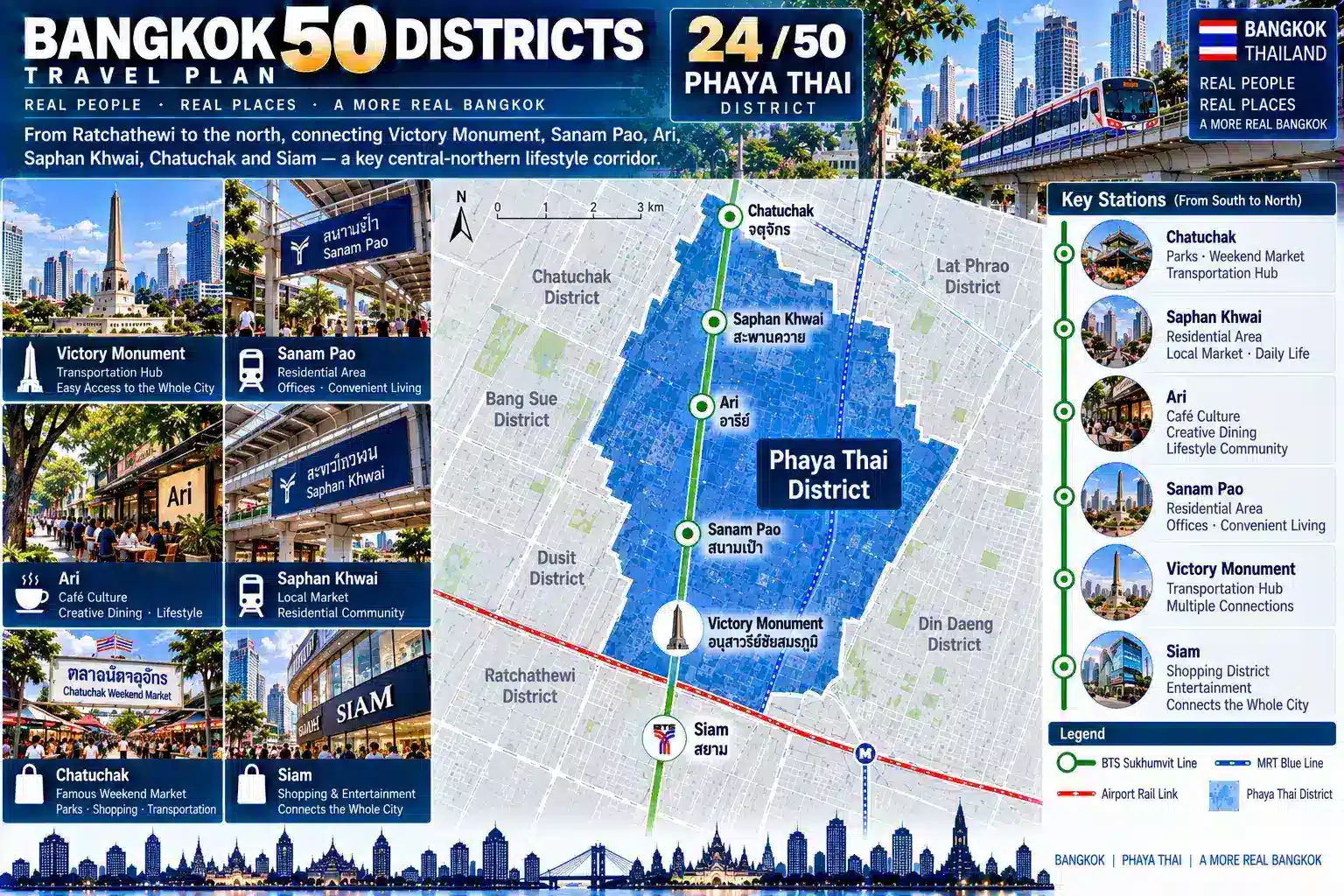
01|Where Is Phaya Thai?
Phaya Thai lies north of Bangkok’s central commercial core.
To the south is Ratchathewi.
To the east is Din Daeng.
Continue north and the city gradually moves toward Chatuchak.
One of the most important public transportation corridors running through this area is the:
BTS SUKHUMVIT LINE
Important lifestyle nodes along this corridor include:
Sanam Pao.
Ari.
And farther north toward Saphan Khwai.
The area is not far from Siam.
Yet the atmosphere feels noticeably different.
You can still reach central Bangkok quickly for work.
But once you return to the neighborhood, you can enter quieter residential streets.
This gives Phaya Thai an important urban advantage:
It is close to the city center without forcing you to live constantly inside the noise of the city center.
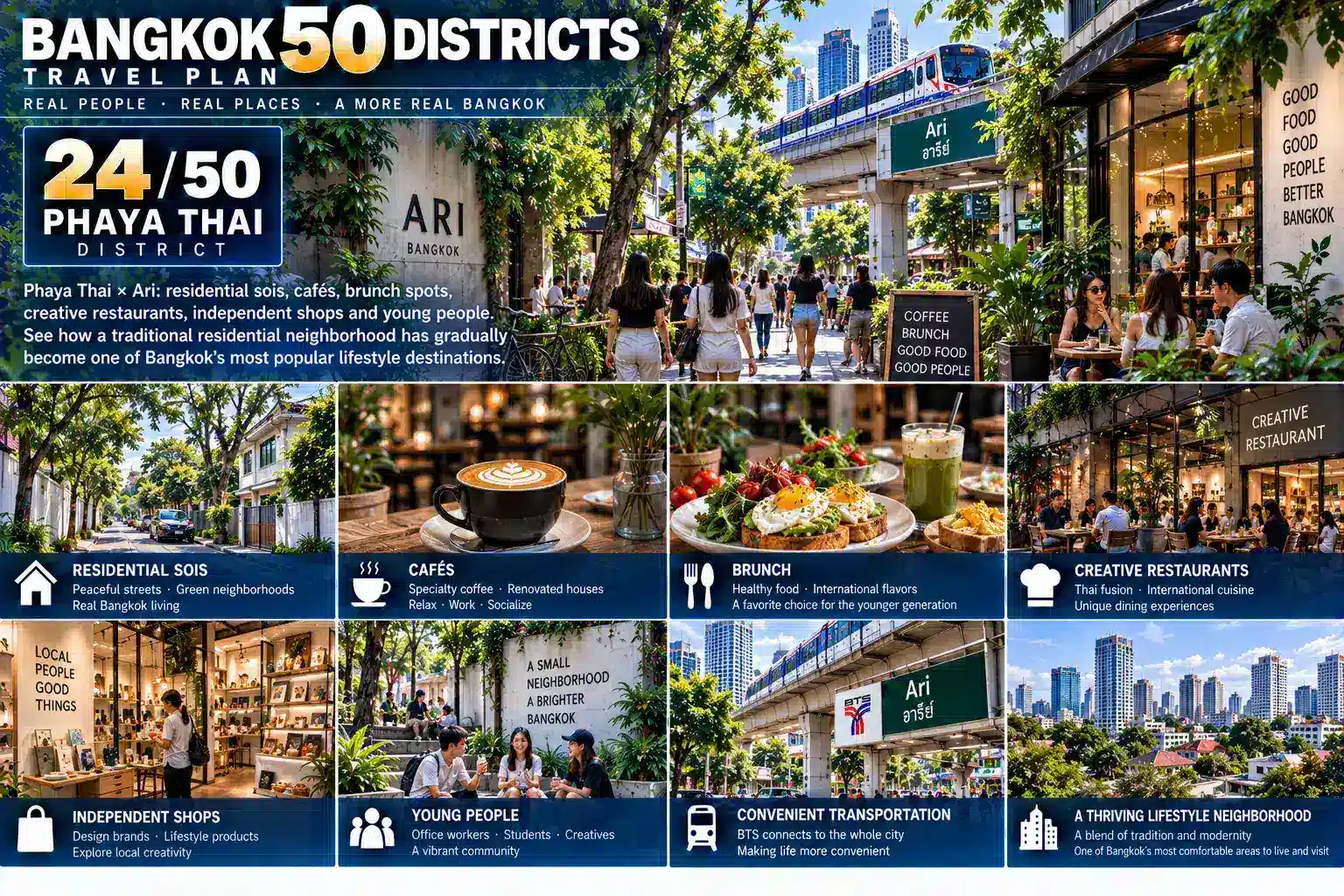
02|Ari: How Did a Residential Neighborhood Become a “Lifestyle Destination”?
When people talk about Phaya Thai today, one of the first places many younger Bangkok residents think of is:
ARI
But Ari is not a conventional tourist destination.
There is no giant temple.
No major historical monument.
No concentration of mega malls like Siam.
What attracts people here is something much simpler:
LIFE ITSELF.
Cafés appear inside residential sois.
Older houses become restaurants.
Small commercial spaces enter the neighborhood.
Design shops hide along side streets.
Independent brands begin to appear.
People do not necessarily come here to complete a tourist checklist.
They may simply come to:
Drink coffee.
Have brunch.
Meet friends.
Work.
Walk.
Take photos.
Then find a small restaurant for dinner.
An ordinary residential neighborhood gradually becomes:
a lifestyle community that people come specifically to experience.
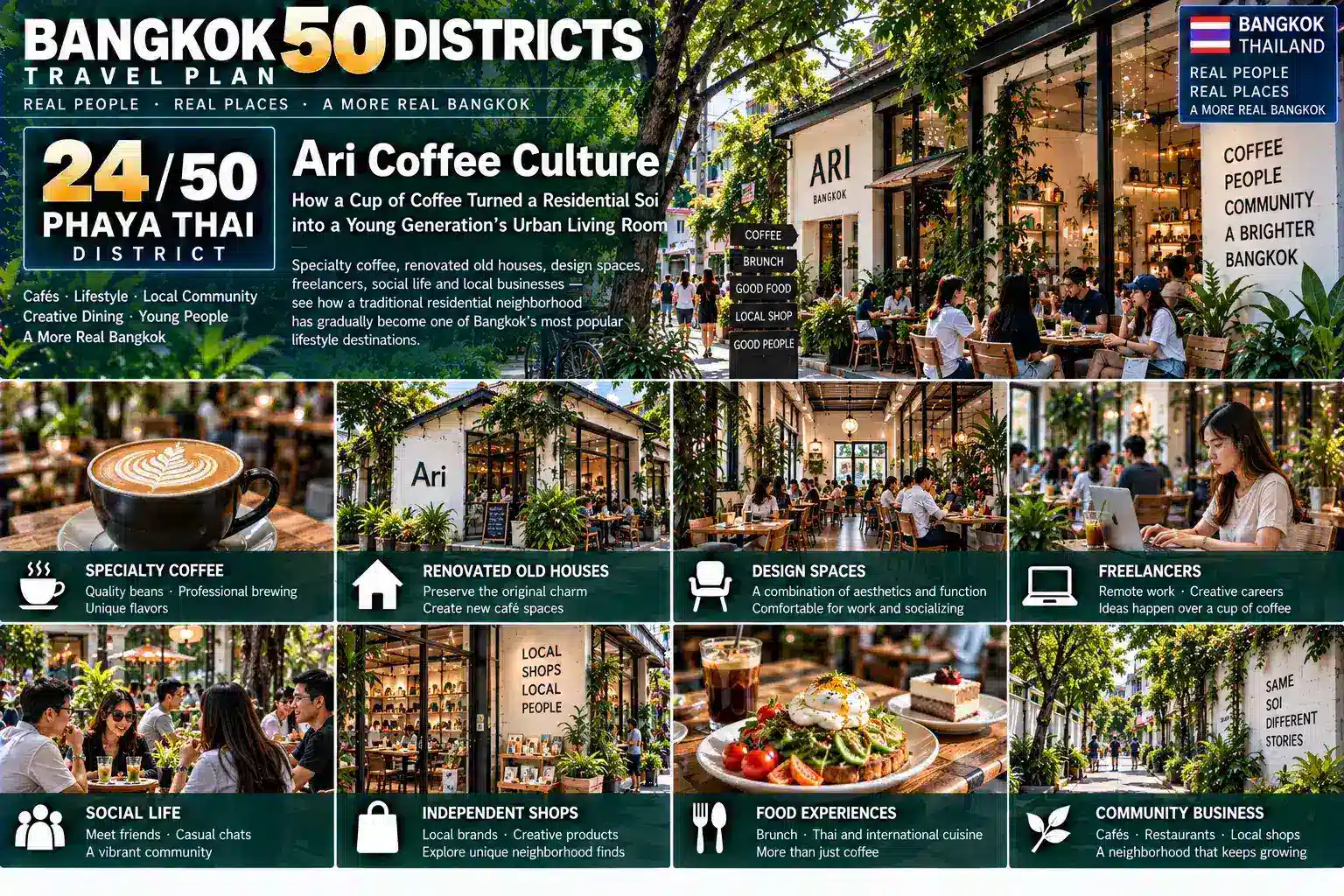
03|Café Culture: How Can Coffee Shops Change an Entire Soi?
One café may look like nothing more than a small business.
But when more and more cafés enter the same neighborhood, something begins to change.
Young people start coming.
Freelancers stay longer.
Friends arrange to meet here.
Photos of the neighborhood spread across social media.
More restaurants and independent shops follow.
In other words:
Cafés begin creating “dwell time.”
Traditional retail often encourages people to:
Buy something and leave.
A café encourages you to:
Sit.
Talk.
Work.
Read.
Rest.
When large numbers of people are willing to spend two or three hours inside a neighborhood, the commercial value of the surrounding streets changes as well.
That is why Ari’s café culture is about much more than:
“There are lots of coffee shops here.”
More importantly:
Café culture has changed the way people use neighborhood space.
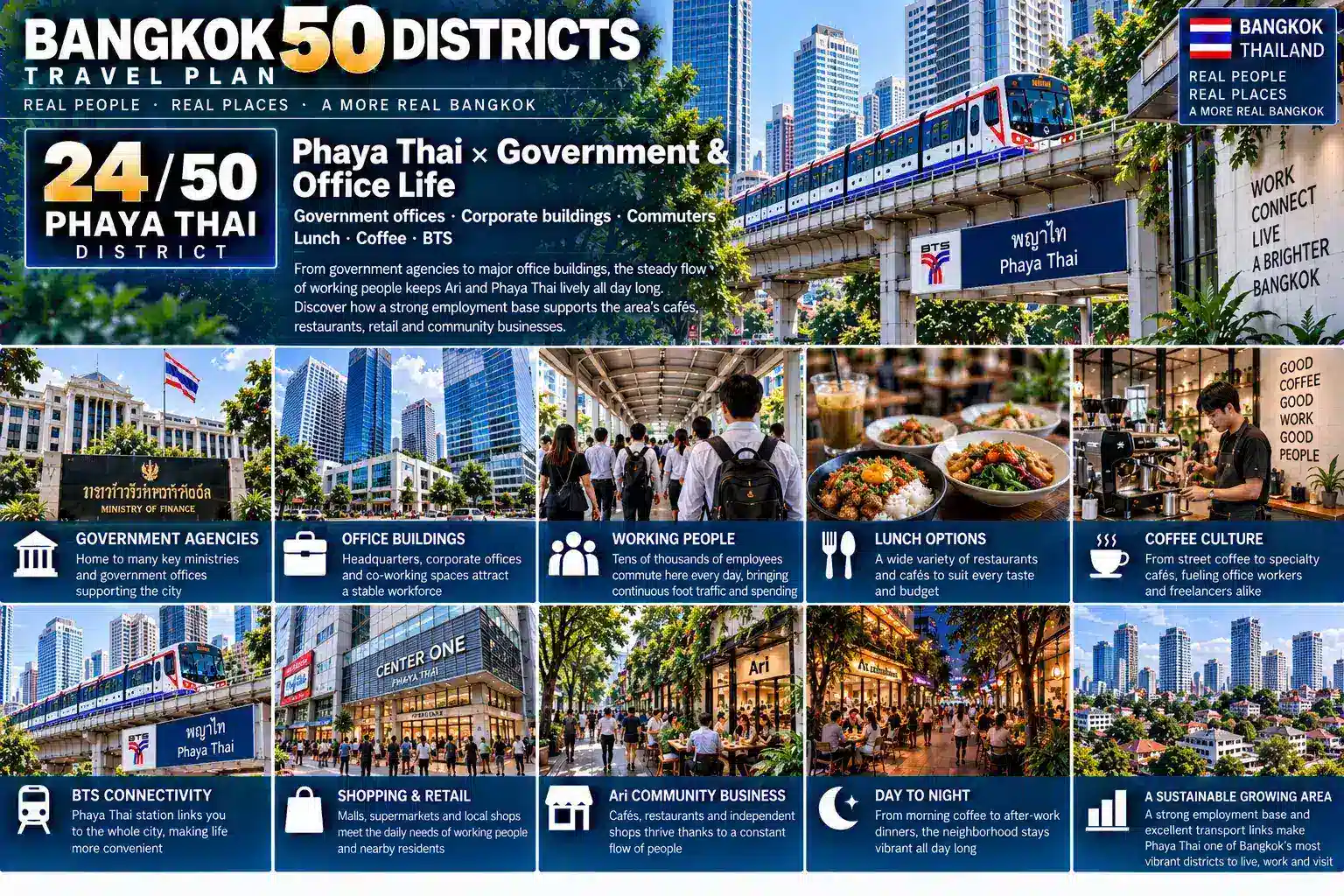
04|Government Institutions × Offices: Phaya Thai Is More Than an Instagrammable Neighborhood
Looking only at social media, it is easy to reduce Ari and Phaya Thai to:
Cafés.
Brunch.
Beautiful little shops.
But the stable foundation of daily activity in this area also comes from:
WORK
Government institutions.
Public-sector offices.
Private offices.
Hospitals and related institutions.
Companies.
Schools.
All of them generate a steady weekday population.
In the morning, people arrive for work.
At lunchtime, they need food.
In the afternoon, they need coffee.
After work, they need restaurants, convenience stores, gyms and transportation.
Office populations and lifestyle businesses therefore begin supporting one another.
This is one reason Ari has been able to maintain its vitality.
It does not depend entirely on tourists.
Even if visitors disappeared:
people would still be living and working here every day.
05|Changing Housing: Why Are More Condominiums Appearing Beside Older Homes?
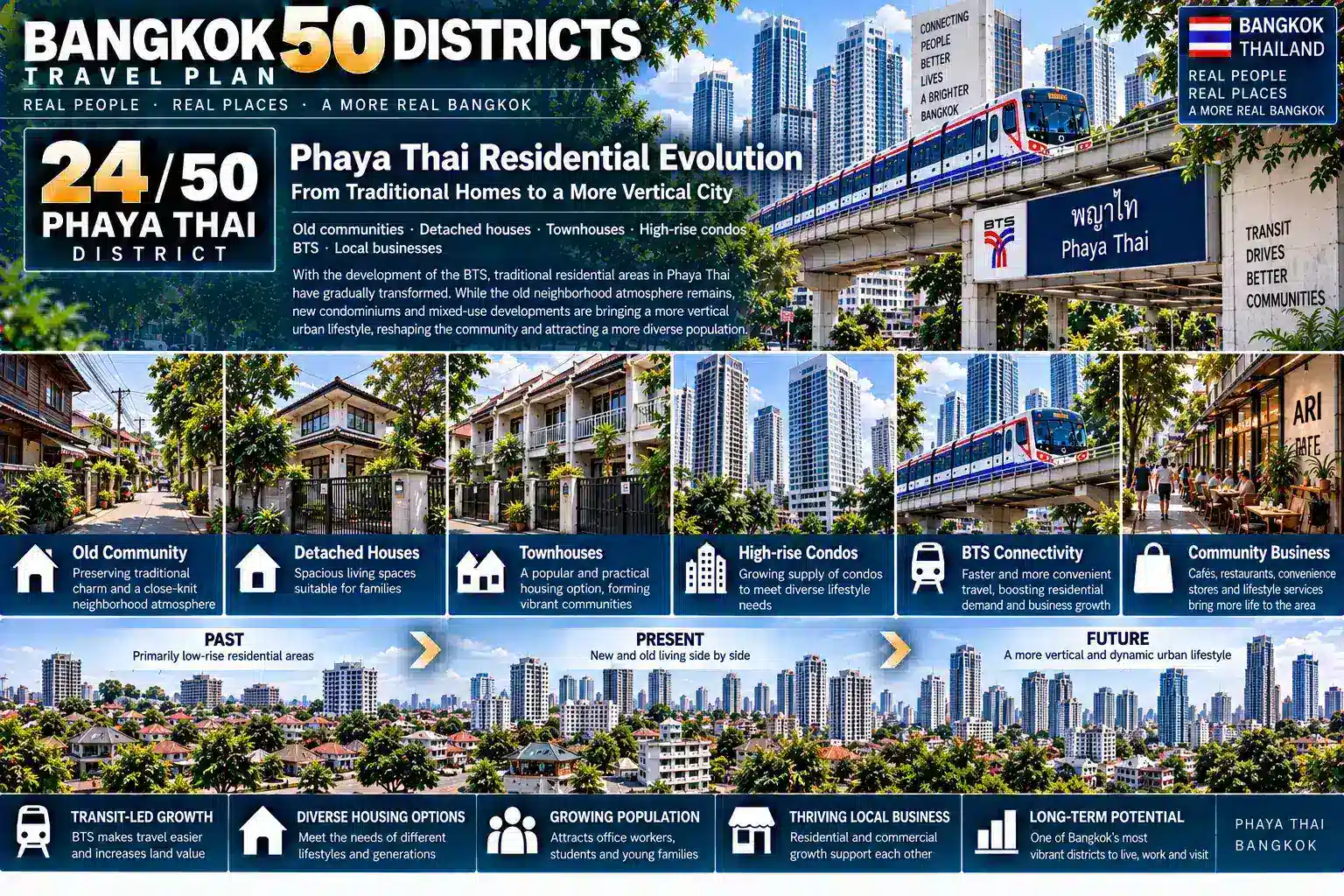
When transportation improves, housing patterns usually change.
Phaya Thai is no exception.
Traditional neighborhoods remain.
Detached houses remain.
Townhouses remain.
But around BTS stations and major roads:
High-rise condominiums have become increasingly common.
The reason is straightforward.
Residents here can take BTS to:
Siam.
Asok.
Chatuchak.
And other major employment areas.
At the same time, once they come downstairs, they have access to:
Cafés.
Restaurants.
Convenience stores.
Neighborhood businesses.
This lifestyle is especially attractive to younger professionals.
Phaya Thai therefore increasingly displays a distinctive urban landscape:
Old Homes × New Condominiums
One soi may still contain houses that have been there for decades.
Turn the corner and you may suddenly see a modern residential tower.
06|Soi Life: Why Does a Comfortable City Need Small Streets?
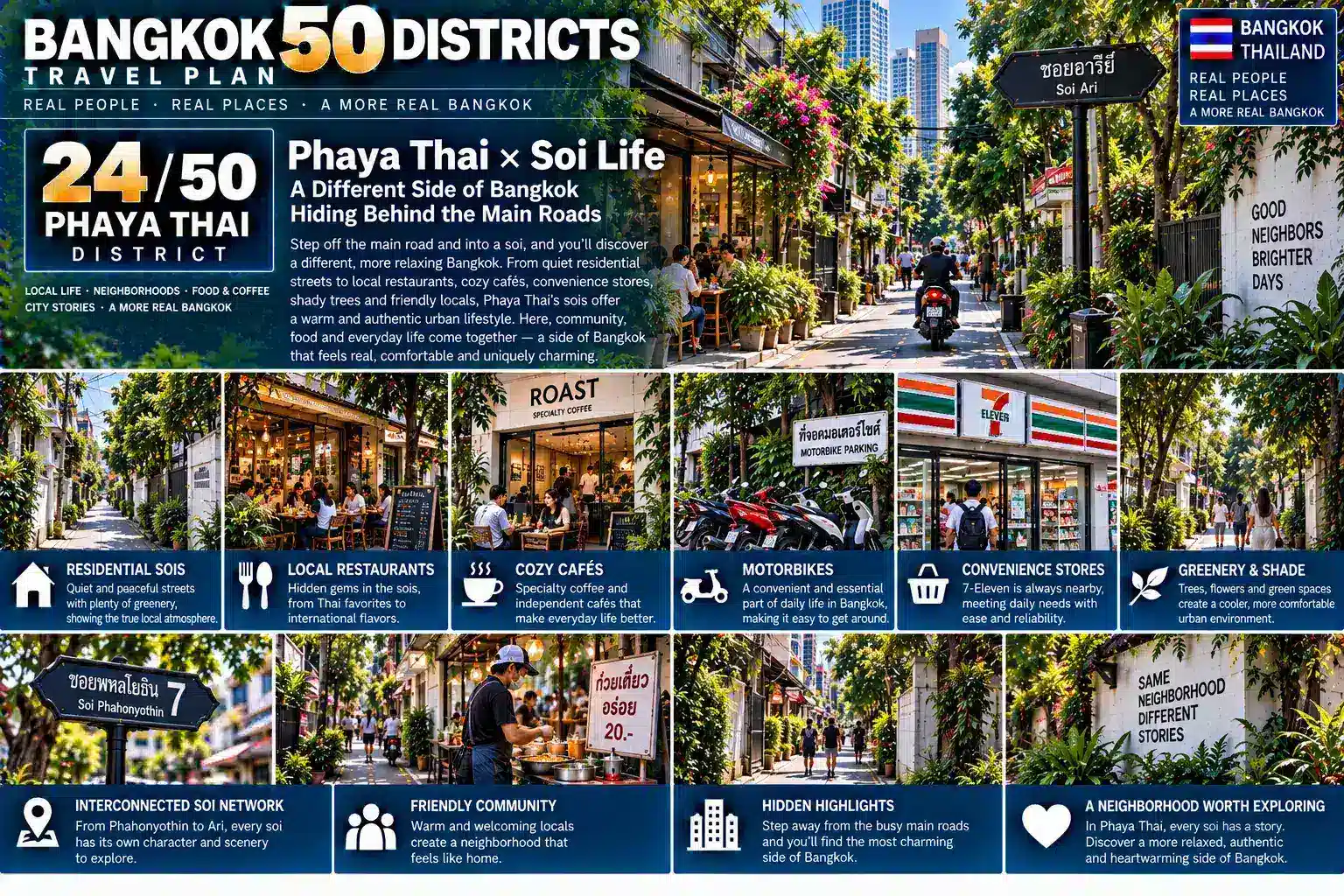
Bangkok’s major roads are designed for:
MOVEMENT
But much of the city’s real neighborhood life happens inside:
SOIS
Enter the residential lanes around Ari and Phaya Thai and you will find:
Homes.
Small restaurants.
Cafés.
Convenience stores.
Motorcycles.
Trees.
Small offices.
Condominium entrances.
Residents walking their dogs.
Delivery riders.
None of these things are major landmarks.
But together, they create something extremely important:
LIVABILITY
A city cannot consist only of:
Expressways.
Mega malls.
Skyscrapers.
What makes people willing to live somewhere for years often comes down to much simpler questions.
Can I find food near home?
Can I buy everyday necessities?
Are there trees?
Can I walk around?
Is there somewhere to have coffee?
When I return home, does it still feel like a neighborhood?
That is why the most interesting thing about Phaya Thai is not simply which Ari cafés are trending.
It is:
how a mature city fits everyday life into thousands of small sois.
07|What to Eat in Phaya Thai? Two Different Bangkoks on the Same Table
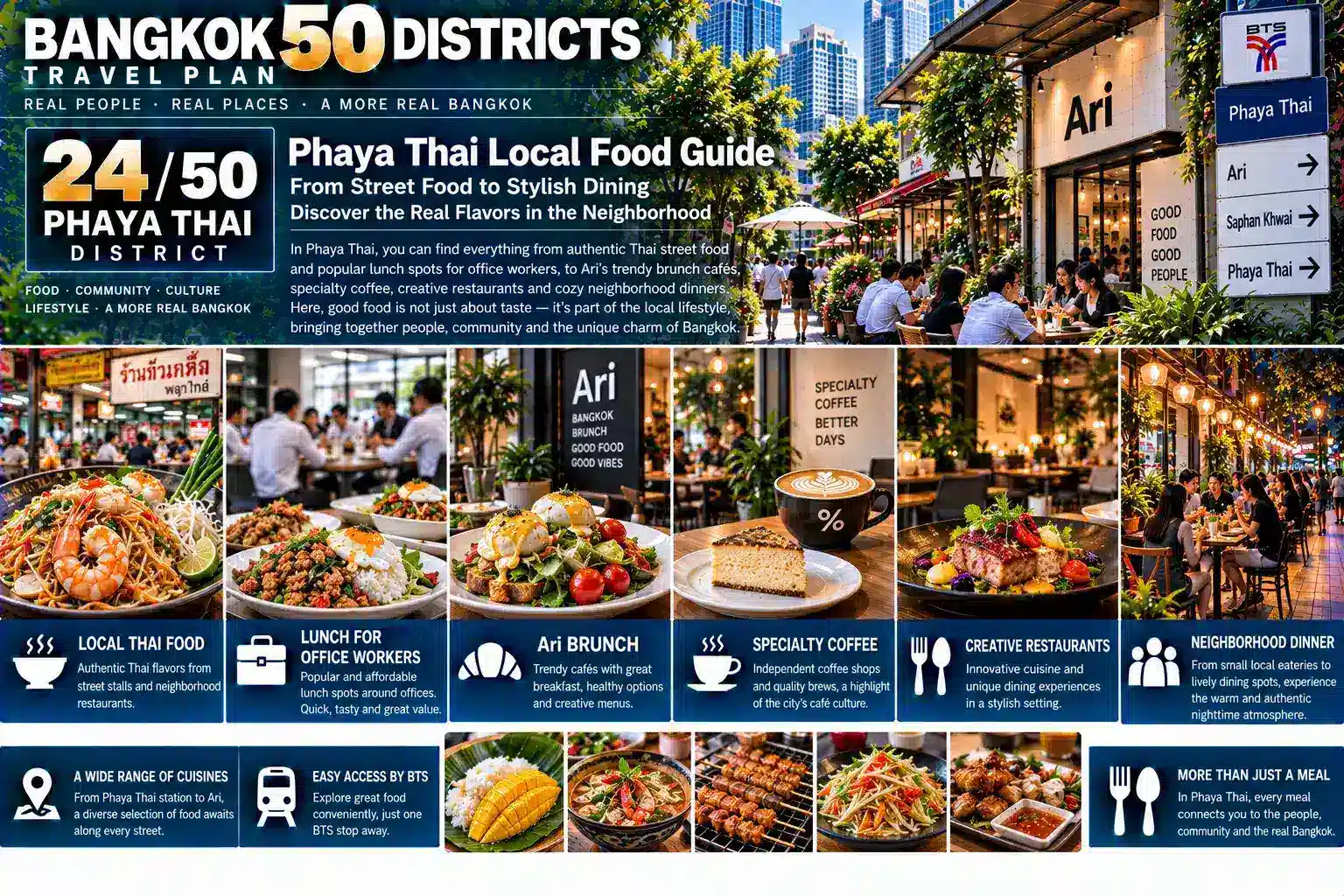
Phaya Thai’s food scene is especially representative of the district.
Because two different versions of Bangkok exist here at the same time.
One is:
The Bangkok People Eat Every Day
The other is:
The Bangkok People Travel Across Town to Eat
① Neighborhood Thai Food
Pad kra pao.
Chicken rice.
Noodles.
Curry rice.
Rice dishes.
② Office-Worker Lunches
Affordable.
Fast.
Plenty of choices.
③ Ari Brunch
Egg dishes.
Bread.
Salads.
Western-style breakfast.
Creative fusion cuisine.
④ Specialty Coffee
Single-origin coffee.
Pour-over.
Espresso.
Desserts.
⑤ Creative Restaurants
Modern Thai cuisine.
Japanese.
Korean.
Western.
Fusion.
⑥ Neighborhood Dinner
At night, Ari changes again.
Small bars.
Thai restaurants.
Barbecue.
Izakayas.
Dinner with friends.
That is what makes the area special.
In the morning, you can have an ordinary neighborhood breakfast for around 40–60 baht.
In the afternoon, sit inside a beautifully designed specialty café.
At night, visit a creative restaurant.
Three completely different spending patterns can exist within the same neighborhood.
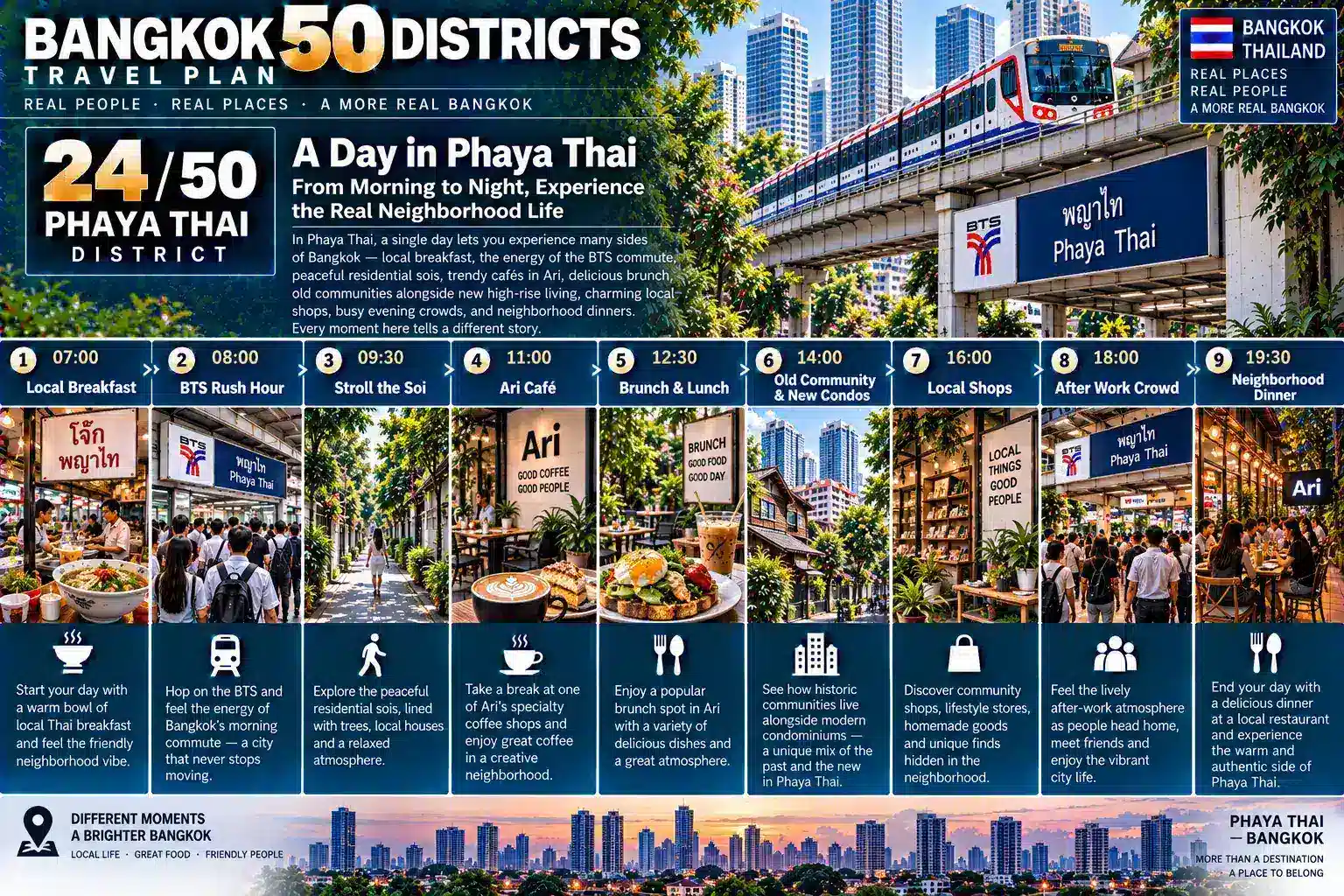
08|How to Spend One Day in Phaya Thai
For this stop, we are not trying to maximize the number of attractions.
Instead, we want to experience:
A COMFORTABLE BANGKOK WEEKDAY
07:30|Neighborhood Breakfast
Start with noodles or pad kra pao.
Watch how local residents begin their day.
08:30|BTS Morning Rush
Observe the working population around Sanam Pao and Ari.
10:00|Walk Through Residential Sois
Leave the main road.
Enter the real neighborhood.
11:30|Ari Café
Find a specialty coffee shop and sit down.
Do not rush.
The most important experience here is:
staying for a while.
13:00|Brunch / Lunch
Experience Ari’s newer lifestyle businesses.
15:00|Old Neighborhoods × New Condominiums
Observe how traditional homes and modern high-rise housing coexist.
16:30|Neighborhood Shops
Design stores.
Desserts.
Coffee.
Independent businesses.
18:00|After-Work Rush
Watch BTS, offices and residential neighborhoods all enter the evening peak.
19:30|Neighborhood Dinner
Choose a restaurant hidden inside a soi.
End the day slowly.
09|What Phaya Thai Really Teaches Us: The Best City May Not Be the Busiest One
When traveling, it is easy to judge cities using a familiar set of standards:
Are the buildings tall enough?
Are the malls big enough?
Are there enough tourists?
Is the skyline dramatic enough?
But Phaya Thai and Ari offer a different answer.
The things that make this area attractive can be surprisingly ordinary.
A tree.
A soi.
An old house.
A café.
A neighborhood market.
A small restaurant.
A new condominium.
A BTS station.
Individually, none of these are spectacular landmarks.
But put them together and they become:
QUALITY OF LIFE
That is one of the most important abilities of a mature city.
Not every district needs to become a CBD.
Not every neighborhood needs a mega mall.
Not every place should be filled with tourists.
Some districts have a different purpose:
to make everyday urban life comfortable.
You can live here.
Work nearby.
Take BTS into central Bangkok.
Return to a quieter soi after work.
Walk to a café on the weekend.
Eat an ordinary Thai lunch.
Meet friends at a neighborhood restaurant in the evening.
This kind of urban life is not dramatic.
But it can remain enjoyable for years.
And that helps explain why Ari has become one of Bangkok’s most popular lifestyle neighborhoods among younger generations.
A truly good urban neighborhood does not necessarily make you say:
“Wow.”
Sometimes it simply makes you think:
“Living here actually seems pretty nice.”
That is what makes District 24, Phaya Thai, worth understanding.
Government institutions.
Residential communities.
BTS.
High-rise condominiums.
Street-side Thai food.
Specialty coffee.
Older houses.
New lifestyles.
None of them completely replaced one another.
Instead, they accumulated layer by layer within the same district.
The result is today’s:
PHAYA THAI × ARI LIFESTYLE BANGKOK
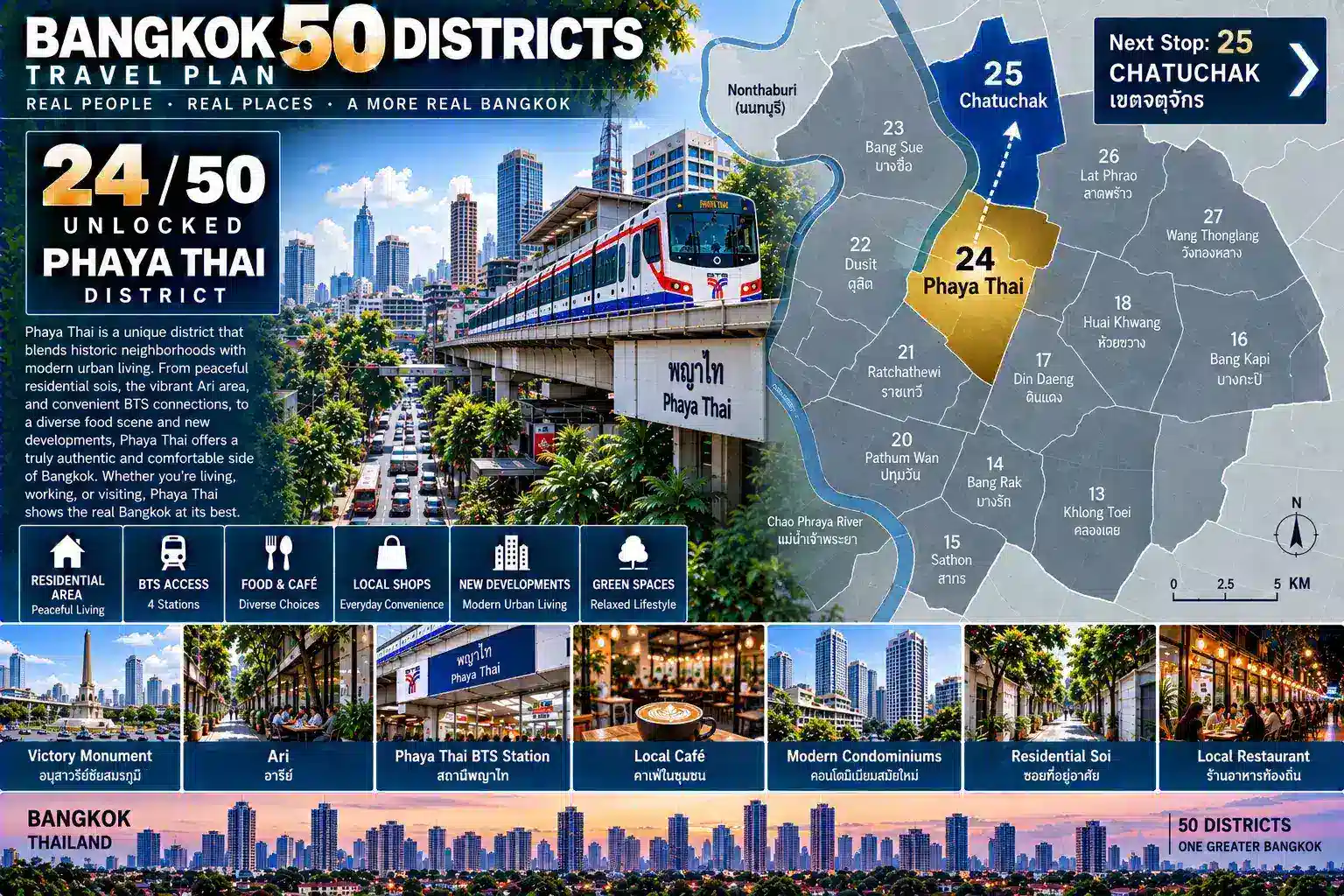
24 / 50 UNLOCKED
PHAYA THAI ✓
Keywords:
Phaya Thai · Ari · Sanam Pao · BTS · Residential Sois · Government Institutions · Offices · Specialty Coffee · Brunch · Creative Dining · High-Rise Condominiums · Neighborhood Life · Lifestyle Bangkok
26 districts remaining.
NEXT STOP|25 / 50
CHATUCHAK
Next, we continue north into Chatuchak.
District 25 introduces Bangkok on an entirely different scale.
Chatuchak Weekend Market.
Large urban parks.
BTS.
MRT.
Bang Sue.
Krung Thep Aphiwat Central Terminal.
Offices.
Residential neighborhoods.
Visitors from around the world.
If Phaya Thai showed us:
“How a mature urban district can make everyday life feel comfortable,”
then District 25, Chatuchak, asks:
“When a mega market, major parks, a national railway terminal, BTS, MRT, offices, housing and global visitors all converge, how does northern Bangkok become a super-hub connecting the city, the country and the wider region?”