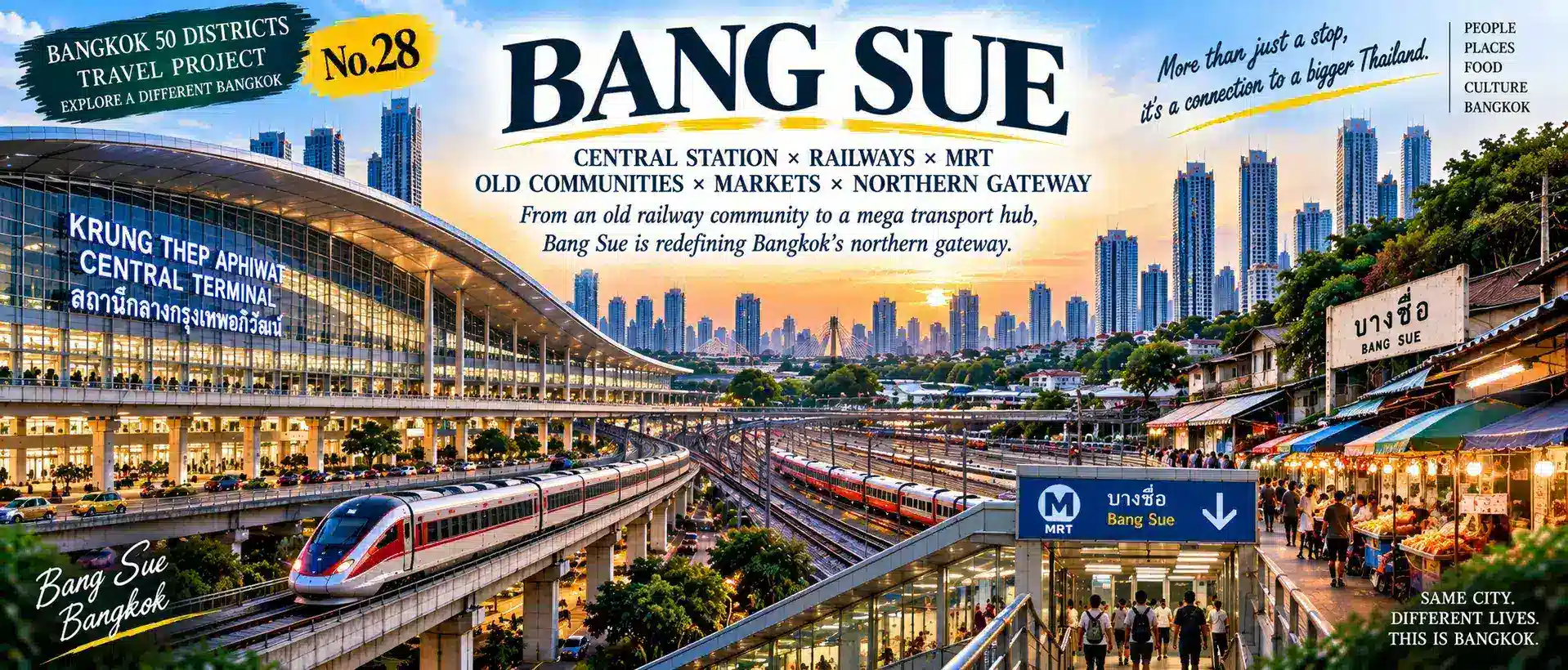
Many people arrive in Bang Sue for one reason:
Transportation.
To catch a train.
To transfer to the MRT.
To travel north from Bangkok.
Or to continue toward another part of Thailand.
But if you are not in a hurry to leave and spend some time exploring beyond the station, you will discover a much bigger urban story.
Railways.
Old communities.
Markets.
Low-rise neighborhoods.
Major roads.
New urban rail systems.
And a massive modern central station.
The past and future of Bangkok's transportation system exist almost side by side.
This is:
Bang Sue
01|Why Is Bang Sue Important?
To understand Bang Sue,
start with the railway.
For generations, railway lines connected this area with central Bangkok and destinations farther north.
Today,
with the development of a new central railway hub,
Bang Sue's role has expanded.
Railways.
Urban rail.
Buses.
Roads.
Long-distance transportation.
Different transport networks increasingly meet here.
Bang Sue is therefore more than an ordinary residential district.
It is becoming:
A gateway connecting Bangkok with the rest of Thailand.
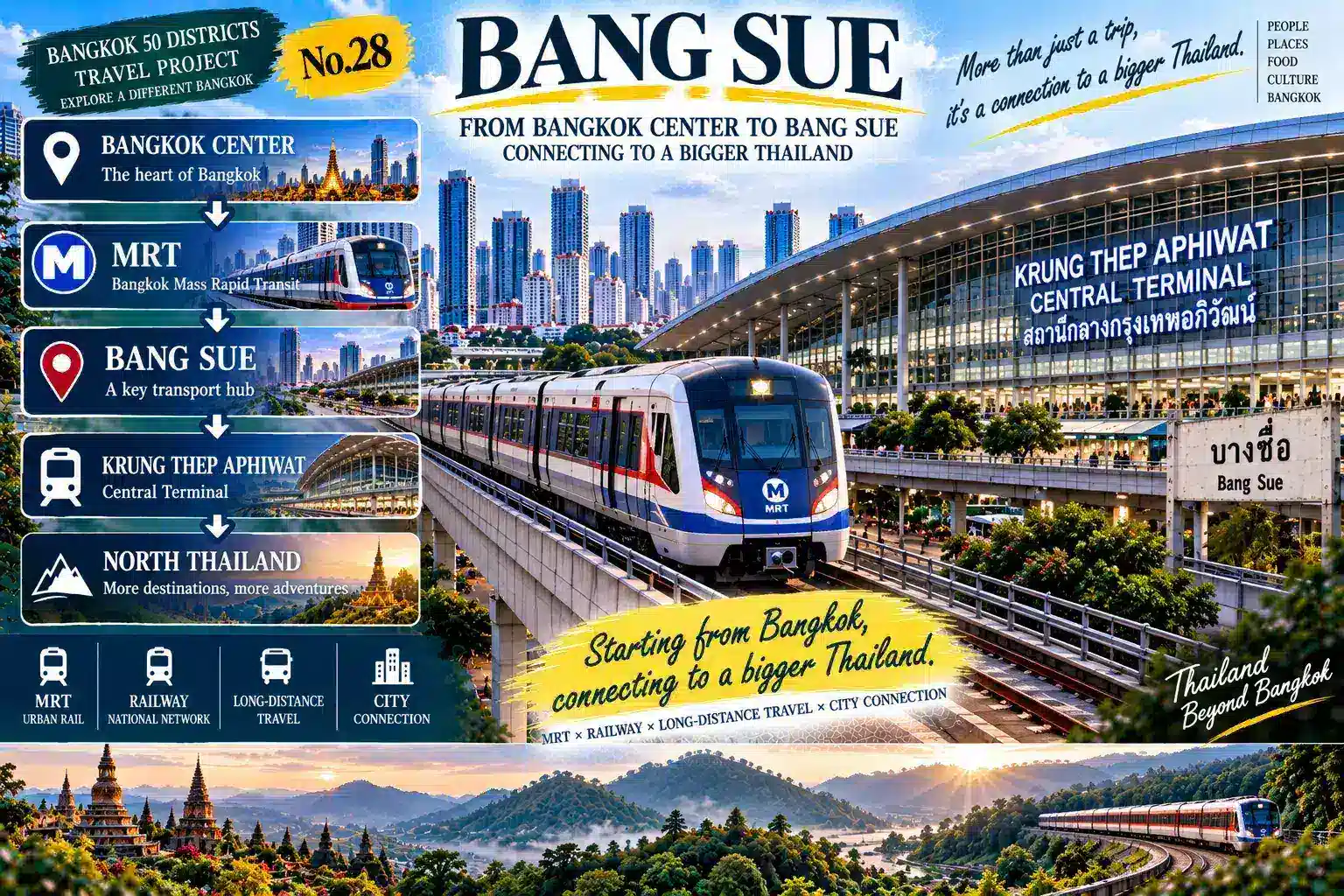
BANGKOK CENTER
↓
MRT
↓
BANG SUE
↓
KRUNG THEP APHIWAT
↓
NORTH THAILAND
MRT × RAILWAY × LONG-DISTANCE TRAVEL × CITY CONNECTIONS
**Starting from central Bangkok,
this gateway connects the city with destinations farther across Thailand.**
02|Krung Thep Aphiwat: A New Railway Era
One of the most visible transformations in Bang Sue is its massive central railway hub:
Krung Thep Aphiwat Central Terminal
A huge station building.
Numerous platforms.
Long-distance trains.
Commuter rail.
Connections with Bangkok's urban transport network.
Its scale is completely different from Bangkok's traditional railway stations.
Historically,
railway stations were often closely integrated with surrounding streets and older neighborhoods.
Today,
a major transport hub can function almost like a piece of city infrastructure on its own.
Bang Sue represents an important part of Bangkok's changing transportation system.
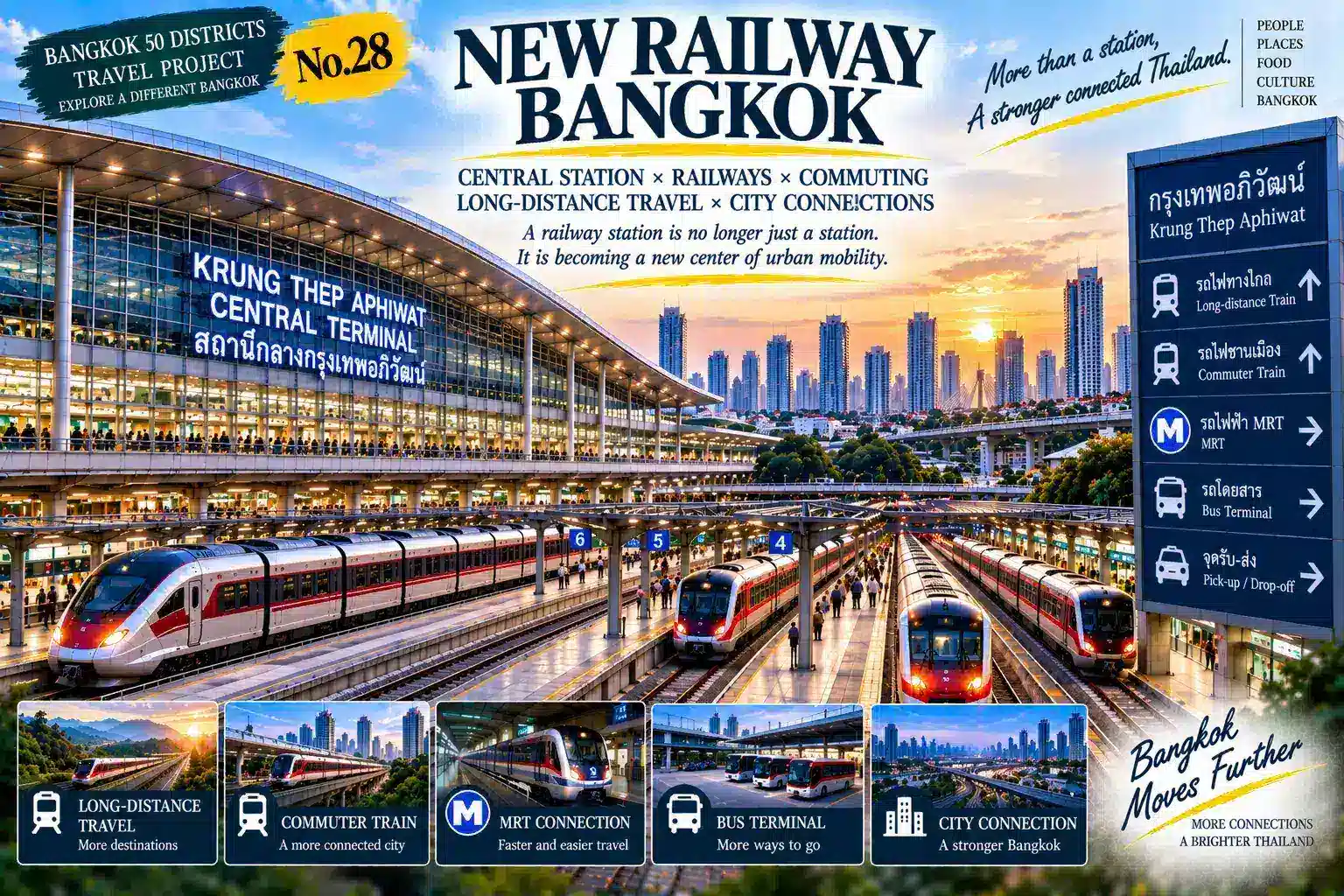
NEW RAILWAY BANGKOK
CENTRAL STATION × RAILWAY × COMMUTING × LONG-DISTANCE TRAVEL × CITY CONNECTIONS
**A railway station is no longer just a station.
It is becoming a new center of urban mobility.**
03|From the Old Railway Era to a Modern Transport Hub
Bang Sue's railway story did not begin recently.
The railway has shaped this area for generations.
Railway workers.
Communities along the tracks.
Small shops.
Markets.
Homes.
All developed around transportation.
Today,
a massive central station, urban rail and modern road networks have been added to this older urban landscape.
So the story here is more than a simple comparison between “old” and “new.”
It shows:
How transportation reshapes urban life layer by layer.
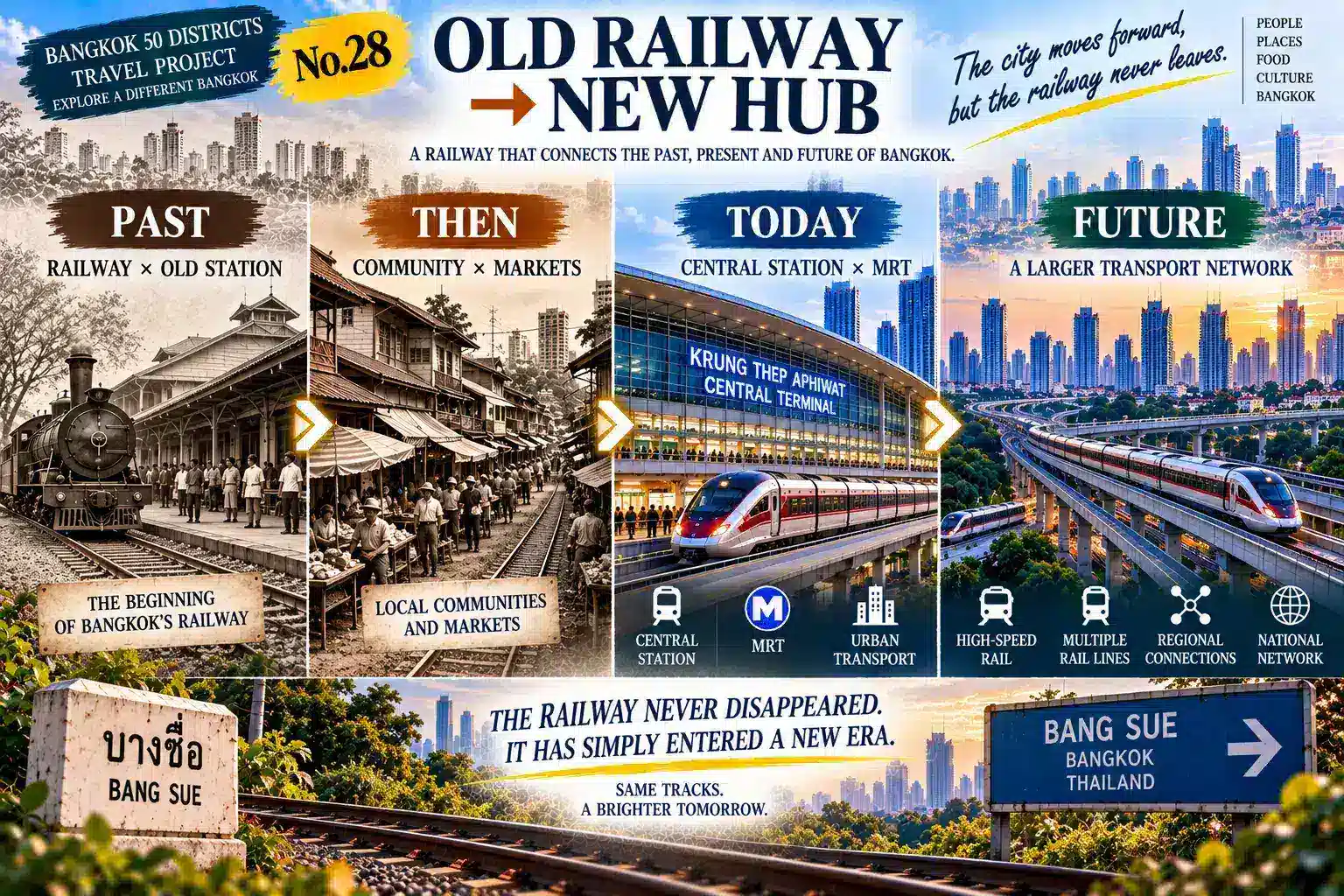
OLD RAILWAY → NEW HUB
PAST|RAILWAY × OLD STATION
↓
THEN|COMMUNITIES × MARKETS
↓
TODAY|CENTRAL STATION × MRT
↓
FUTURE|LARGER TRANSPORT NETWORK
**The railway never disappeared.
It simply entered a new era.**
04|Beyond the Mega Station, Everyday Bang Sue Continues
Leave the massive station behind,
and the scale of the city quickly changes.
Low-rise homes.
Neighborhood roads.
Schools.
Street restaurants.
Motorbikes.
Markets.
Residents continue living according to their own everyday rhythms.
This is one of the most interesting things about Bang Sue.
Major infrastructure can change rapidly,
while surrounding communities continue their ordinary daily lives.
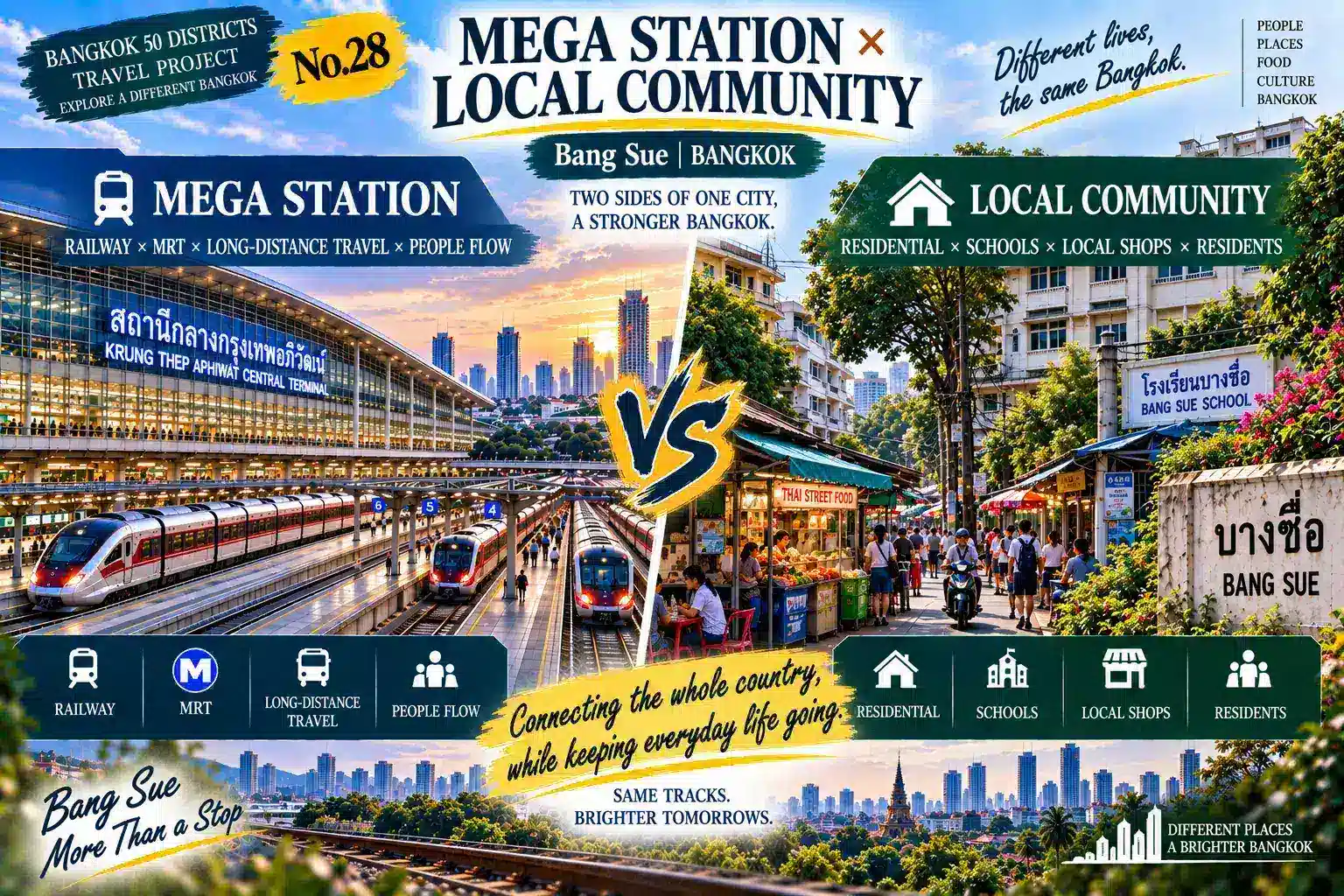
MEGA STATION × LOCAL COMMUNITY
STATION
RAILWAY × MRT × LONG-DISTANCE TRAVEL × PASSENGERS
VS
COMMUNITY
HOMES × SCHOOLS × SMALL SHOPS × RESIDENTS
**One side connects an entire country.
The other continues with everyday life.**
05|Local Markets Beside a Major Transport Hub
Transportation brings people.
People create commerce.
In Bang Sue's neighborhoods,
markets and street-level businesses remain an important part of everyday life.
Breakfast.
Fruit.
Prepared food.
Daily necessities.
Local restaurants.
Neighborhood shopping.
The contrast with the massive transport infrastructure nearby is striking.
On one side is a large national transportation hub.
On the other,
residents still complete their everyday routines in ordinary neighborhood markets.
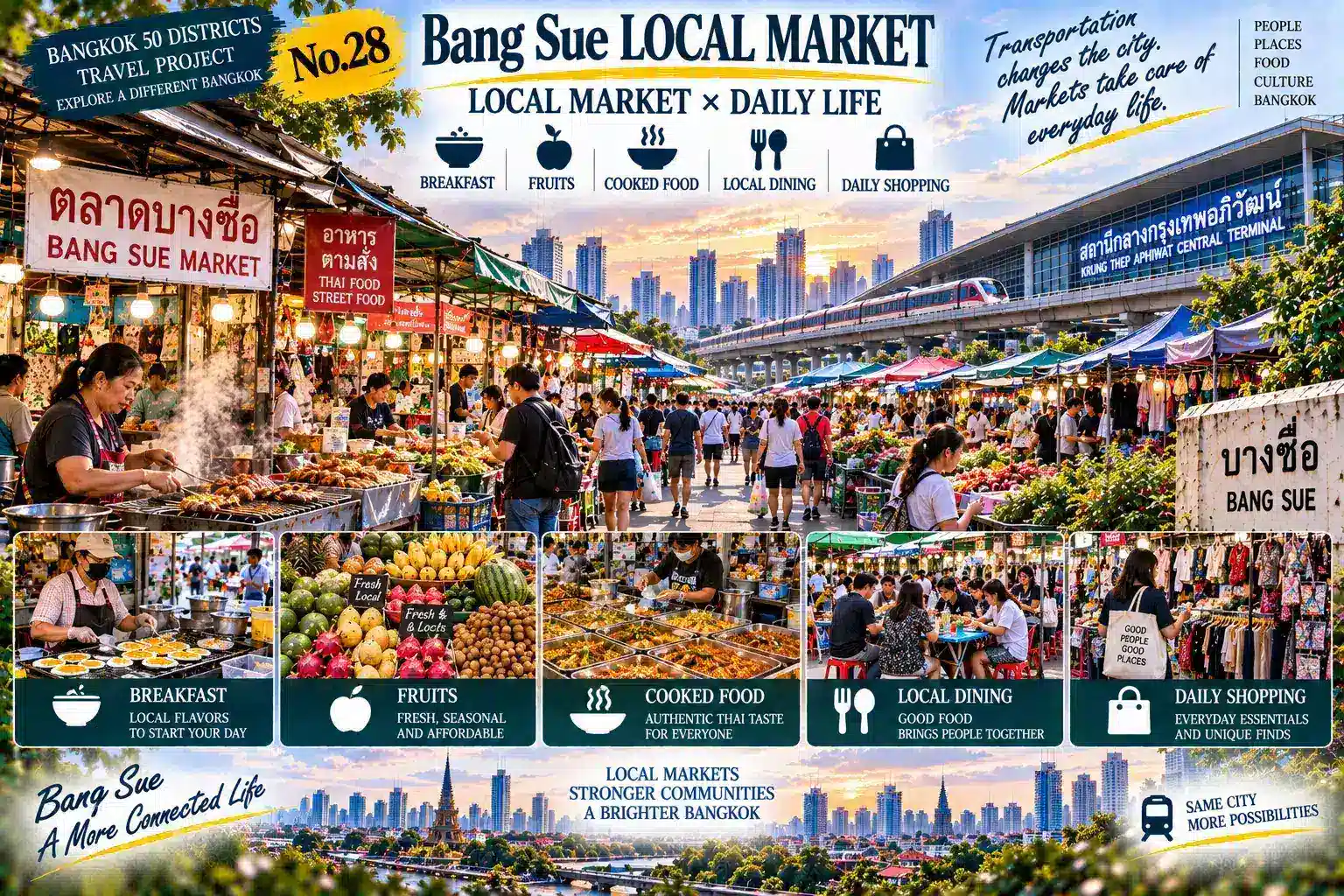
LOCAL MARKET × DAILY LIFE
BREAKFAST × FRUIT × PREPARED FOOD × LOCAL DINING × DAILY SHOPPING
**Transportation changes the city.
The market continues to serve everyday life.**
06|Why Is Bang Sue a “Transfer City”?
Many people do not stay here for very long.
They arrive by train.
Transfer to the MRT.
Change to another rail service.
Continue toward another part of Bangkok.
Or leave the capital entirely.
That gives Bang Sue a very particular urban role.
Huge numbers of people arrive here,
but their goal is often not to stay.
Their goal is:
To reach the next destination.
This is one of the biggest differences between a major transport hub and an ordinary commercial center.
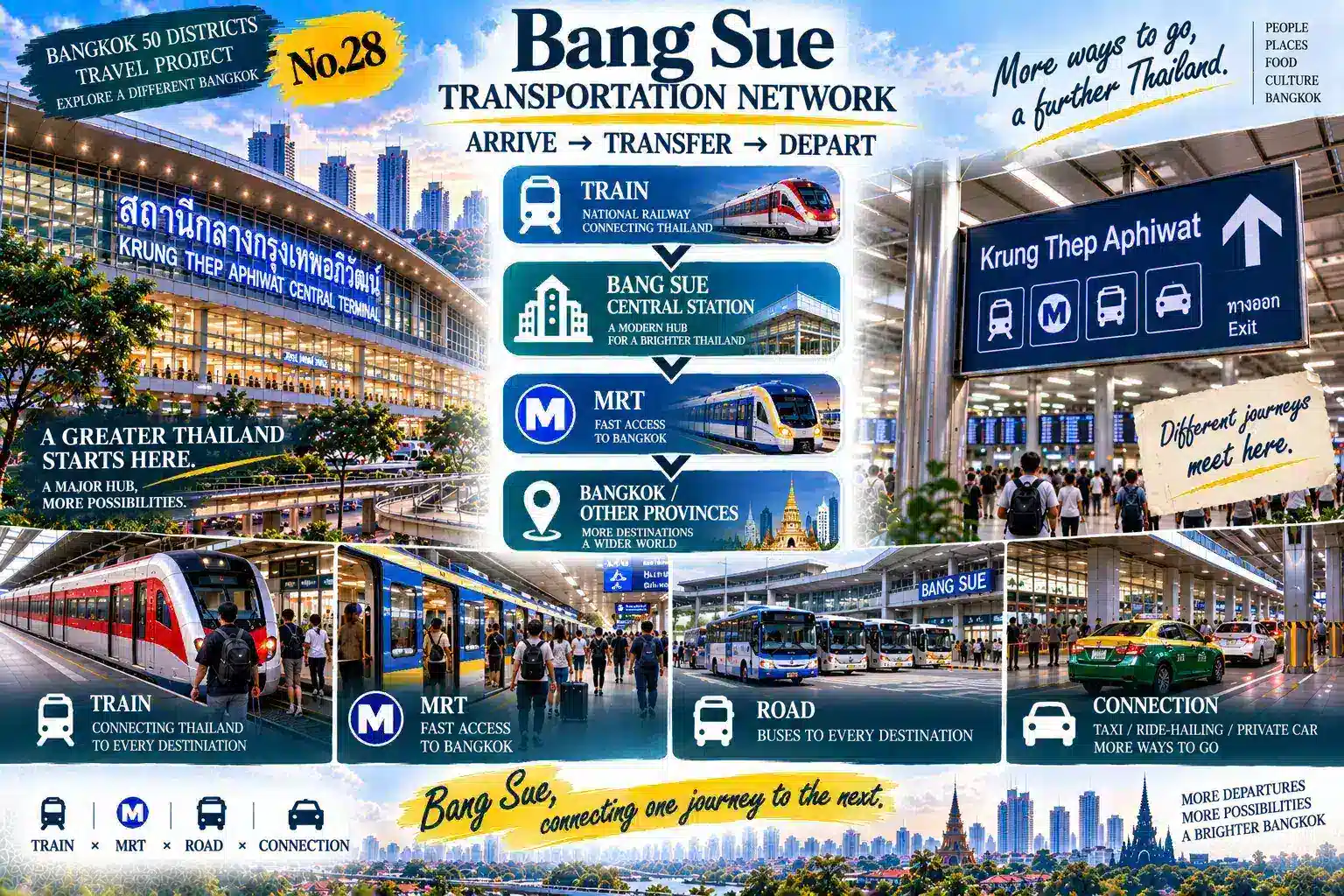
ARRIVE → TRANSFER → DEPART
RAILWAY
↓
CENTRAL STATION
↓
MRT
↓
BANGKOK / OTHER PROVINCES
TRAIN × MRT × ROAD × CONNECTION
**For many people, Bang Sue is the space
between one journey and the next.**
07|How Is Transportation Changing Bang Sue?
When major transportation infrastructure appears,
it changes more than mobility.
Land use around the transport hub can also change.
New residences.
Commercial spaces.
Roads.
Public transportation.
New urban development.
All can continue growing around major transport nodes.
So when you visit Bang Sue today,
you are not simply looking at a finished city.
You are watching:
A new urban center gradually take shape.
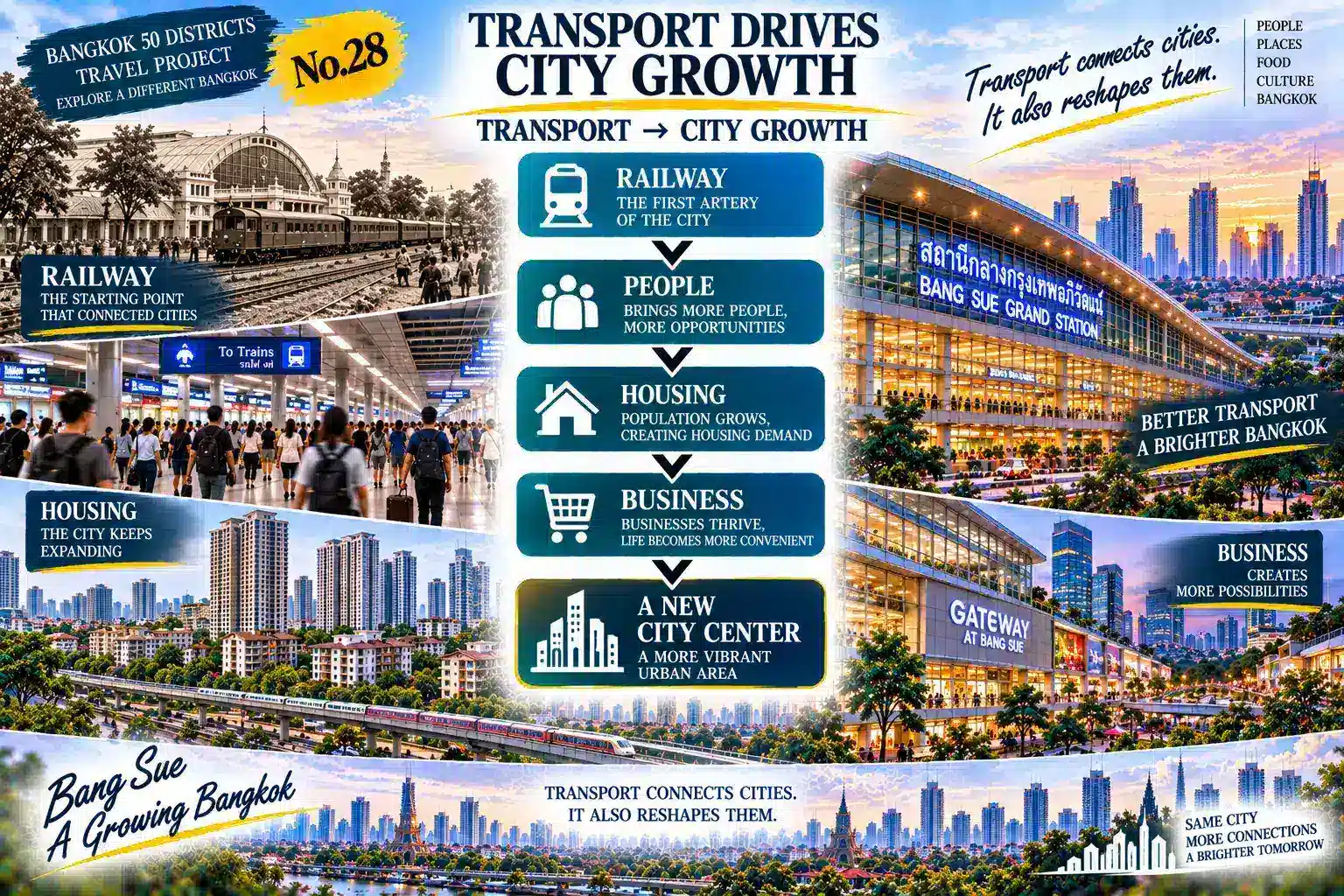
TRANSPORT → CITY GROWTH
RAILWAY
↓
PEOPLE
↓
HOUSING
↓
COMMERCE
↓
NEW URBAN CENTER
**Transportation connects the city.
It also reshapes the city.**
08|A One-Day Bang Sue Travel Plan
For a first visit,
think of the day as:
“From Bangkok's Railway Past to Its Modern Transport Future.”
09:00|Depart Central Bangkok
Take the MRT or another form of public transportation toward Bang Sue.
09:45|Krung Thep Aphiwat
Begin at the massive central railway hub.
11:00|Railway × Urban Transportation
Observe how railways, MRT and surrounding roads connect.
12:00|Local Lunch
Leave the core station area and find lunch in a nearby neighborhood.
13:30|Old Community × Residential Life
Explore the Bang Sue that exists beyond the major transport infrastructure.
15:00|Local Market
Observe everyday shopping and neighborhood commerce.
16:30|Railway × Urban Change
See how older railway landscapes and newer development coexist.
18:00|Evening Rush Hour
Watch commuters move through the transport network.
19:00|Dinner × Return
Finish the day and return toward central Bangkok.
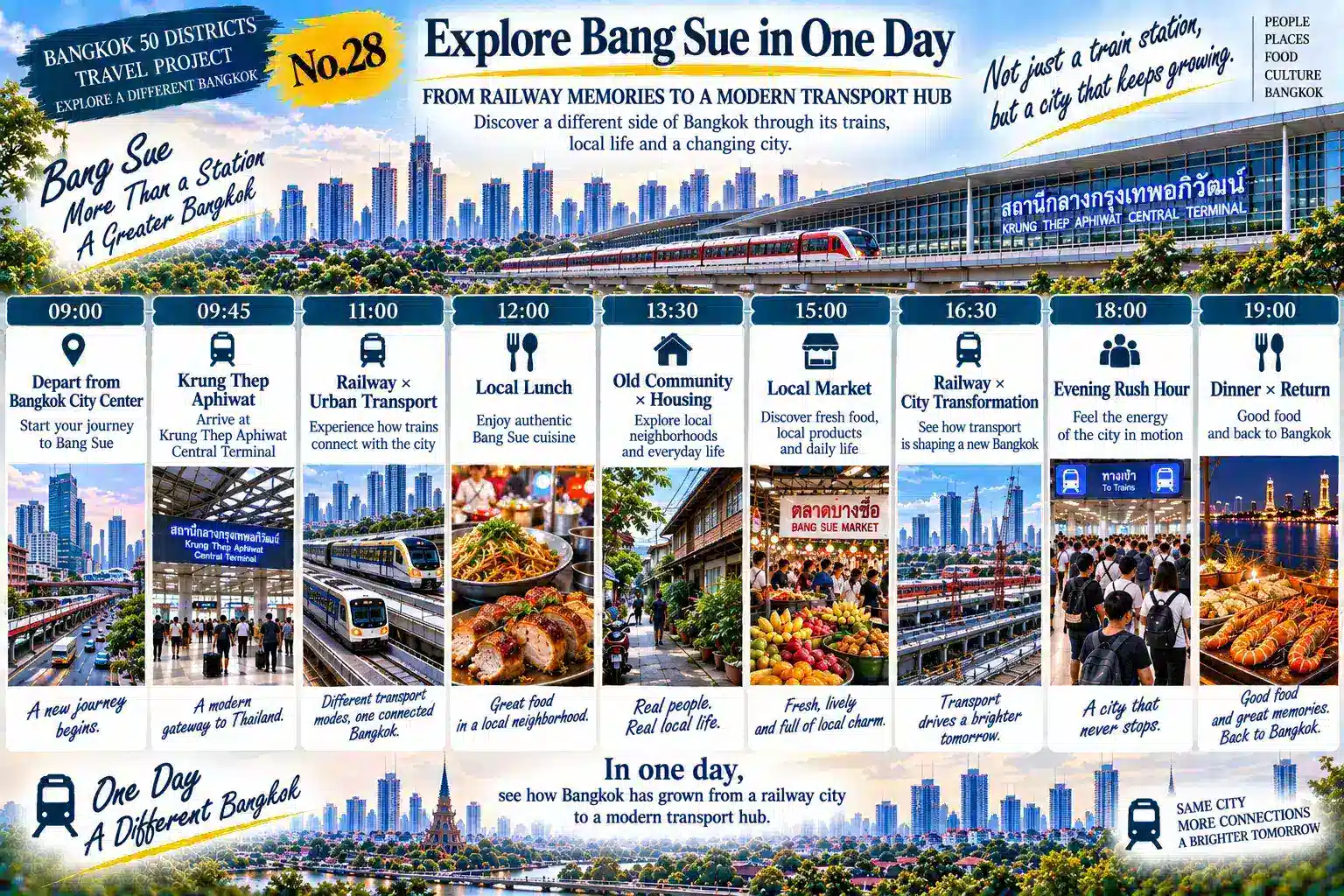
09:00|DEPART CENTRAL BANGKOK
09:45|KRUNG THEP APHIWAT
11:00|RAILWAY × URBAN TRANSPORT
12:00|LOCAL LUNCH
13:30|OLD COMMUNITY × RESIDENTIAL LIFE
15:00|LOCAL MARKET
16:30|RAILWAY × URBAN CHANGE
18:00|EVENING RUSH HOUR
19:00|DINNER × RETURN
**One day,
see how Bangkok is moving from a railway city toward a modern transport hub.**
09|Why Is Bang Sue Worth This Stop?
Because Bang Sue shows us that transportation is about much more than moving people from Point A to Point B.
Railways create communities.
Stations bring people.
People generate commerce.
New transport networks encourage residential and urban development.
Over time,
an area once shaped around traditional railway lines can develop into a transport center operating at a completely different scale.
Many Bangkok districts tell stories about:
Commerce.
Tourism.
Communities.
But Bang Sue helps us understand something different:
**Transportation itself can shape a city.**
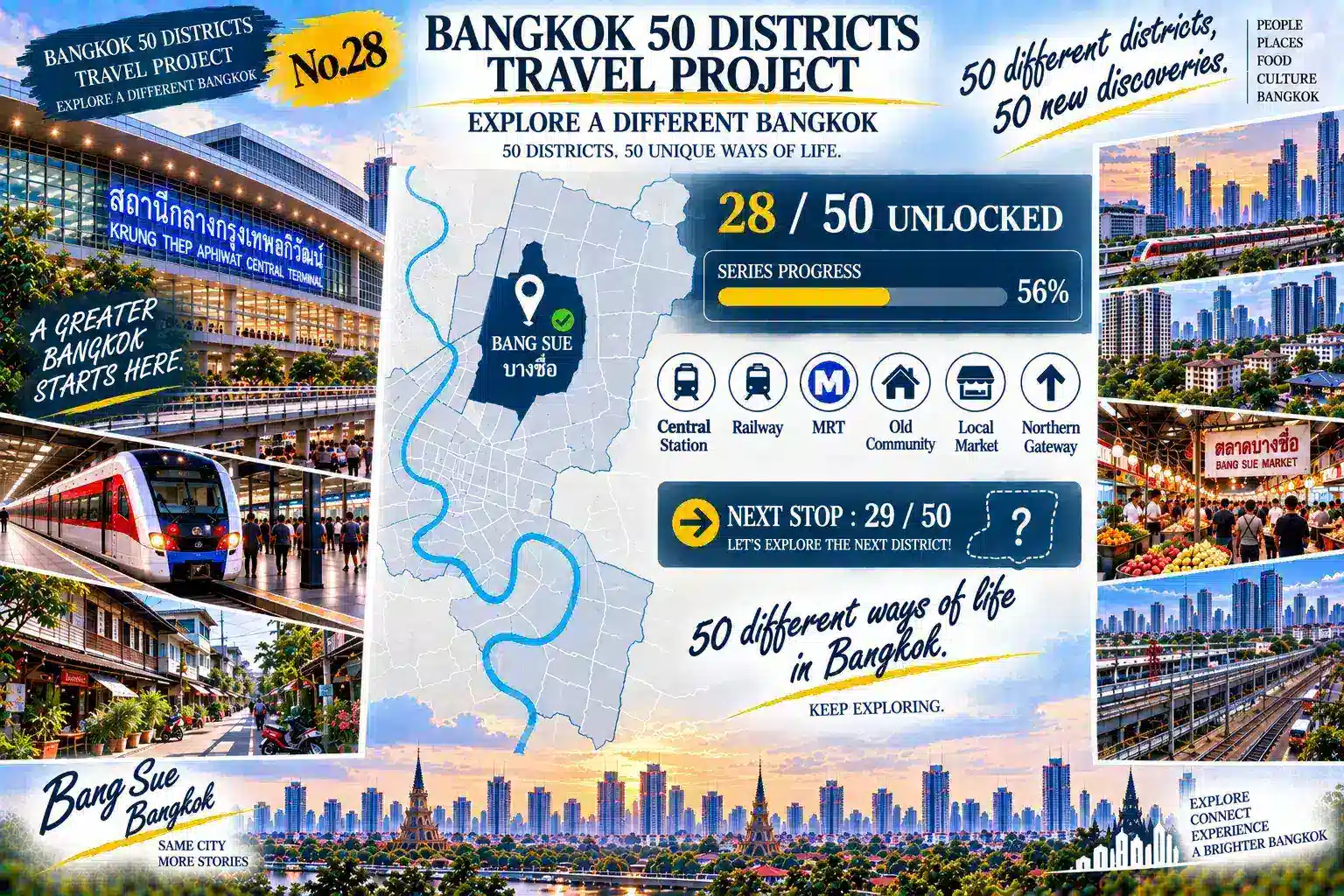
BANGKOK 50 DISTRICTS TRAVEL PROJECT
**28 / 50 UNLOCKED**
BANG SUE ✓
SERIES PROGRESS|56%
CENTRAL STATION × RAILWAY × MRT × OLD COMMUNITIES × MARKETS × NORTHERN GATEWAY
NEXT STOP: 29 / 50
**50 districts.
50 different ways of life.
Keep exploring Bangkok.**